
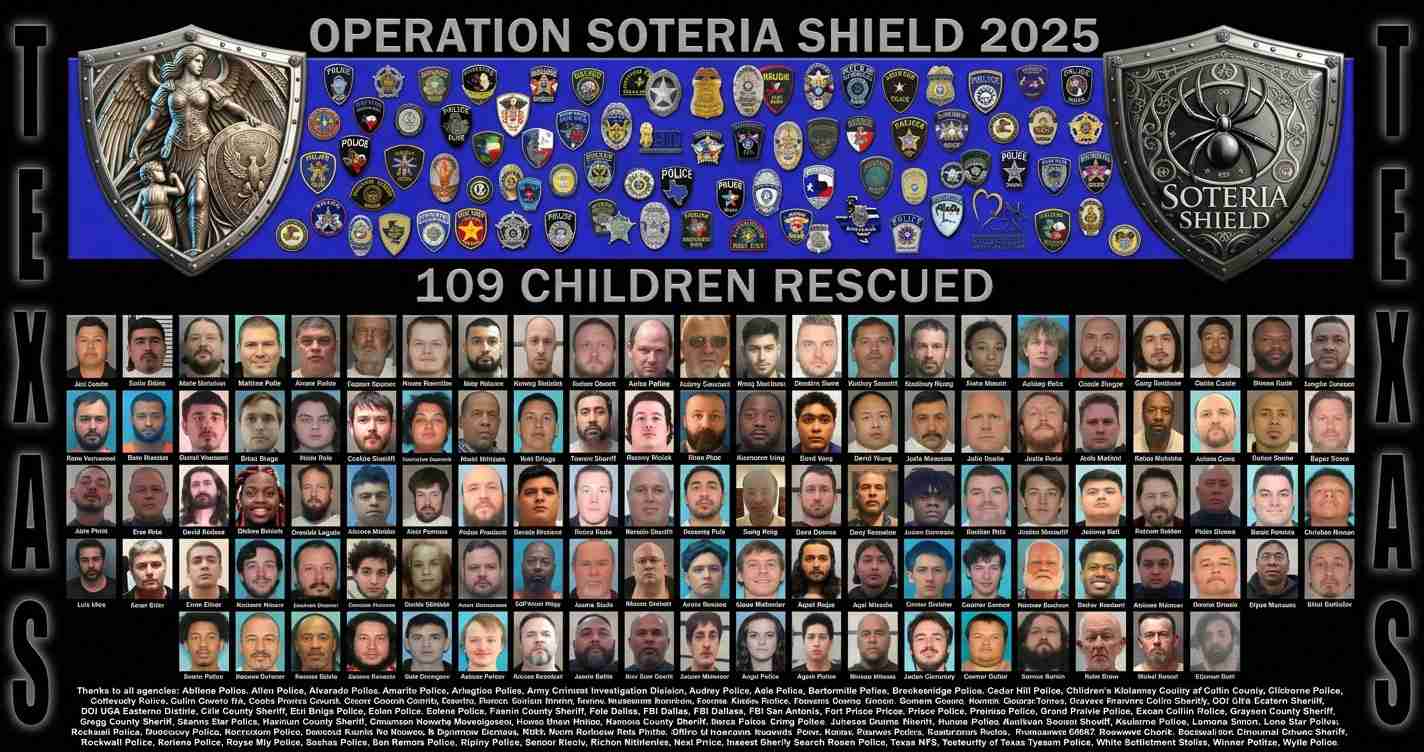
FBI’s Operation Iron Pursuit netted hundreds of arrests, rescued children — but “Operation Soteria Shield” in Texas appears to be fabricated
The DOJ and FBI’s monthlong April sweep, Operation Iron Pursuit, resulted in more than 350 arrests and over 200 child victims located; separate claims about a Texas “Operation Soteria Shield” appear unsupported by official records.
- Operation Iron Pursuit resulted in 350+ arrests and the location of 200+ child victims, per the DOJ press release.
- No public DOJ, FBI or major Texas law-enforcement records corroborate a North Texas “Operation Soteria Shield” producing 276 arrests and 89 rescued children.
- Officials urge the public to report tips via tips.fbi.gov and the National Center for Missing & Exploited Children at missingkids.org (1‑800‑THE‑LOST).
- Verify detailed regional tallies and quotes against official DOJ/FBI/local press releases before sharing.
Key information
The following points preserve verified details and original sourcing:
- Operation Iron Pursuit was a coordinated, one‑month, nationwide effort run April 1–30 by the Department of Justice and the FBI that resulted in more than 350 arrests and more than 200 child victims located — see the DOJ press release.
- The operation involved all 56 FBI field offices and every U.S. Attorney’s Office, coordinated with state and local partners.
- There is no public record from the DOJ, FBI or major Texas law‑enforcement offices of an “Operation Soteria Shield” in North Texas producing the cited 276 arrests and 89 rescued children.
- Officials emphasize continued public reporting through tips.fbi.gov and the NCMEC CyberTipline at missingkids.org (1‑800‑THE‑LOST).
What Operation Iron Pursuit is — verified facts
Announced by the Department of Justice, Operation Iron Pursuit was a focused, monthlong sweep (April 1–30) targeting child sexual exploitation and rescuing child victims. The DOJ said the effort enlisted all 56 FBI field offices and all U.S. Attorney offices, working with state and local partners and specialized squads to pursue suspects; results included more than 350 offenders arrested and more than 200 children located, per the DOJ press release.
The initiative targeted online sexual exploitation, sex trafficking of minors, physical sexual abuse and kidnapping of minors, and the production, distribution or possession of child sexual abuse material (CSAM). The operation used tips to NCMEC’s CyberTipline and FBI reporting mechanisms to generate leads and move rapidly to protect victims.
What is unverified or false: “Operation Soteria Shield” and specific Texas figures
Claims that a separate Texas-focused operation named “Operation Soteria Shield” produced exactly 276 arrests and rescued 89 children in North Texas are not supported by DOJ or FBI public records. A review of official releases and field‑office archives shows no announcement using that operation name tied to Iron Pursuit or listing those Texas-specific totals.
“The numbers and the operation name appear to be additions to the national narrative that are not corroborated by primary sources.”
Several names and quotes attributed in social posts — including references to an “FBI Director Kash Patel” in this context — are inaccurate and do not match DOJ or FBI releases connected to Iron Pursuit.
How the operation worked (methods and partnerships)
The DOJ description highlights the role of the FBI’s cyber and child‑exploitation squads, state and local police, and federal partners such as Homeland Security Investigations and the U.S. Marshals Service. NCMEC’s CyberTipline often forms leads for investigations.
- Techniques used: digital forensics, search warrants, undercover online operations, and emergency responses when victims are identified.
- Partnerships included: federal task forces, state and local agencies, and nonprofit assistance through NCMEC (missingkids.org).
Context and larger enforcement picture
Operation Iron Pursuit fits into ongoing DOJ and FBI strategies to run time‑bounded, nationwide operations that prioritize locating and rescuing children while arresting offenders. These campaigns often coincide with National Child Abuse Prevention Month (April) and reflect increased emphasis on cyber and online investigations.
Be cautious of social posts that aggregate or inflate percentages without citing primary DOJ or FBI sources; the official release should be the reference point for verified metrics (DOJ press release).
Child exploitation debunked: sorting fact from fiction
- Fact: Operation Iron Pursuit is real and national; DOJ confirmed results in its public release (DOJ press release).
- Fiction: A separate North Texas “Operation Soteria Shield” producing 276 arrests and 89 rescues — no supporting DOJ, FBI or major Texas law‑enforcement announcement exists.
- Fact: DOJ and FBI rely on public tips and NCMEC to find victims; reporting suspicious activity remains crucial (tips.fbi.gov; missingkids.org).
- Fiction: Highly detailed regional tallies and dramatic quotes that cannot be traced to official releases should be treated as suspect.
Why accurate reporting matters
Accurate information helps communities understand threats to children and preserves trust in responding institutions. Inflated or fabricated claims can create confusion, undermine legitimate law‑enforcement messaging, and distract from verified cases. Verified DOJ and FBI operations demonstrate meaningful action against predators and protect victims.
Implications for Redding, California
Economic impact: Large federal operations typically do not directly affect a small city’s economy, though local investigative costs can rise if residents are implicated. Federal partnerships may bring resources and training to local agencies.
Political consequences: Verified federal operations reinforce law‑and‑order priorities; misinformation can misdirect political pressure and policy responses.
Social effects: Parents and community leaders should stay vigilant about online safety; verified operations show predators operate nationwide and may affect smaller communities.
Cultural relevance: Protecting children resonates locally; confirmed law‑enforcement successes align with community values but communities must guard against spreading unverified claims that sow fear.
Practical applications for residents
- Report concerns to federal and local channels: FBI tips and NCMEC’s hotline at missingkids.org / 1‑800‑THE‑LOST.
- Encourage schools and youth organizations to review online‑safety programs and parental controls.
- Work with local law enforcement to request federal assistance, training or briefings; for regional guidance consider contacting the FBI Dallas field office.



