
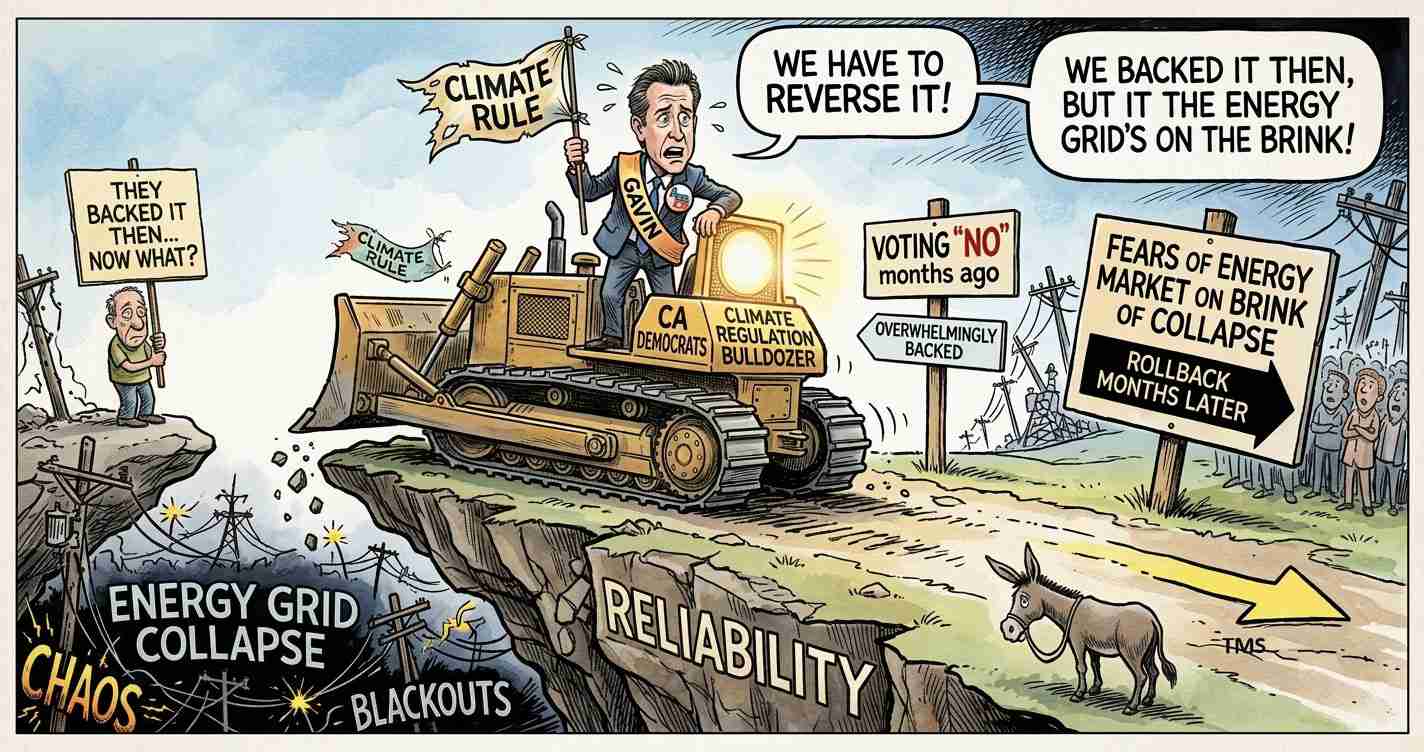
Fifteen California Democrats Urge CARB to Rethink Cap-and-Invest Amendments, Citing Risk of Higher Prices and Energy Instability
A coalition of fifteen California Democratic Assemblymembers has formally urged the California Air Resources Board to reconsider proposed amendments to the state cap-and-invest program, warning potential energy-market destabilization and higher consumer costs ahead of a May vote.
Key takeaways
- Fifteen Assemblymembers who reauthorized cap-and-invest asked CARB to pause and reevaluate updates covering fuels, gas and electricity — citing supply and market readiness concerns via San Joaquin Valley Sun.
- Risk of higher prices: Industry analysis cited by lawmakers (Chevron) projects the changes could add more than $1 per gallon to gasoline by 2030, raising cost-of-living concerns.
- Regulatory clash ahead: A May vote could trigger a major political fight between lawmakers, industry and CARB as stakeholders present new analyses and lobby during rulemaking (Carbon Pulse).
Background: How cap-and-invest works
California’s cap-and-invest program imposes a statewide limit on greenhouse-gas emissions from large sources. Companies that emit above set limits must purchase allowances; proceeds fund clean-energy and community projects. CARB calls this the “most cost-effective way” to meet state climate goals (see background video).
Lawmakers who backed reauthorization now urge caution
In September the Legislature reauthorized cap-and-invest and directed CARB to update rules for fuels, gas and electricity. Now, 15 Democratic Assemblymembers who voted for that reauthorization have publicly asked CARB to slow and reassess aspects of the implementing regulations. Their letter to CARB chair Lauren Sanchez warns the proposal could outpace infrastructure and market readiness, creating chronic supply imbalances and long-term instability (San Joaquin Valley Sun).
“We are deeply concerned that an energy transition that outpaces infrastructure readiness, market realities, and technological feasibility risks creating chronic supply imbalances and long-term market instability,” the lawmakers wrote.
They also warned the plan could disproportionately burden families already struggling with high energy costs: “This crisis is not a fallacy nor a thinly veiled threat. It is a reality borne by consumers today who are historically and empirically least able to afford it.”
Industry warnings and price projections
Oil companies and refiners say stricter rules may make operating in California more costly and could prompt refinery closures or relocations. The lawmakers cited a Chevron analysis projecting the proposed changes could add more than $1 per gallon to pump prices by 2030 — a scenario industry argues would worsen California’s high cost of living and threaten refinery-related jobs (San Joaquin Valley Sun).
The state’s market already faces volatility: recent global events, including military action in the Middle East, pushed local gas prices up by more than $0.50 per gallon in recent weeks, showing how external shocks can amplify policy impacts on fuel prices (background video).
Who signed the letter
The letter to CARB chair Lauren Sanchez was signed by Assemblymembers Blanca Rubio, Michelle Rodriguez, Jose Luis Solache, Stephanie Nguyen, Lisa Calderon, Juan Carrillo, James Ramos, Lori Wilson, Blanca Pacheco, Maggy Krell, Esmeralda Soria, Tina McKinnon, Cecilia Aguiar-Curry, Anamarie Avila Farias and Mike Gipson (San Joaquin Valley Sun).
CARB’s defense and the regulatory process
CARB officials defend the cap-and-invest framework as essential to meeting California’s legally mandated climate targets and say the proposed updates align fuels, gas and electricity sectors with state law. The agency emphasizes that allowance revenue funds clean-energy projects and assistance for vulnerable communities (background video).
Rulemaking is underway and the board could vote on the amendments as soon as May. The September reauthorization gave CARB authority to update the program; these amendments represent implementing steps lawmakers previously instructed — and now some of those same lawmakers are asking CARB to revisit (Carbon Pulse; San Joaquin Valley Sun).
Political stakes and the clash in Sacramento
This letter sets up a notable intra-party clash over climate policy. Conservative lawmakers and industry groups frame the updates as regulatory overreach that will raise California’s premium on goods and energy. Supporters say aggressive action is needed to meet mandates and that allowance revenue mitigates impacts for low-income communities.
Implications: The disagreement could complicate CARB’s path forward, as signers wield influence over local politics and funding priorities. With a May vote looming, expect hearings, new analyses and heavy lobbying from both industry and environmental advocates (Carbon Pulse).
Implications for Redding, California
Economic: Redding and Shasta County rely on affordable energy. Even small fuel-price increases would raise commuting and freight costs, squeeze small-business margins, and increase household expenses (San Joaquin Valley Sun).
Jobs and industry: Stricter rules that accelerate refinery exits could reduce regional contracts and energy-related employment, affecting local service providers and workers.
Energy reliability: Redding is distant from major refining centers; supply imbalances could hit remote regions first, making consistent delivery and predictable pricing critical.
Social effects: Working families with fixed incomes could face trade-offs between essentials if fuel and power costs rise — a key point emphasized by the lawmakers’ letter.
Local politics: The public pushback may embolden local officials to seek exemptions, delayed timelines, or targeted infrastructure investments to protect residents from price shocks (San Joaquin Valley Sun).
Practical advice: Redding residents should monitor local fuel prices, consider carpooling or adjusted commute patterns if prices spike, and press for impact studies and coordinated transition timelines (San Joaquin Valley Sun; Carbon Pulse).
Next steps
CARB’s rulemaking could reach a vote in May. In the coming weeks, lawmakers, industry and advocacy groups will likely present new analyses during public hearings. The letter’s political pressure may prompt additional studies or revisions before final action (Carbon Pulse; San Joaquin Valley Sun).
Sources and further reporting
Reporting for this story drew on public coverage and statements from local outlets and industry briefings. For background on the cap-and-invest program and CARB’s rationale, see the agency’s explanations and coverage compiled here: background video. Additional reporting on the lawmakers’ letter is available at San Joaquin Valley Sun, and broader regulatory debate coverage is available at Carbon Pulse.



