
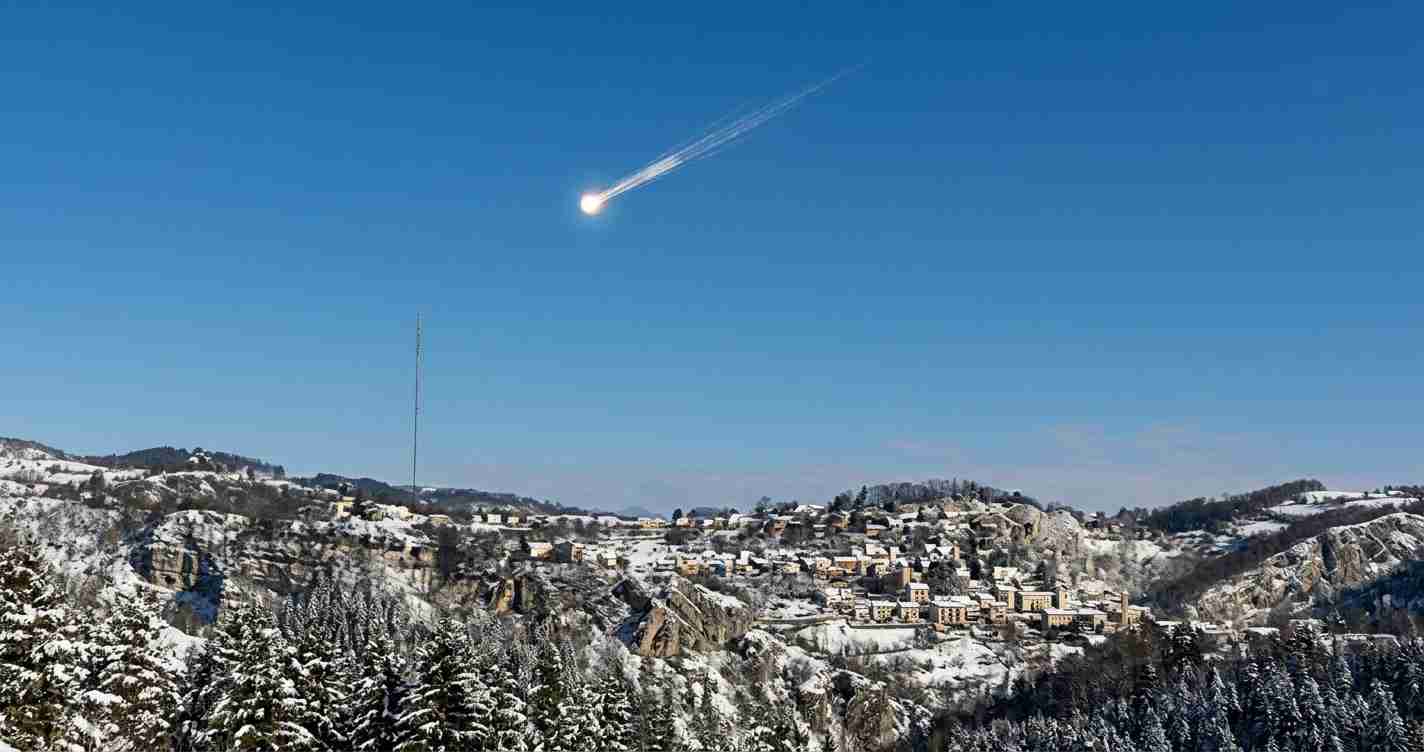
7-Ton Meteor Lights Up Morning Sky, Triggers Sonic Boom Over Northeast Ohio — Valley City Meteor Fragmentation Draws National Attention
A roughly seven‑ton, six‑foot‑wide meteor produced a brilliant daylight fireball and powerful sonic boom over Northeast Ohio on March 17, 2026, fragmenting above Valley City and drawing eyewitness reports and scientific analysis from NASA and regional agencies.
- Mass and size: A small asteroid about six feet across and roughly seven tons in mass — small asteroid nearly six feet in diameter.
- Trajectory and energy: Traveled more than 34 miles of atmosphere at ~40,000–45,000 mph and released energy equal to ~250 tons of TNT — Daylight fireball and sonic boom over Northeast Ohio on March 17, 2026, energy estimate.
- Fragmentation and fallout: Broke apart about 30 miles above Valley City; fragments likely fell toward Medina County with no immediate damage reported — breakup details, local trajectory reporting.
- Detection limits: Object was too small for prior detection, underscoring gaps in current monitoring of small near‑Earth objects — NASA comments on detection limits.
What happened: eyewitness reports and video
Shortly before 9 a.m. ET on Tuesday, residents across parts of Ohio and neighboring states reported a bright streak and a loud boom. The National Weather Service office in Pittsburgh captured video of the fireball as it crossed the sky — NWS video and confirmation — and staff at the Cleveland NWS said they heard and felt vibrations from the blast.
The American Meteor Society and NASA received dozens of eyewitness reports from states ranging from Delaware and Maryland to Michigan and New York, and from the District of Columbia. Observers noted visible flashes and shaking windows from Cleveland to Medina County, and reports were submitted from as far as Ontario, Canada — widespread eyewitness accounts.
“The phenomenon was visible in daylight because the object was unusually bright — a daylight fireball — and because the meteor traveled low enough and broke up close enough for residents to see flashes and hear explosive noises.”
Scientific analysis: origin, path and fragmentation
Experts tracking the event concluded the object was likely a small asteroid, roughly six feet across and weighing about seven tons. Bill Cooke, head of NASA’s Meteoroid Environments Office, said the object was too small to have been detected before it hit the atmosphere — a limit of current monitoring systems — NASA and expert statement.
NASA and other agencies estimated the meteor moved at roughly 40,000–45,000 mph and traversed more than 34 miles of the upper atmosphere before breaking apart. The main breakup occurred about 30 miles above Valley City, north of Medina, Ohio. When it fragmented, the meteor released energy on the order of 250 tons of TNT, producing a pressure wave that reached the ground and caused the audible sonic booms — energy estimate and trajectory.
Where debris may have fallen
While most meteors disintegrate in the atmosphere, small fragments can survive as meteorites. Officials reported that surviving pieces likely continued on a southerly path after breakup and may have fallen in or near Medina County. As of initial reports, there were no confirmed injuries or property damage. Recovery teams and local authorities began searches using trajectory data and eyewitness reports — trajectory and search efforts, local reporting on searches.
Scientific note: Typically less than 5% of an original meteoroid’s mass reaches the surface; the Valley City event was unusual because a relatively shallow breakup allowed the pressure wave to reach people on the ground.
Why this was unusual
Daylight fireballs that produce strong sonic booms are uncommon. Fireballs must be exceptionally bright to be seen in daylight, and they usually break up so high the sound dissipates. The Valley City event combined brightness with a relatively low fragmentation altitude, resulting in a pressure wave that produced shaking windows and loud, explosive booms that prompted multiple 911 calls — local descriptions.
Response and public-safety notes
Local emergency services and county authorities in the Medina County area were notified and monitored reports of possible falls. So far, there are no verified reports of damage or injuries. Officials remind the public: do not touch unusual metal fragments and report discoveries to law enforcement or university geology departments. Meteorites can be scientifically valuable and may have sharp edges or unusual chemistry.
The event highlights limits in current detection systems — small asteroids like this one are generally too small for routine early warning with today’s surveys — and underscores the need to continue improving monitoring and preparedness — detection and preparedness context.
Cleveland meteor sonic boom and media verification
Video from the National Weather Service office in Pittsburgh circulated widely and was used by regional outlets to verify the event. The NWS in Cleveland confirmed staff felt vibrations from the boom. Major outlets cross-checked eyewitness reports with data from the American Meteor Society and NASA to confirm the timeline and general path — news verification, additional coverage.
Implications for Redding, California
Economic impact: The Valley City meteor event is unlikely to have direct economic consequences for Redding; no reported damages or commerce disruptions occurred in Northeast Ohio. However, discoveries of meteorites can spur scientific partnerships and small local economic activity tied to research, preservation and museum exhibits.
Political and policy consequences: The incident underscores limits of current detection systems and may resonate with audiences prioritizing national security and civic preparedness. Local leaders in Redding can cite the event when advocating for funded emergency operations and targeted monitoring programs.
Social and cultural effects: The event serves as a reminder about household preparedness: keep emergency contacts updated, know reporting channels for unexplained debris, and avoid handling unknown fragments. Schools and museums can use the event to promote community science engagement.
Reporting notes and sources
This report draws on statements and analysis from NASA, the American Meteor Society, the National Weather Service, and regional news organizations. For more detailed reading and source material, see initial coverage and scientific updates at:



