Emergency repairs finished after Potomac Interceptor sewage spill; full flow restored, C&O Canal drained
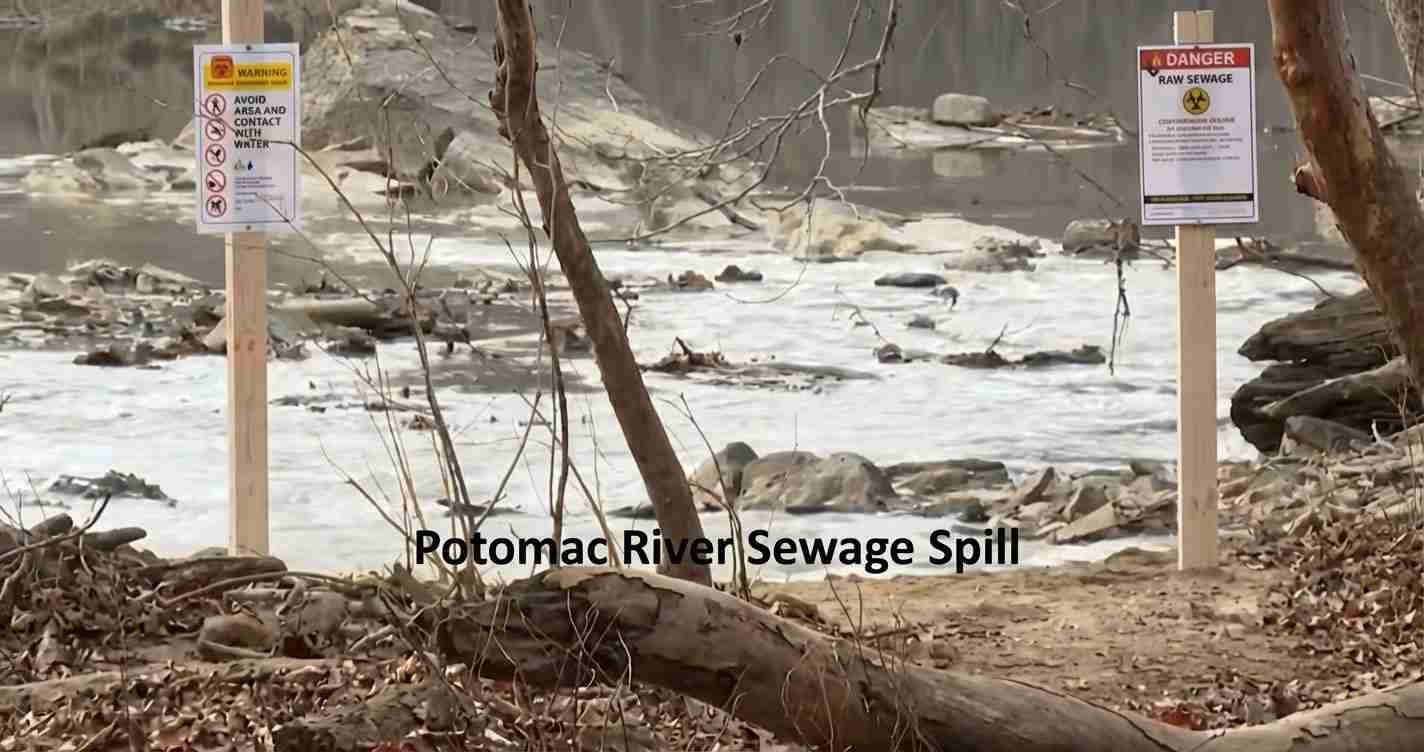
Emergency repairs finished in mid-March restored full flow after the Potomac Interceptor collapsed Jan. 19, 2026, spilling roughly 240–300 million gallons of sewage into the Potomac River and prompting tri-state E. coli advisories and extensive cleanup.
- Massive spill: roughly 240–243 million gallons (some estimates to 300 million) of untreated sewage entered the Potomac River.
- Repairs complete: crews used a temporary bypass through the drained C&O Canal and replaced the damaged pipe section; full flow restored by mid‑March.
- Public health: tri‑state E. coli warnings discouraged swimming, boating, fishing and shellfish harvesting while monitoring continues.
- Costs & oversight: emergency work cost millions; long‑term replacement projected in the hundreds of millions with ongoing jurisdictional questions.
What happened and how crews fixed it
On Jan. 19, contractors and utility crews discovered a breach in the Potomac Interceptor — a large sewer pipeline built around 1962 that typically carries about 60 million gallons per day toward the Blue Plains Treatment Plant in Washington, D.C. The failure occurred beneath parkland along the Clara Barton Parkway inside the Chesapeake & Ohio Canal National Historical Park, allowing raw sewage to flow into the Potomac until crews installed an emergency bypass on Jan. 24. (KMPH; Wikipedia.)
The emergency bypass routed flow through about 2,700 feet of the C&O Canal. Crews used heavy pumps and a temporary steel bulkhead to drain sections of the canal and access the damaged interceptor. Teams worked around the clock from Jan. 19 through mid‑March to stabilize the site, stop further overflows and restore full conveyance through the repaired section. Officials reported no overflows into the river for more than two weeks before the mid‑March announcement. (KMPH; KOMO News.)
“The bypass and pipe replacement allowed us to restore safe conveyance while site restoration in the canal continues,” officials said as crews drained parts of the C&O Canal to perform the work. (KOMO News.)
Environmental and public health concerns
The spill created a downstream public‑health hazard: state and local health departments recorded spikes in Potomac River E. coli and issued advisories across Maryland, the District and parts of Virginia. Authorities warned against recreational contact, fishing for food, and shellfish harvesting in affected stretches. Monitoring of water and sediments is ongoing. (KMPH; Wikipedia.)
Drinking-water intakes upstream such as Great Falls in Virginia and certain Montgomery County intakes were reportedly not affected; one downstream intake was shut off before the collapse. Local officials continue sampling to confirm downstream recovery. (KMPH.)
Political fallout and federal role
The collapse triggered a jurisdictional clash over responsibility. D.C. Mayor Muriel Bowser declared a public emergency, waived procurement rules to accelerate repairs and requested federal assistance. President Donald Trump approved a federal disaster declaration in late February, enabling FEMA support and involvement from the EPA and U.S. Army Corps of Engineers. The president publicly criticized local officials and warned of summer event impacts. (KMPH; Wikipedia.)
Maryland Gov. Wes Moore countered that the failed section sits on federal land and is operated by DC Water, an independent utility, not the state. Maryland described its role as a neighbor providing monitoring and support. The dispute highlights complexity when aging infrastructure crosses federal, state and local jurisdictions. (WSWS; Wikipedia.)
Costs, cleanup and long-term fixes
Officials estimate emergency measures cost millions: short‑term emergency work roughly $10–20 million and cleanup $5–10 million. Long‑term replacement and upgrades of the Potomac Interceptor are projected in the high hundreds of millions — preliminary estimates of about $600–625 million — with years of planning and construction ahead. (WSWS; Wikipedia; KOMO News.)
Legal claims and community response
A recreational boater, Nicholas Lailas, filed suit seeking compensation for property and recreational losses tied to the spill. Community groups such as the Potomac Riverkeeper Network criticized cleanup plans as inadequate. Residents attending DC Water public meetings raised concerns about transparency and delayed notification; critics noted DC Water’s first public meeting occurred about five weeks after the spill. (KMPH.)
What oversight questions remain?
Investigators and federal agencies are reviewing why the decades‑old interceptor failed, whether inspection and maintenance were adequate, and whether the patch and bypass are sufficient until a full rebuild is funded and completed. The incident raises broader questions about how utilities manage critical infrastructure that traverses multiple jurisdictions and who ultimately pays when failures occur on federal land. (KMPH.)
Implications for Redding, California
- Water safety and recreation: The Potomac E. coli spike is a reminder to local managers in Redding to maintain testing and advisories for the Sacramento River and local waterways so tourism and outdoor recreation remain safe.
- Fiscal responsibility and utilities: Aging pipes and deferred maintenance can lead to sudden, costly emergencies; Redding and Shasta County should review inspection schedules and reserve funding for preventive work.
- Federal, state and local roles: The Montgomery County dispute shows how jurisdictional ambiguity can delay response; Redding stakeholders should clarify responsibilities where local, state and federal lands intersect.
- Public health monitoring and communication: Fast, clear messaging and tested alert systems are critical when E. coli or other contaminants rise; local agencies should rehearse public notices and thresholds.
- Legal and economic exposure: Post‑spill lawsuits highlight liability risks; Redding‑area businesses and governments should assess insurance, reserves and legal exposure related to water quality incidents.