
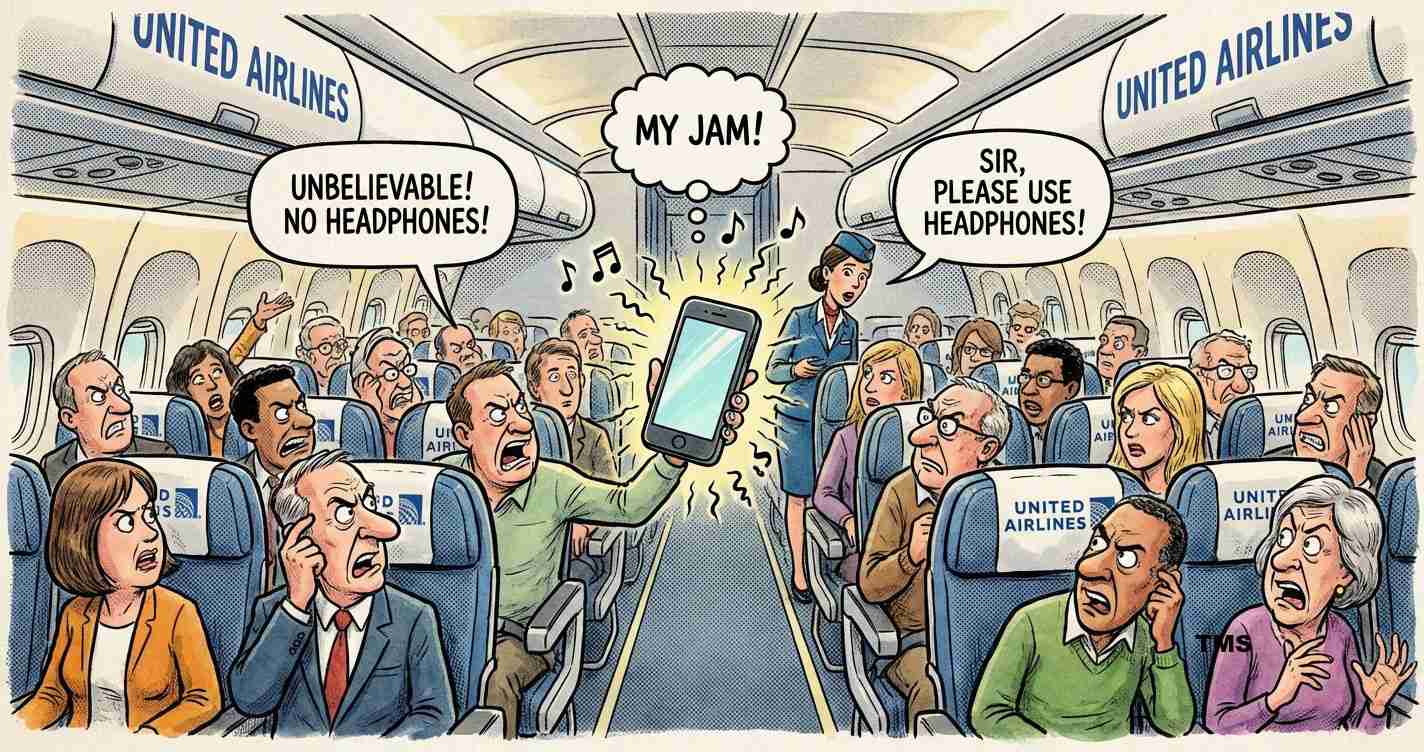
United Airlines codifies headphone rule — blast a video without them and you could be denied boarding
United Airlines updated its Contract of Carriage to require passengers to wear headphones for any audio or video on personal devices during flights, effective Feb. 27, 2026; failure to comply may result in denied boarding or permanent bans.
Key takeaways
- United added headphone language to Rule 21 of its Contract of Carriage as of Feb. 27, 2026, making refusal to wear headphones grounds for refusal of transport.
- Enforcement can be severe: passengers who refuse may be denied boarding, removed, or permanently banned; United may seek reimbursement for costs.
- United links timing to Starlink rollout and will offer free basic wired earbuds on request while supplies last.
- No other major U.S. carrier has yet made headphone use a contractual requirement; other airlines frame it as a courtesy.
What changed in the Contract of Carriage
Rule 21 — United’s Refusal of Transport provision — now explicitly lists headphone use as a condition of carriage. That means failing to follow a crew member’s request to wear headphones can be treated the same as ignoring crew instructions or causing a disturbance.
United spokespeople say the change gives crews clearer legal authority to enforce cabin expectations and is intended to protect the comfort and safety of passengers and crew. See reporting from FOX13 Seattle and CBS News.
Why United says it acted now
United cites expanded in-flight streaming after adding Starlink satellite Wi‑Fi as a driver for the change — increased device use means more risk of disruptive audio. The airline frames the update as a proactive step to reduce conflicts and distractions that can affect safety and schedules. Source: FOX13 Seattle.
How enforcement could work in practice
Under the revised Contract of Carriage, gate and cabin crews have discretion to refuse transport for passengers who do not comply. Typical steps could include:
- Crew asks the passenger to put on headphones.
- If the passenger refuses, United could deny boarding or remove the passenger from the aircraft.
- The airline could place the passenger on a no‑fly list for United and seek reimbursement for costs related to enforcement.
Practical questions remain about how often crews will invoke the rule and who makes the judgment call; the change effectively turns a long-standing etiquette norm into a contractual requirement. Reporting: FOX13 Seattle, CBS News.
How other carriers handle headphone use
So far, no other major U.S. carrier has embedded a headphone mandate in its legal carriage terms. Airlines such as Delta continue to present headphone use as a courtesy rather than a contractual duty. Travel experts say United’s move is a first among big U.S. carriers and may draw attention from rivals and regulators. Source: CBS News.
What passengers should know
Bring your own headphones. United will provide basic wired earbuds on request while supplies last, but relying on that may be risky on full flights.
- The rule covers both audio and video played from personal devices; speakerphone calls or videos played aloud could be treated the same as music without headphones (CBS News).
- If you believe enforcement was unfair, document the interaction and file a complaint with United; travelers can also seek clarification at the gate before boarding.
- Legal challenges are possible, but Contract of Carriage language generally favors airlines unless regulators intervene.
Voices on both sides
Reactions are mixed. Some passengers applauded an on‑board announcement that scolded speaker‑mode videos — a moment captured on video when a pilot quipped,
“Nobody wants to hear your video. Use your AirPods, use your headphones.”
— which drew applause from fellow customers (video).
Travel expert Scott Keyes called the rule a “graceful way to handle” the small minority who play audio on speakers, while etiquette experts note the policy elevates courtesy into a formal condition of carriage (CBS News, FOX13 Seattle).
Implications for Redding, California
Economic impact
Redding’s regional airport depends on reliable, pleasant service. A quieter cabin could make United flights more appealing to business travelers and tourists, modestly benefiting local commerce. Conversely, heightened enforcement that leads to disputes or delays could harm schedules regional businesses rely on.
Political consequences
For conservative readers in Redding, the rule frames themes of individual responsibility and the rights of private companies to set service conditions. United’s right to manage cabins aligns with views favoring limited government interference; however, perceived heavy‑handed enforcement could become a local political issue.
Social effects and cultural relevance
Redding residents who value courtesy may welcome the change, while those resistant to mandates could view it as overreach. Quieter flights can improve rest and productivity for travelers heading to Northern California’s outdoor and tourism economies.
Practical applications for Redding travelers
- Always carry earbuds or headphones when flying United; consider a dedicated travel kit.
- Brief children about the rule to avoid gate conflicts.
- If you believe enforcement was unfair, document the interaction, file a complaint with United, and notify local representatives if patterns emerge.
Sources and further reading
Reporting and documentation referenced in this article include: FOX13 Seattle; CBS News; and an onboard announcement video.
Bottom line: United’s new in‑flight headphone policy marks a clear contractual shift — pack your headphones to avoid a dispute that could cost you your trip.



