
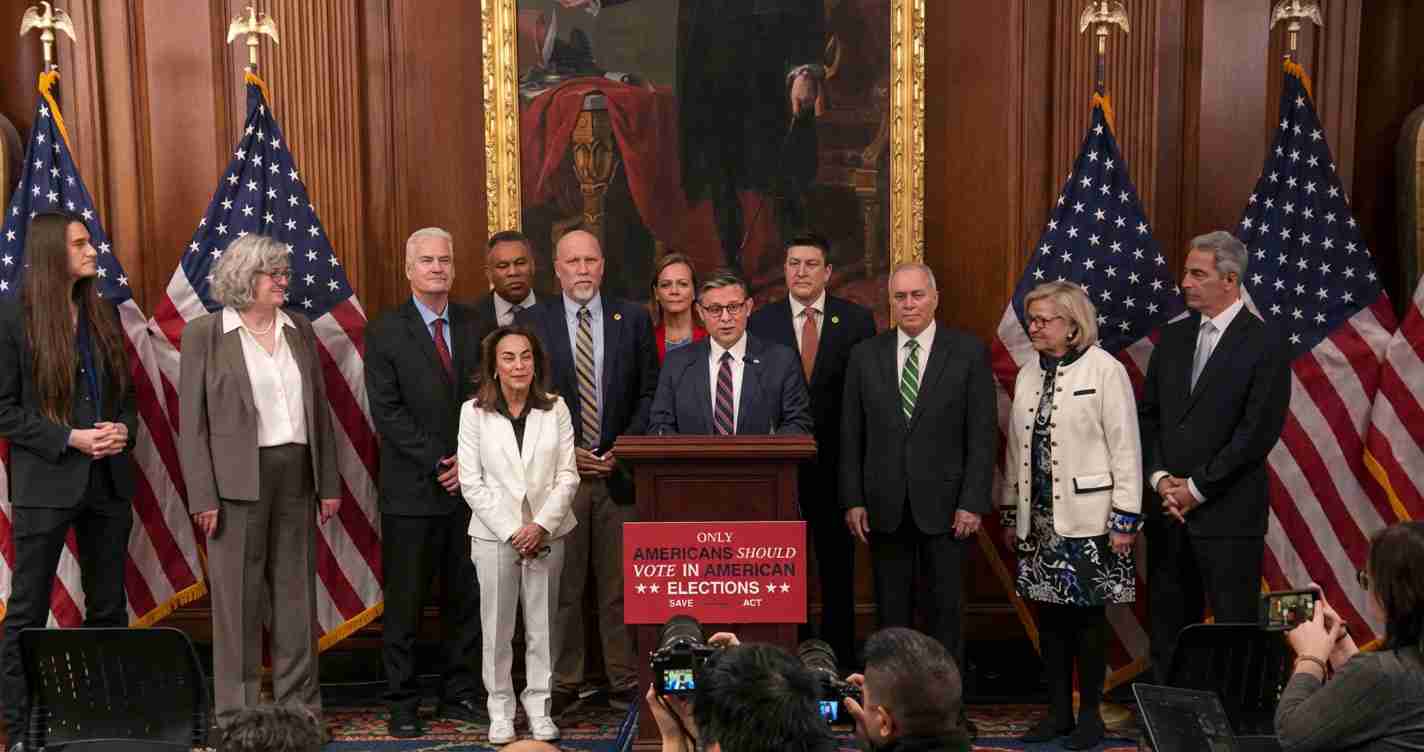
House passes SAVE America Act to tighten voter rules, setting up high-stakes Senate fight over proof of citizenship and federal voter ID rules
The U.S. House passed the SAVE America Act (S. 1383) on Feb. 11, 2026, by a 218–213 vote, mandating proof of citizenship and federal photo ID for voter registration and federal elections; the bill now moves to the Senate.
- House vote: Passed 218–213, with only Rep. Henry Cuellar (D‑Texas) crossing party lines; Politico live updates and Fox News coverage.
- Main provisions: Requires documentary proof of citizenship to register, federal photo ID to vote in federal contests, increased state–federal data sharing, roll removals, and new private-rights litigation; bill text at Congress.gov.
- Senate hurdle: Passage faces a likely filibuster — Republicans lack 60 votes — making Senate prospects uncertain; coverage at Politico.
- Local impact: Counties like Shasta (Redding) could face added costs, administrative burdens, and legal conflicts with California; see analysis and press materials from Rep. Chip Roy.
Main story
WASHINGTON (Times Media Service) — On Feb. 11, 2026, the U.S. House of Representatives passed the SAVE America Act (S. 1383) by a 218–213 vote. Sponsored in the House by Rep. Chip Roy (R‑Texas) and carried in the Senate by Sen. Mike Lee (R‑Utah) in prior iterations, the measure aims to impose uniform federal standards requiring proof of citizenship to register and photo identification to vote in federal contests.
What the SAVE America Act would do
The updated bill is an expanded version of the earlier SAVE Act that cleared the House in April 2025 but stalled in the Senate. Key provisions include:
- Proof of citizenship for registration: States would be required to obtain in‑person documentary proof of citizenship — examples cited include REAL ID‑compliant documents showing citizenship — before accepting federal voter registration applications. See Rep. Roy press release and the earlier bill text on Congress.gov.
- Photo ID to vote in federal elections: A new federal photo‑ID mandate would require voters to present eligible photo identification at the polls for federal contests; reported by Politico.
- Voter‑roll maintenance and information sharing: States would be required to use federal data sources to identify non‑citizens on rolls, share information with federal authorities, and remove ineligible names; details at Congress.gov (updated bill).
- Enforcement and litigation: The bill creates private‑rights lawsuits against officials who register voters without proof of citizenship and empowers DHS to pursue immigration cases if non‑citizens are found on rolls, as reported by Politico.
How the bill reached the floor and the House vote
House leaders advanced the measure rapidly by using a Senate‑passed shell bill to expedite consideration. Republicans framed the vote as delivering on promises to secure elections and prevent non‑citizen voting, a message amplified by Speaker Mike Johnson and Majority Whip Tom Emmer (video remarks linked at House GOP video).
The final roll call was narrow: 218 yeas to 213 nays. All Republicans present voted for the bill; only one Democrat, Rep. Henry Cuellar (D‑Texas), voted in favor. See vote coverage at Politico and Fox News.
Partisan debate and public claims
Republicans argue the legislation is a necessary step for election integrity, citing what they call record illegal immigration and polling that they say shows broad support for voter ID. See Rep. Roy materials.
“More than 80% support for voter ID across parties and demographics,” Rep. Roy has cited in floor remarks and press materials.
Democrats and critics label the bill voter suppression, warning it creates hurdles for seniors, low‑income residents, and communities of color. Policy groups note documented incidents of non‑citizen voting are rare and suggest less burdensome alternatives; see the Bipartisan Policy Center briefing.
Supporters say uniform federal rules will restore confidence; opponents warn of administrative confusion, longer polling lines, and legal fights over federal reach into state election administration. Detailed bill text and analysis are available at Congress.gov.
Senate path uncertain
Passing the House was the easier leg; the Senate presents steeper hurdles. Republicans lack the 60 votes needed to overcome a filibuster, and Senate leaders have resisted major rule changes to force quick passage. Coverage and analysis at Politico.
Some GOP senators, including Sen. Lisa Murkowski (R‑Alaska), criticized the bill as federal overreach into state-run election systems. Senate Majority Leader John Thune has rejected proposals such as a talking filibuster to alter floor rules, leaving prospects dependent on persuading Democrats or reaching a bipartisan compromise.
What supporters and critics say about effects on elections
If enacted, the law could reshape registration and polling procedures before the November 2026 midterms by creating a national standard for proof of citizenship and requiring photo ID in federal contests. Proponents say this will prevent ineligible participation and boost confidence. Opponents counter it will suppress turnout among eligible citizens lacking documents, magnify access disparities, and prompt immediate court challenges over federal authority and chilling effects on participation; read analysis at the Bipartisan Policy Center.
Implications for Redding, California
Economic impact
- Local election costs: Shasta County and nearby jurisdictions would likely need new procedures to verify citizenship documentation, update registration systems, and train staff — potentially forcing budget reallocations or state assistance; see reporting at Politico.
- IT and privacy: If state offices must share data with federal agencies, counties may require new IT systems and legal reviews to handle privacy and compliance questions; bill text at Congress.gov.
Political consequences
- Redding’s conservative‑leaning voters may view passage as a win for election integrity, potentially energizing Republican turnout.
- California leaders or counties prioritizing states’ rights could resist federal mandates, mount legal challenges, or seek waivers — a dynamic noted in national coverage at Politico.
Social effects
- Some residents — particularly seniors, low‑income individuals, and younger voters — could face new barriers if they lack required documents, unless outreach and document assistance expand (BPC briefing).
- Conversely, community members concerned about election integrity may feel reassured by uniform federal rules.
Cultural relevance
Redding voters often emphasize rule‑of‑law and clear procedures; the bill’s focus on proof of citizenship and photo ID may resonate with those values. Tensions could rise, however, between officials committed to broad access and residents favoring tighter controls — a split that mirrors national debates.
Practical applications for daily life
- Check registration and ID: Voters should verify registration status and acceptable ID types with county election offices if the law is implemented. The bill text and guidance are available on Congress.gov.
- Plan ahead: Residents without current photo ID or birth certificates may need extra time to secure documents before the 2026 midterms; policy guidance at Bipartisan Policy Center.
Legal outlook
Legal experts predict immediate court challenges if the bill becomes law, particularly over federal imposition on state election administration and potential chilling effects on voter participation. Observers point to constitutional questions and a likely wave of litigation if enacted; see analysis at BPC and bill text on Congress.gov.
Sources and further reading
- Politico live updates on the House passage
- Rep. Chip Roy press release
- Fox News coverage of the vote
- Congress.gov — original SAVE Act (H.R. 22)
- Congress.gov — updated bill text and details
- Bipartisan Policy Center briefing on criticisms and alternatives
- Video of House Republican remarks and floor action
This report will be updated as the Senate takes up the bill and as California and local officials in Shasta County respond to potential federal changes.



