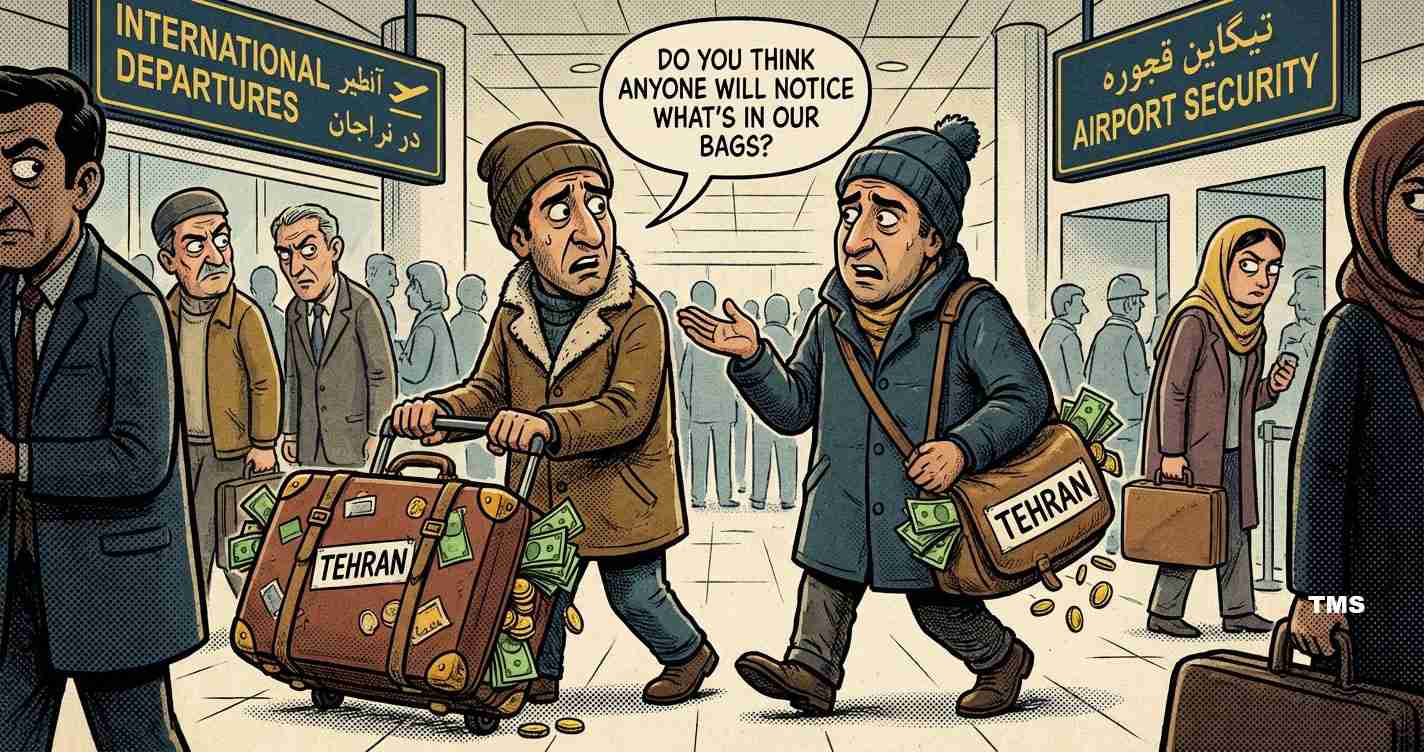
Iran’s Ruling Elite Move “Tens of Millions” Abroad as U.S. Tightens Sanctions; Treasury Calls It “Rats Fleeing the Ship”
After U.S. Treasury sanctions on Jan. 15, 2026, Iran’s ruling elite reportedly moved tens of millions abroad amid a violent protest crackdown — a capital flight Secretary Scott Bessent called “rats fleeing the ship,” signaling regime fragility.
Key takeaways
- OFAC sanctions targeted five Iranian officials and shadow banking networks tied to protest suppression and resource-revenue laundering; see the Treasury press release.
- Officials wired “tens of millions” out of Iran, using banks, crypto and informal networks — a trend Treasury officials say they are tracking (analysis).
- Most funds are reported headed to Dubai, with some unverified claims tying transfers to close regime relatives under investigation (coverage).
Main content
Sanctions action and what was targeted
On Jan. 15, the U.S. Treasury announced a coordinated action naming five Iranian officials accused of leading violent crackdowns on protesters. The Office of Foreign Assets Control (OFAC) also named shadow banking networks alleged to facilitate theft and laundering of revenue from Iran’s natural resources.
The department framed these measures as part of a broader enforcement effort tied to President Trump’s National Security Presidential Memorandum 2 (NSPM-2), aimed at restricting Iran’s petroleum sales and access to international finance (coverage and analysis).
Treasury warnings and the capital outflows
Treasury officials, including Secretary Scott Bessent, warned the sanctions disruption prompted a surge in capital flight.
“Millions, tens of millions of dollars are being wired out of the country,”
language later summarized by reporters as “rats fleeing the ship.”
The Treasury says it will track, freeze and prevent sanctioned officials from safeguarding stolen assets abroad and pursue enablers through naming and sanctioning networks.
Scale, destinations and methods
Multiple outlets report Dubai as the primary destination for outbound funds, a long-standing regional hub for discreet transactions (analysis).
Transfers reportedly used a mix of conventional bank wires, hawala-style informal networks and cryptocurrencies to evade standard anti-money-laundering checks, complicating U.S. and allied efforts to trace flows (reporting on channels).
Some media accounts allege very large transfers by close relatives of top regime figures. One unverified claim alleges Mojtaba Khamenei moved roughly $328 million, though that figure remains under investigation and lacks independent official confirmation.
Economic context driving the exodus
Iran’s economy is under severe strain: the rial has reportedly fallen to roughly 1.1 million per U.S. dollar amid hyperinflation and shortages that have battered living standards and fueled strikes and mass protests that began in late December 2025 (currency and inflation reporting).
A late-2025 drop in oil output widened Tehran’s budget gap while sanctions on petroleum sales and restrictions on access to international banking have drained foreign-exchange reserves, leaving growth for 2026 near zero and creating motive and opportunity for elites to move capital abroad (analysis).
Security, repression and the human toll
The capital flight is unfolding amid a harsh crackdown. Authorities have labeled protesters mohareb — “enemies of God” — a charge that can carry the death penalty, and courts are reportedly preparing expedited trials. Independent tallies cited in coverage suggest thousands were killed in a short period; some reports place the toll at 3,428 within eighteen days, a figure that underscores the scale of violence though independent verification inside Iran remains difficult (coverage).
Analysts warn that violent repression combined with elite capital flight signals panic and potential loss of cohesion at the top of the regime — a dynamic that could further degrade governance if leaders prioritize asset protection over public stability.
Expert views and enforcement priorities
Behnam Ben Taleblu, a senior fellow at the Foundation for Defense of Democracies, told reporters that confirmed exodus of funds would emphasize the need for U.S. authorities to “track, freeze and seize” assets tied to sanctioned figures (interview and analysis).
Treasury officials signaled a long-term enforcement stance: pursue networks, name financial enablers, and apply secondary sanctions to banks or entities that facilitate illegal transfers. Financial institutions aiding sanctioned flows face exposure to secondary sanctions and restricted access to U.S. markets (Treasury guidance).
Implications for Redding, California
Economic impact
- Energy and fuel prices: Continued disruptions to Iran’s oil exports and wider geopolitical instability could keep crude prices elevated, potentially raising fuel and logistics costs for businesses in Redding (analysis).
- Local economies: Small manufacturers and transport-dependent firms in Shasta County should monitor input and shipping costs and consider contingency planning for price spikes.
Political consequences
- National security and law-and-order: Conservative constituents may press for vigorous sanctions enforcement and asset seizure to deny the Iranian regime safe havens (Treasury actions).
- Immigration and refugee issues: Regional instability can shape national debates on border security and asylum, with indirect effects on local politics in Redding.
Social effects
- Community response: Redding’s Iranian and Middle Eastern diaspora communities may experience heightened concern; civic and faith-based groups might mobilize to support families with ties to Iran.
- Charitable giving and humanitarian relief: Local donors and charities must vet partners to ensure aid reaches civilians and complies with sanctions (Treasury guidance).
Cultural relevance
Reports of elites moving wealth abroad while ordinary Iranians suffer may sharpen local interest in policies that hold kleptocrats accountable through asset freezes and legal measures (analysis).
Practical applications for local leaders and residents
- Monitor energy budgets: City and county officials should review fuel and utility budgets and consider short-term hedging or contingency plans.
- Support robust oversight: Civic leaders can urge federal representatives to fund Treasury enforcement and demand transparency on sanctions enforcement (Treasury press release).
- Aid channels: Charities and local relief groups must vet international partners carefully to ensure assistance reaches civilians and does not run afoul of sanctions; public guidance can help (reporting on channels).
Reporting and verification
Many of the largest transfer claims remain under verification. U.S. officials say they are tracking flows and plan to pursue enforcement against enablers. Journalists and investigators face limits verifying totals inside Iran, where information flow is tightly controlled and internet access has been restricted during the crackdown (analysis; context).
Sources and further reading
- U.S. Department of the Treasury press release on Jan. 15, 2026 sanctions
- Analysis and reporting on capital flight and regime fragility
- Coverage of alleged transfers and political context
- Economic and protest background reporting
- Reporting on cryptocurrency and alternative channels used for transfers
Reporting from Tehran; additional analysis by Times Media Service.