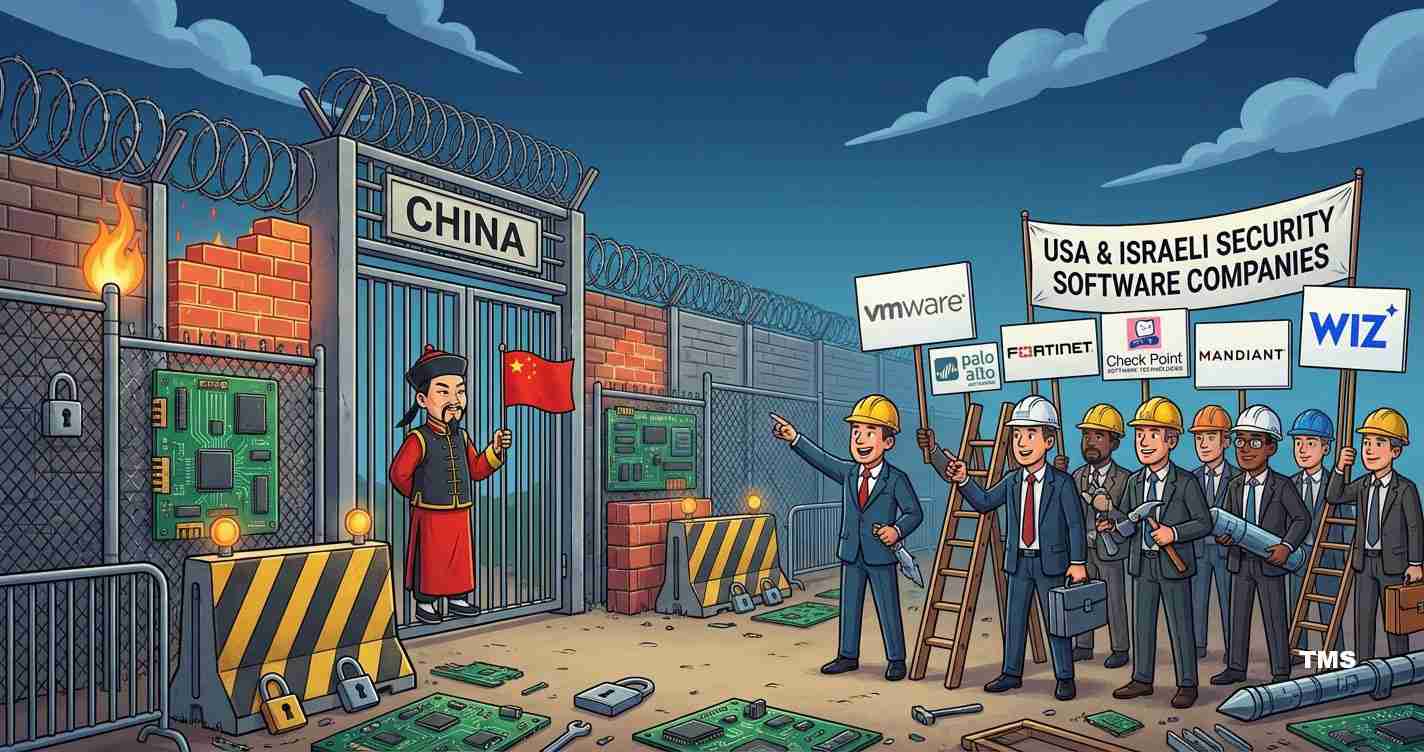
China orders domestic firms to stop using software from a dozen U.S. and Israeli cybersecurity firms amid national security concerns
Beijing has reportedly ordered some Chinese companies to remove cybersecurity products from more than a dozen U.S. and Israeli vendors, citing national security worries over potential data collection and overseas transmission amid a drive for technological self-reliance.
- Beijing reportedly told some firms to stop using foreign cybersecurity products, citing data and national security concerns.
- Companies named include major U.S. and Israeli vendors such as VMware, Palo Alto Networks, Fortinet and Check Point.
- Reporting is based on anonymous sources and lacked official confirmation from Chinese regulators or the affected companies as of Jan. 14, 2026.
- Possible ripple effects span lost contracts, supply‑chain scrutiny, and increased demand for domestic alternatives — with local implications for places like Redding, California.
What was reported
Chinese regulators have reportedly circulated a directive instructing some domestic companies to remove or cease installing cybersecurity software from a list of foreign vendors. Reporting says the order was driven by concerns that foreign-made security tools could collect sensitive data and transmit it overseas, representing a national security risk. The coverage of this development is based on briefings from two to three anonymous sources, as reported by Fox Business, The Jerusalem Post and The Japan Times.
Who is on the list
Multiple outlets named the same cluster of companies. Reports identified the following vendors:
- U.S. companies: VMware (owned by Broadcom), Palo Alto Networks, Fortinet, Mandiant and Wiz (both owned by Alphabet), CrowdStrike, SentinelOne, Recorded Future, McAfee, Claroty, and Rapid7.
- Israeli companies: Check Point Software Technologies, CyberArk, Orca Security, and Cato Networks.
- Other: Imperva, noted as owned by French defense company Thales, was also reported on the list.
Sources naming these firms include Fox Business, The Jerusalem Post, and The Japan Times.
Officials, companies silent so far
Reports say China’s Cyberspace Administration and the Ministry of Industry and Information Technology did not respond to requests for comment. Several named companies had not issued public statements in the early coverage. The story relies on anonymous briefings and had not been officially confirmed by Beijing as of Jan. 14, 2026.
Why Beijing may be acting
Analysts tell reporters this move fits a broader Chinese strategy to reduce dependence on foreign technologies in critical areas — chips, AI and cybersecurity — and to build domestic alternatives. Beijing’s push for tech self-reliance and greater scrutiny of foreign suppliers for supply‑chain and data risks help explain the directive’s rationale.
Coverage and analysis appear in Fox Business, The Jerusalem Post, and The Japan Times.
Timing and broader context
Observers note the reports come amid escalating geopolitical and commercial technology tensions between Beijing and Washington. The development follows diplomatic engagements — including a Chinese envoy’s visit to Israel — and recent U.S. export policy changes that eased some restrictions on advanced chips. Experts say Beijing may be signaling both concern over perceived vulnerabilities and intent to accelerate domestic cybersecurity development.
Possible implications for U.S. and Israeli firms
If the directive is implemented broadly, vendors could face:
- Constricted revenues from Chinese customers and an accelerated shift toward local suppliers.
- Increased scrutiny of product architectures, telemetry, and data flows.
- Potential lost contracts, delayed deployments, and higher costs to redesign products or demonstrate non‑exfiltration of data.
Reporting and analysis referenced include Fox Business and The Jerusalem Post.
How experts describe the risk
“Security software often needs deep system access to function, which raises questions about where logs and telemetry are stored and who can access them.”
Technical realities — deep system access, logging, and telemetry — are central to the national security concerns cited. Globally, regulators are increasingly scrutinizing foreign-made security tools for these reasons.
Limits of the reporting
Important caveat: The stories are based on a small number of anonymous sources and lack independent confirmation from Chinese agencies or public statements from affected firms. Multiple outlets note the uncertainty; policies could change, be limited in scope, or be implemented unevenly across sectors.
Implications for Redding, California
Economic impact: Local businesses and service providers in Redding could feel ripple effects if broader U.S.‑China tech decoupling reduces sales or raises costs for American cybersecurity vendors. U.S. firms drawing meaningful revenue from global customers may slow investment or pass on costs.
Political consequences: For conservative readers and local leaders, the move underscores strategic competition with China and the need for secure domestic supply chains. It may reinforce calls for more domestic production of critical technologies.
Social effects: Redding hospitals, schools, utilities and small businesses using cloud services and third‑party security tools may audit software supply chains and telemetry practices. Even without evidence local systems use the named vendors, audits could strain local IT budgets and staff.
Cultural relevance: In a region valuing self‑reliance and local control, the China tech self‑reliance narrative may resonate with residents who favor strong national defense and secure infrastructure.
Practical applications for residents and officials
- Local governments and institutions should inventory cybersecurity products and ask vendors about data storage, telemetry and access controls.
- School districts and healthcare providers should verify crisis plans, ensure backups and local controls are in place.
- Small businesses may consult IT providers about potential changes in support or pricing from major vendors.
- Civic leaders can advocate for federal or state grants to bolster local cybersecurity capacity and workforce training.
Further context and guidance appear in reporting from Fox Business and The Japan Times.
Source list for reporting
- Fox Business: China bans dozen US, Israeli cybersecurity firms over national security concerns, report
- The Jerusalem Post: Reports on Chinese directive targeting U.S. and Israeli cybersecurity tools
- The Japan Times: Coverage of China’s reported action and context of tech rivalry
- Table.media: Additional reporting summary
Reporting note: This article preserves all original facts and source URLs as reported by the outlets above; where statements are attributed to anonymous sources, that attribution is retained.