Iran’s Internet “Kill Switch” Used to Mask Crackdown, Rights Groups Say
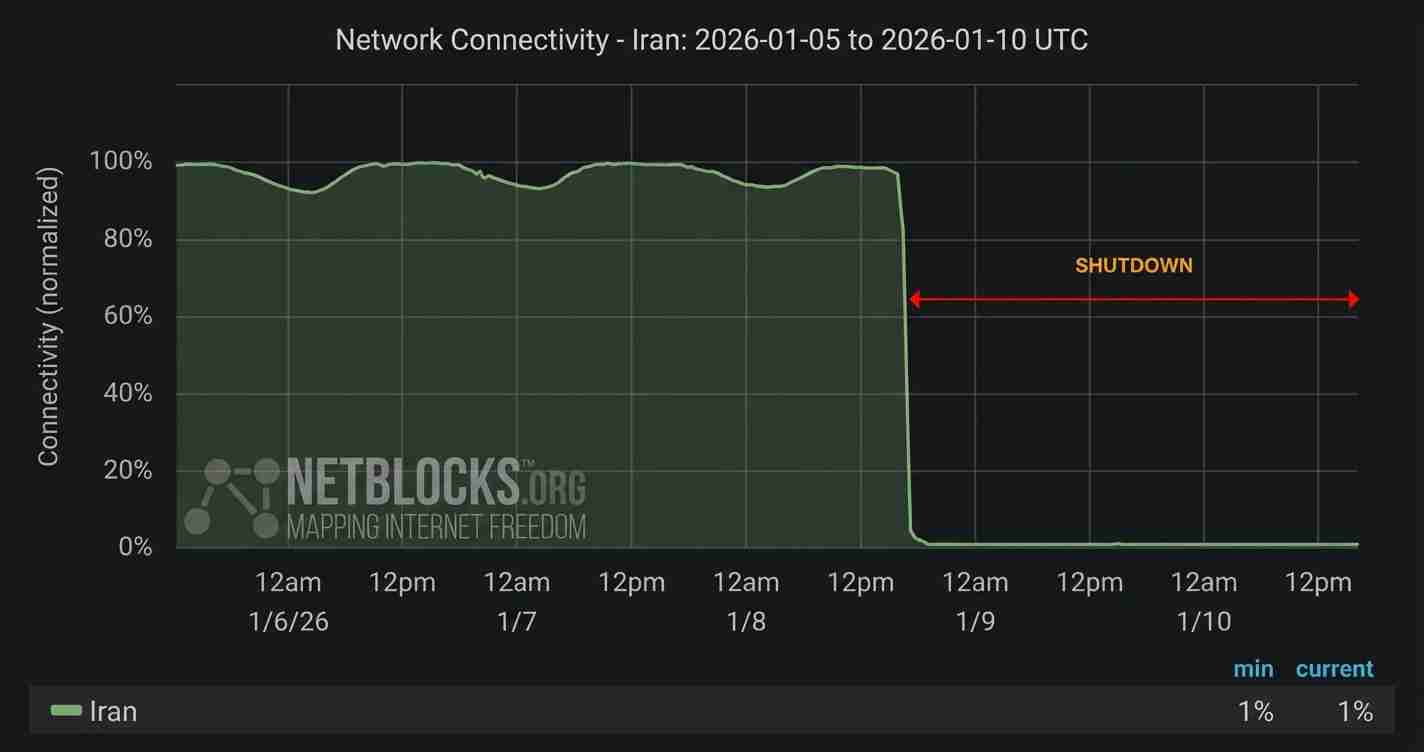
Iran imposed a near-total nationwide internet and telecom blackout on January 8, 2026, amid escalating anti-government protests — a shutdown rights groups say was used to hide serious human rights abuses and hinder independent reporting and evidence.
Key takeaways
- Near-total blackout: A nationwide internet and telecom shutdown began on January 8, 2026, during protests that began December 28, 2025, and continued into a second week — according to Amnesty International.
- Purpose alleged: Rights groups say the shutdown appears designed to conceal violent abuses by security forces, making independent documentation and reporting difficult (Amnesty International).
- Verified deaths and arrests: Amnesty has verified dozens of killings across multiple cities; some activist networks report higher figures, and the Institute for the Study of War (ISW) documents continued protests despite repression.
- Obscured verification: The blackout restricts user-generated evidence, complicating international monitoring, legal documentation, and humanitarian response (Amnesty International; ISW).
What happened: the blackout and the protests
Protests began in Tehran on December 28, 2025, initially driven by a sharp currency collapse and runaway inflation that pushed up prices for food and fuel. Demonstrations spread rapidly to cities nationwide, with crowds calling for economic relief and broader political change, including demands to end the Islamic Republic’s rule. Amnesty International documented the unrest and its causes.
On January 8, 2026 — the 13th day of unrest — Iran’s internet traffic fell to a fraction of normal levels as authorities imposed a near-total nationwide shutdown of internet and telecom services. Rights groups describe the move as a blanket blackout intended to cut off outside reporting and to prevent protesters from organizing or sharing evidence of violence (Amnesty International; ISW).
Why rights groups call it a “kill switch”
Amnesty’s Security Lab and analysts characterize the shutdown as a de facto “kill switch” — a state-controlled measure that severs access to digital communications and social media at national scale. Amnesty notes this tactic has precedent in Iran: similar near-total internet cuts occurred during the 2019 protests and the 2022 “Woman, Life, Freedom” uprising, both followed by heavy crackdowns and many deaths (Amnesty International).
“Blanket internet cuts are inherently disproportionate under international human rights law and both violate rights and enable further violations by reducing transparency,” Amnesty says.
Scale and limits on verification
Because the blackout prevents independent reporting and blocks most user-generated content, Amnesty investigators stress that confirmed figures are likely undercounts. The group has independently verified the killings of dozens of protesters and bystanders across at least 13 cities and eight provinces in the days before and after the shutdown, and it warns the true toll may be far higher (Amnesty International).
ISW reports continued nationwide protest activity despite the shutdown and rising repression, underlining the geographic spread and persistence of unrest.
Allegations of unlawful force and mass arrests
Amnesty documents a violent nationwide crackdown involving unlawful use of force, firearms, and mass arbitrary arrests. The group reports that security forces killed protesters and bystanders, including children, in multiple cities between December 31, 2025, and January 3, 2026. Amnesty further alleges that the intensity of unlawful lethal force increased after the internet shutdown, hampering efforts to document and respond to abuses (Amnesty International).
International reaction and diplomatic pressure
Amnesty has called for urgent global diplomatic action in response to the rising death toll and the blackout. Some governments have condemned the killings and warned citizens against travel to Iran. Canada publicly urged an immediate end to violence and warned Canadians to avoid travel to Iran; those comments were discussed in a CTV News segment outlining concerns that Tehran could respond to external pressure by lashing out.
Western capitals and rights groups have signaled they will watch for evidence of crimes under international law and push for accountability.
How the blackout helps obscure abuses
Investigators point to two main effects of the shutdown: it limits the flow of images, video and eyewitness accounts that expose violence, and it complicates international monitoring, legal documentation and humanitarian response. Amnesty contends blanket internet cuts are both rights violations and enablers of further violations by reducing transparency (Amnesty International).
Past patterns, present danger
Amnesty’s timeline places the current shutdown in a pattern of repeated internet outages by Iranian authorities. Similar blackouts in 2019 and 2022 coincided with major crackdowns; rights groups warn history may be repeating itself amid renewed economic collapse and nationwide anger (Amnesty International).
Implications for Redding, California
Economic impact
- Energy and fuel prices: Instability in Iran can ripple through global oil markets. Short disruptions or fears of regional turmoil often lift crude prices, which can raise gasoline and heating costs in Redding and Shasta County — affecting residents and farm operations.
- Remittances and small-business ties: Disruptions to communications and banking in Iran can complicate remittances and financial support. Residents with family in Iran may face delays and stress while the blackout continues.
Political consequences
Reports that Iran used an internet blackout to hinder documentation of mass arrests and killings may resonate with local voters and leaders in Redding who prioritize civil liberties and opposition to state suppression. Local officials may press California’s congressional delegation for accountability measures and humanitarian channels.
Social effects
Although Redding has a smaller Iranian-American community than larger California cities, families and friends are affected. Churches, civic groups and immigrant services may see more requests for help and information, and local conversations may focus on censorship, government power, and protecting civil liberties.
Cultural relevance
Religious freedom and family ties are central to many in Redding; reports of state violence against protesters and civilians may prompt prayer vigils, letter-writing campaigns, or forums to support affected families.
Practical applications for Redding residents
- Travel and safety: Residents planning travel to Iran should heed travel warnings; governments have advised against travel and cautioned that leaving the country could be difficult as air service and consular help are strained (CTV News segment).
- How to help: Concerned residents can donate to reputable relief and human rights organizations, contact elected officials, or support local interfaith groups aiding affected families.
- Information verification: Because the blackout complicates verification, rely on established rights groups and vetted outlets for updates and be cautious about unverified social media reports (Amnesty International; ISW).
Reporting notes and sources
This article relies on reporting and analysis by Amnesty International and the Institute for the Study of War, which documented a deliberate nationwide internet and telecommunications shutdown beginning January 8, 2026, and verified dozens of deaths and mass arrests tied to the protests.
Coverage of diplomatic responses and travel advisories is reflected in reporting including a CTV News segment. Authorities in Iran have not publicly acknowledged the full scope of the shutdown or the casualty and arrest counts cited by some activist networks; both Amnesty and ISW caution that numbers are provisional and likely understate the true toll because the blackout blocks independent verification (Amnesty International; ISW).