
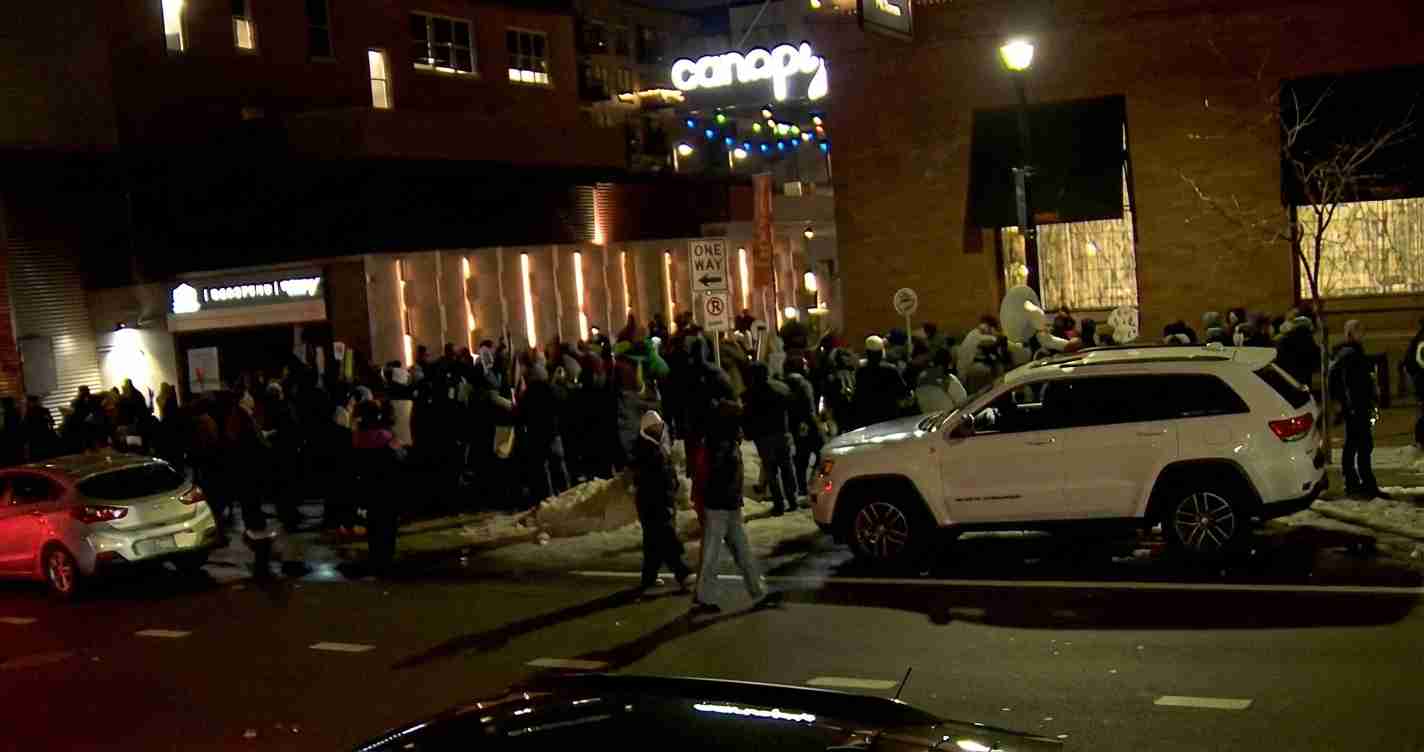
Headlined protests surround Minneapolis Canopy hotel after ICE shooting of Renee Good; uncertainty remains over agents’ presence
Hundreds of protesters surrounded the Canopy by Hilton in downtown Minneapolis after ICE agent Jonathan Ross fatally shot Renee Nicole Good during Operation Metro Surge, sparking demonstrations, hotel tensions and federal investigations amid unresolved questions about agents’ lodging.
Key takeaways
- Protests: Hundreds gathered outside the Canopy by Hilton believing federal agents were lodged there; that belief is reported but not independently confirmed.
- Investigation: The FBI is leading the criminal probe; the Minnesota BCA says it has been effectively sidelined from the usual joint review process.
- Logistics & hotels: At least one hotel canceled bookings for federal personnel during the surge, creating chaotic alternative housing arrangements.
- Legal questions: Civil claims against ICE or the federal government are being evaluated under the Federal Tort Claims Act and constitutional theories.
What happened in the shooting
Who died: Police and federal releases identify the woman who died as 37-year-old Renee Nicole Good, a U.S. citizen and mother of three who lived in south Minneapolis. Family members described her as caring and nonviolent.
The shooting occurred on Jan. 7, 2026, during a large ICE operation known as Operation Metro Surge, which brought additional out-of-state federal immigration agents to Minnesota. The agent involved is identified as Jonathan Ross.
DHS released cell-phone video recorded by Ross showing the confrontation from his perspective. The footage circulated publicly and shows Ross approaching the vehicle and then firing; some reports note roughly 40 seconds passed between his exit from the car and the shots fired.
Protests and the Canopy Hotel
Anger over Good’s death prompted large demonstrations across Minneapolis. Protesters demanded accountability, criticized ICE’s presence, and called for the agency to leave. At least one demonstration was declared an unlawful assembly as crowds swelled.
On the night after the shooting, hundreds of demonstrators converged on the Canopy by Hilton in downtown Minneapolis. Witnesses and local accounts describe people shouting at the hotel, while guests watched from inside. Protesters publicly believed federal immigration agents were lodging there, though mainstream reporting has not independently verified agent rosters for that property on that night.
“Protesters identified downtown hotels as likely housing for out-of-state federal teams attached to Operation Metro Surge and targeted those sites for demonstrations.”
Hotels, cancellations and alternative housing
Large federal deployments commonly require block bookings at chain hotels. Reporting shows at least one hotel canceled reservations for federal personnel amid public pushback, forcing DHS to secure alternate housing on short notice. The specifics of exactly which hotels and when remain unclear in local reporting.
These cancellations had practical effects: chaotic logistics for the deployment, safety concerns for targeted hotels, and frightened guests as crowds gathered outside. Hotel staff can face reputational and safety risks when properties are identified or suspected as housing federal agents.
Investigations and legal questions
The FBI has taken sole control of the criminal inquiry into the shooting, a move that drew criticism from Minnesota law enforcement officials who say the Minnesota Bureau of Criminal Apprehension (BCA) has been effectively excluded from the usual joint investigation process. That decision has raised transparency concerns among local leaders and the public seeking clear answers.
Legal advocates are evaluating whether Good’s family can bring civil claims against ICE or the federal government. Potential avenues include the Federal Tort Claims Act and constitutional claims alleging excessive force or unlawful seizure, though federal immunity doctrines can limit remedies.
What remains unclear
- Whether ICE or other federal immigration agents were actually lodged at the Canopy by Hilton on the night protesters gathered — local reporting documents the protesters’ belief and the demonstration itself, but lacks definitive confirmation from hotel management or federal lodging records.
- The exact hotels that canceled reservations tied to Operation Metro Surge and whether the specific “Hampton Inn by Hilton in Lakeview” referenced in some accounts is among them — major Minnesota outlets report at least one cancellation but do not name that property in the coverage reviewed.
Reliable verification will require direct confirmation from hotel statements, federal lodging records, or official DHS releases. Meanwhile, released agent video, family statements, ongoing demonstrations, and logistical chaos paint a picture of a community in distress.
Sources and reporting used in this article
- Star Tribune — reporting on the shooting and protests.
- Star Tribune — reporting on Operation Metro Surge and related coverage.
- MPR News — family statements and local reporting.
- DHS-released video 1 and DHS-released video 2 — agent-recorded footage cited in public reporting.
- Minnesota Department of Public Safety, BCA statement — statement on investigation participation.
- American Immigration Council analysis — legal options and analysis.
Implications for Redding, California
Economic & business impact: Local hotels and hospitality businesses should note that federal deployments can thrust lodging into the public spotlight. Cancellations, lost revenue and security costs can follow when properties are identified as housing federal agents.
Political consequences: The FBI’s sole control of the probe and the BCA’s sidelining may heighten calls for federal-state communication and accountability. Local leaders could face pressure to clarify protocols for out-of-area law enforcement lodging.
Social effects: Grief and anger can spill into public spaces; community leaders should prepare to support peaceful assembly while protecting public safety and property.
Practical applications
- Hotels: Review policies for large government bookings, communication plans, security assessments, and contingencies for protests and cancellations.
- City officials: Update coordination protocols with federal agencies to clarify lodging arrangements, public notice, and rapid de-escalation plans near private properties.
- Law enforcement: Prepare clear public communications about investigations and jurisdictional roles to reduce confusion and build community trust.
Conclusion
This developing story combines an urgent call for answers about the fatal ICE shooting of Renee Good with community unrest targeting downtown hotels thought to house federal agents. Authorities, hotel operators and community leaders will be watched closely as investigations proceed and lodging questions remain unresolved.


