
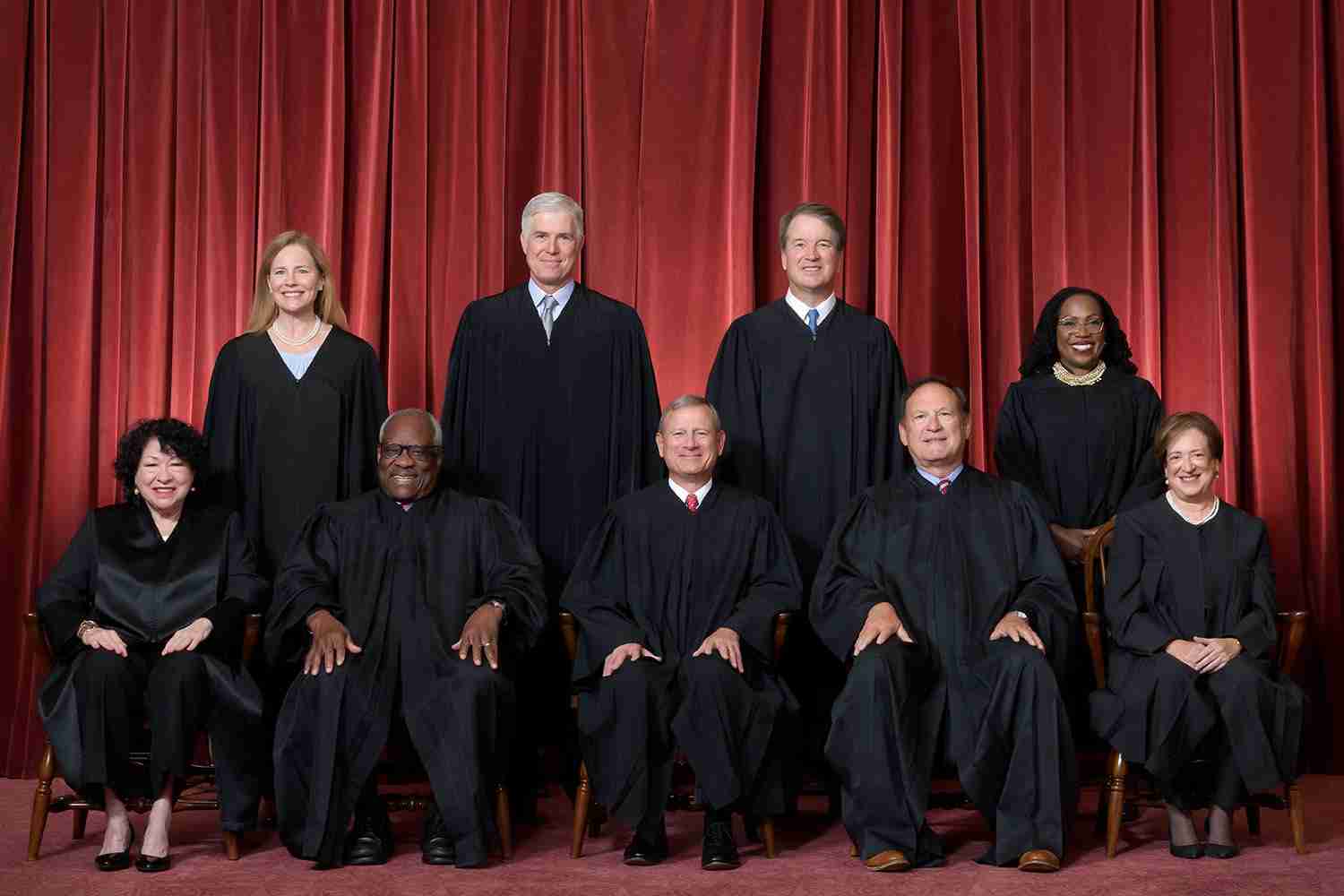
Supreme Court Blocks Trump Guard Deployment in Chicago in 6-3 Ruling — Limits on Federal Power Upheld in Trump v. Illinois
The U.S. Supreme Court on Dec. 23, 2025, denied an emergency request to federalize roughly 300 Illinois National Guard members and Texas troops for deployment to Chicago yesterday, leaving lower-court orders blocking the deployment intact.
- Emergency request denied: The Court refused to stay lower-court orders, preserving Judge April Perry’s restraining order and the Seventh Circuit’s decision.
- Legal limit on federalization: The majority said the government failed to identify authority to federalize Guard troops to “execute the laws,” calling such domestic military deployment exceptional (Supreme Court order).
- Dissents noted: Justices Samuel Alito, Clarence Thomas and Neil Gorsuch publicly dissented from the Court’s action (dissenting views).
- Deployment blocked: The order halts federalization of about 300 Illinois Guard members and additional Texas Guard troops sent to the Chicago area (The Texas Tribune reporting).
Main content
Background and timeline
On Oct. 4, 2025, President Trump invoked 10 U.S.C. §12406(3) to federalize roughly 300 Illinois National Guard members; the White House said the move aimed to protect federal personnel and property, especially Immigration and Customs Enforcement officers operating in and around Chicago. The next day, Oct. 5, additional Texas National Guard troops were federalized and deployed to the region (court order).
Litigation path: Illinois filed suit to block the federalization and deployment. After district and appellate rulings rejecting the government’s move, the administration sought emergency relief at the U.S. Supreme Court on Oct. 17; the Court did not act until issuing its Dec. 23 order in Trump v. Illinois (25A443).
Legal findings in the order
The Court’s brief order emphasized that using soldiers to “execute the laws” on U.S. soil is an extraordinary measure that requires clear statutory authority. The majority concluded the government did not point to a legal source that authorized federalizing state Guard troops for that purpose in Illinois, and therefore it left in place Judge Perry’s temporary restraining order and the Seventh Circuit’s refusal to grant a stay (text of the order).
Notably, three justices — Samuel Alito, Clarence Thomas and Neil Gorsuch — dissented from the Court’s refusal to permit the deployment; their separate views are recorded with the order (dissenting statements).
Reactions from state and civil liberties leaders
Illinois Gov. J.B. Pritzker hailed the ruling as a “big win” and decried what he described as an “abuse of power,” warning against a perilous expansion of executive authority into state and local domains (Governor Pritzker statement).
ACLU response: The American Civil Liberties Union of Illinois and the national ACLU praised the decision, calling the administration’s rationale “manufactured” and underscoring that federalizing state Guard forces requires a clear legal foundation (ACLU of Illinois press release; ACLU national statement).
Administration spokespeople defended the deployment as necessary to protect federal agents and property, particularly ICE officers, and argued the federal government must be empowered to act when federal personnel face threats in states that decline to provide support (reporting and context).
Investigative context: Why this matters
The ruling addresses fundamental questions about federal power, states’ rights and the National Guard’s role. The statute invoked — which permits a governor to “detail” Guard forces for federal duty in certain circumstances — became the focal point of whether federalizing troops to protect federal personnel constitutes “executing the laws” without clear authority (court opinion).
Critics viewed the deployment as part of a pattern to send federal forces into Democratic-led cities under the guise of protecting federal officers; supporters framed it as necessary where local officials decline cooperation. The Court’s requirement of clearer legal grounds will constrain similar future efforts and shift disputes into courts or Congress (Texas Tribune analysis).
Source documents and reporting
Primary court order — Trump v. Illinois (25A443) — Supreme Court order
Reporting and context — The Texas Tribune
ACLU of Illinois press release — ACLU of Illinois press release
ACLU national statement — ACLU national statement
Governor Pritzker statement — Governor Pritzker statement
Implications for Redding, California
Economic and public-safety impacts: The ruling reaffirms that governors control Guard deployments unless federal law clearly allows otherwise, which for Redding and Shasta County helps reduce the risk of sudden, politically driven federal control during local emergencies (court order).
Political consequences: Conservative voters in Redding may view the decision differently: some will welcome judicial limits on executive actions; others who prioritize robust federal action on immigration and law enforcement may see the ruling as a constraint. The outcome creates a test future administrations must meet to federalize troops (coverage).
Social and community effects: The dispute is now squarely legal, not merely political. Local officials in Shasta County and neighboring jurisdictions should clarify agreements with federal agencies and ensure procedures exist to protect federal personnel while preserving community oversight and civil liberties (ACLU response).
What local leaders can do now
County supervisors, city councils and public-safety leaders in Redding should consider the following practical steps:
- Confirm coordination protocols for state and federal law enforcement and federal personnel protection.
- Review Guard activation policies with the California governor’s office and the Adjutant General.
- Prepare clear public messaging that explains the distinct roles of local, state and federal forces.
- Monitor legal and legislative developments that may change the scope of authority for Guard federalization (reporting).
Ongoing questions
The Court’s emergency order does not resolve every legal question about when the federal government may use state Guard units to protect federal officers or property. Lawmakers, state attorneys general and future courts may further define or challenge the limits recognized in this order. For Redding residents and leaders, the ruling signals that federal attempts to federalize Guard troops for domestic law enforcement will face heightened legal scrutiny (court order).
“This ruling is a notable judicial check on emergency executive action,” a legal analyst said, underscoring the decision’s broader implications for federalism and civil liberties.



