
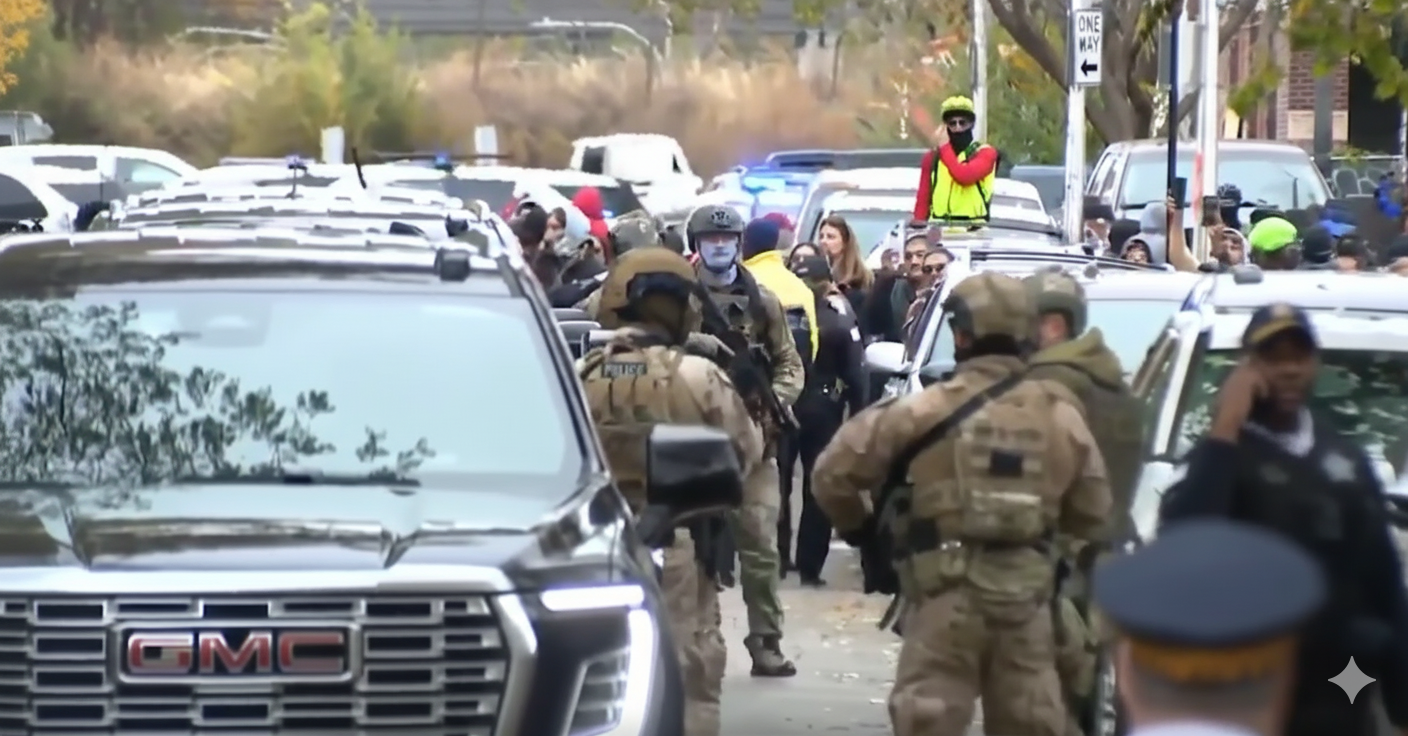
Gunman fires at Border Patrol agents in Little Village; manhunt under way as crowds pelt federal vehicles
A manhunt is underway in Chicago’s Little Village after an unidentified gunman fired at Border Patrol agents during an enforcement action near 26th Street and Kedzie Avenue; no agents were injured as crowds attacked federal vehicles.
- Location: Near 26th Street and Kedzie Avenue, Little Village, Chicago.
- Suspect: Unidentified male driving a black Jeep; at large — seen in video evidence referenced by authorities (DHS statement/video).
- Injuries: No federal agents were reported injured (see Chicago Police Department statement).
- Crowd actions & response: Paint can and bricks thrown at Border Patrol vehicles; chemical agents reportedly used to disperse the crowd (DHS statement/video; WTTW reporting).
Main story
Shooting and manhunt
Federal Border Patrol agents were conducting an immigration enforcement operation in Little Village when gunfire erupted near 26th Street and Kedzie Avenue. Witnesses and officials described the shooter as an unknown male who fired at agents from a black Jeep before fleeing the scene. The Department of Homeland Security characterized the situation as “dynamic” (DHS statement/video).
No federal agents were reported injured, the Chicago Police Department confirmed as officers were called to assist and to clear the immediate area. Authorities have not released identifying details or a motive; the manhunt for the vehicle and suspect is active (Chicago Police Department statement).
“The scene was described as dynamic as federal and local officers worked to secure the area and locate the suspect.” — DHS statement/video
Crowd clashes and crowd control
After the shooting, crowds gathered and confrontations intensified. DHS reported agitators targeted federal vehicles, throwing a paint can and bricks at Border Patrol trucks while agents attempted to secure equipment. Video released by federal sources shows chaotic scenes of people approaching and attacking vehicles (DHS statement/video).
Authorities deployed chemical agents to disperse the crowd; officials said no injuries were reported from those crowd-control measures (WTTW reporting). DHS characterized the confrontations as part of an escalating pattern that increases risks to officers during urban enforcement operations.
Federal response and the broader trend
DHS framed the incident as evidence of a growing and dangerous trend of assaults and obstruction against federal personnel during immigration enforcement. Agency officials told reporters they have observed an uptick in confrontations over the past two months and urged community leaders and members to refrain from violence and obstruction (DHS statement/video).
Local law enforcement role and coordination
Chicago Police Department units assisted federal agents, helped clear the area and joined the search for the black Jeep and its driver. Investigators are reviewing video footage, witness statements and DHS body-worn camera material where available. Authorities asked the public to report tips about the vehicle or individuals involved; at the time of reporting, no arrests had been announced (Chicago Police Department statement).
Questions, community reaction and safety concerns
Neighbors and community leaders in Little Village expressed alarm and demanded answers about the timing and manner of the enforcement action. Videos circulating online show tense confrontations and bystanders confronting agents. Officials face pressure to explain coordination between federal and local agencies and to reduce the risk of violent escalation in future operations.
Source material and reporting
This report draws on official statements and video released by DHS and local reporting by WTTW. Primary materials include the DHS video and WTTW coverage. Investigations are ongoing and facts may change as authorities gather more evidence.
Implications for Redding, California
Economic impact: High-profile violent incidents during federal enforcement can affect how operations are conducted nationwide and may shift budgets or require additional local support, with potential cost implications for cities like Redding.
Political consequences: The episode is likely to be referenced in debates over immigration policy and public safety. Local leaders in Redding may face pressure to clarify cooperation with federal agencies and to support measures that protect officers and public order.
Social and cultural effects: Clashes between community members and federal agents can deepen tensions and spur renewed discussion about balancing enforcement with community trust. In conservative-leaning communities, such incidents often amplify calls for robust law-enforcement support.
Practical applications for residents
Residents and officials in other cities should track coordination between federal and local agencies, update crowd-control and mutual-aid plans, and encourage peaceful, lawful responses to enforcement actions. Citizens who witness violent acts should report tips and avoid engaging in confrontations that could lead to injury or legal consequences.
Public safety reminders
Local police are expected to prioritize neighborhood security and coordinate with federal partners when necessary. Property owners and community leaders can help by promoting lawful responses and supporting outreach to reduce the risk of violent clashes.
Authorities continue to ask anyone with information about the shooter, the black Jeep seen fleeing Little Village, or individuals who attacked Border Patrol vehicles to contact the Chicago Police Department or DHS investigators. Video evidence and witness accounts remain central to the ongoing manhunt and investigation.



