
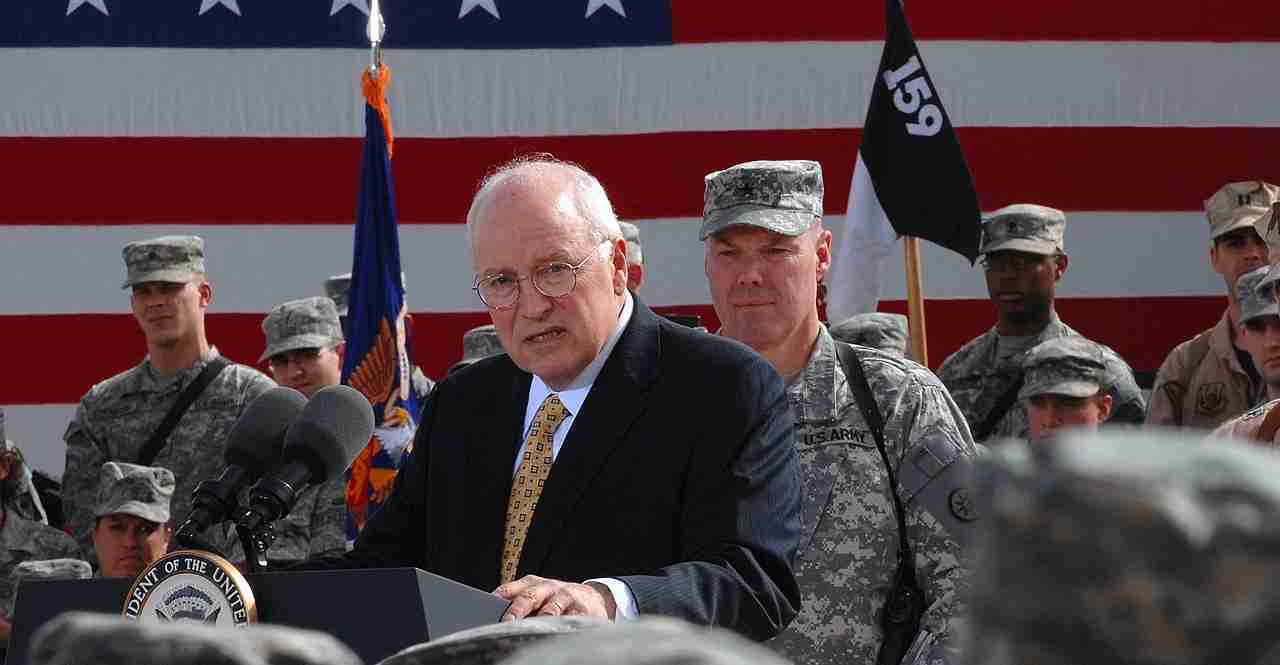
Dick Cheney Dies at 84: Former US Vice President Who Remade the Office and Shaped National Security
Dick Cheney, former U.S. vice president and a figure often described as the most powerful to hold the office, died on November 3, 2025, at 84, leaving a complex, polarizing legacy in national security, foreign policy and presidential authority.
- Transformed the vice presidency into a post of real policy influence and national-security authority.
- Central role in post-9/11 decisions, including the invasions of Afghanistan and Iraq.
- Controversial defender of expanded executive power, surveillance and secrecy.
- Enduring impact on GOP foreign-policy debates and public discussions about liberty and security.
Key information
- Name: Richard B. “Dick” Cheney
- Age at death: 84
- Cause: Complications of pneumonia and cardiac and vascular disease — AM800CKLW; WGBH
- Offices: White House chief of staff; U.S. Representative from Wyoming; Secretary of Defense; Vice President of the United States — WGBH; Wikipedia
- Noted for: Expanding vice presidential influence, shaping post-9/11 policy, advocating robust executive power — The Independent; WGBH
Rise to power
Cheney’s path to power was not straight. He left Yale without a degree and worked in Wyoming jobs before entering government. He rebuilt his career through work in the Nixon and Ford White Houses, eventually becoming White House chief of staff under Gerald Ford (WGBH).
Cheney won a House seat for Wyoming and served several terms, where he learned federal policy and budgets. President George H.W. Bush named him Secretary of Defense, and Cheney led the U.S. military effort during the Persian Gulf War — an early sign of his focus on strong defense and decisive action (AM800CKLW).
Cheney as Vice President (2001–2009)
When George W. Bush took office in 2001, Cheney became vice president and changed expectations for the role. Counselors, policymakers and historians say Cheney exercised unusual control over national security and foreign policy. After the September 11 attacks, he was central to the administration’s strategy, backing the invasions of Afghanistan and Iraq and pressing for aggressive measures to confront terrorism (Wikipedia; WGBH).
Those years solidified Cheney’s reputation: he did not simply advise but often made policy decisions, remaining a constant presence in meetings about war, intelligence and homeland security. Supporters argued his steady hand helped the country respond to a new threat; critics said his influence pushed the nation into costly, risky conflicts (The Independent).
Hallmarks of Cheney’s tenure
Iraq War
Cheney was a leading voice for the 2003 invasion of Iraq. He argued that removing Saddam Hussein was vital to U.S. security and regional stability. The decision remains widely debated — defenders point to the removal of a brutal regime; critics cite the long costs of occupation and regional instability (AM800CKLW; The Independent).
Policy and secrecy
Cheney preferred closed-door deliberation. Following 9/11, he often worked from secure, undisclosed locations and maintained tight control over classified information and operations. That secrecy drew concern from civil libertarians and some lawmakers, who argued it undercut transparency and checks on power (Wikipedia; The Independent).
Executive power
A central theme of Cheney’s career was restoring presidential authority. He pushed for broad interpretations of executive power, challenged post‑Vietnam and Watergate limits, and favored strong wartime authorities for the president. His views shaped debates over the War Powers Resolution, surveillance law and detainee policy (Wikipedia; WGBH).
Influence on the Bush administration
Cheney was consistently a key advisor to President Bush. Colleagues described him as the president’s most trusted voice on national security. His influence was partly practical — deep policy knowledge and experience — and partly political; he posed no electoral threat to the president, making him an outsized partner in decision-making (The Independent).
Personal life and health
Cheney lived with major health challenges for decades, including multiple heart attacks and significant cardiac surgeries. Those problems were well known, yet they did not greatly constrain his influence while in office. Family statements described him as a man of courage and service (The Independent; WGBH).
Controversies and criticism
Cheney’s career drew sharp criticism as well as support. Opponents faulted him for promoting the Iraq War, backing harsh interrogation policies, and expanding surveillance and executive authority. The 2006 hunting accident, when Cheney accidentally shot a fellow hunter, became a public embarrassment and reinforced his polarizing image (Wikipedia; AM800CKLW).
Supporters—especially on the right—defended Cheney as a pragmatic realist who put American safety first, arguing his decisions aimed to prevent future attacks and used force and intelligence aggressively to protect the nation (The Independent).
Later years and public role
After leaving office, Cheney remained active in conservative foreign-policy circles and in support of his family. He publicly backed his daughter Liz Cheney when she opposed former President Donald Trump and criticized the January 6, 2021 Capitol attack — a stance that signaled his continued engagement in political debates and influence within parts of the GOP (AM800CKLW).
Historical assessment
Historians generally agree Cheney transformed the vice presidency into a post of real power. Some compare his role to that of a deputy with influence close to a prime minister’s: subordinate but almost coequal in certain decisions. Even critics admit he reshaped expectations for vice presidents and expanded their role in national-security policymaking (The Independent; Wikipedia).
Family statement: “a noble giant of a man,” commending his courage, honor and public service — WGBH
Implications for Redding, California
Economic impact
Cheney’s death is unlikely to directly change Redding’s local economy. Still, debates he helped shape — about defense spending, veterans’ issues and U.S. engagement abroad — have long-term economic effects that filter to communities. Families with members in the military, defense contractors, or energy sectors may feel policy reverberations tied to the wars and budgets Cheney influenced (AM800CKLW).
Political consequences
For conservative voters in Redding, Cheney’s passing may prompt reflection within the local GOP on national security, party identity and principled dissent. His backing of Liz Cheney highlighted a strain of conservative governance grounded in institutions and national defense (AM800CKLW).
Social effects
Cheney’s career and controversies are part of a national conversation that reaches hometowns like Redding. Veterans, families who served, and civic groups may reopen discussions about sacrifice, policy choices and how to honor service while scrutinizing decisions that send Americans into harm’s way (The Independent).
Cultural relevance
Redding’s conservative-leaning community may view Cheney as a symbol of determined leadership, emphasizing strength and national sovereignty. At the same time, controversies tied to his legacy will keep conversations lively about the balance between liberty and security (Wikipedia; WGBH).
Practical applications for residents
Local officials and veterans’ groups may plan memorial events or panels to discuss Cheney’s impact. Schools and civic organizations could use his life story to teach about public service and the evolving vice presidency. For voters, Cheney’s record offers a yardstick for assessing promises on defense, executive power and foreign policy (AM800CKLW).
Reporting and sources
This report draws on contemporary news accounts and biographical summaries of Cheney’s life and career, including AM800CKLW, WGBH, The Independent and public biographical information on Wikipedia. These sources trace his rise from Wyoming politics to national power and the controversies that shaped his legacy.



