
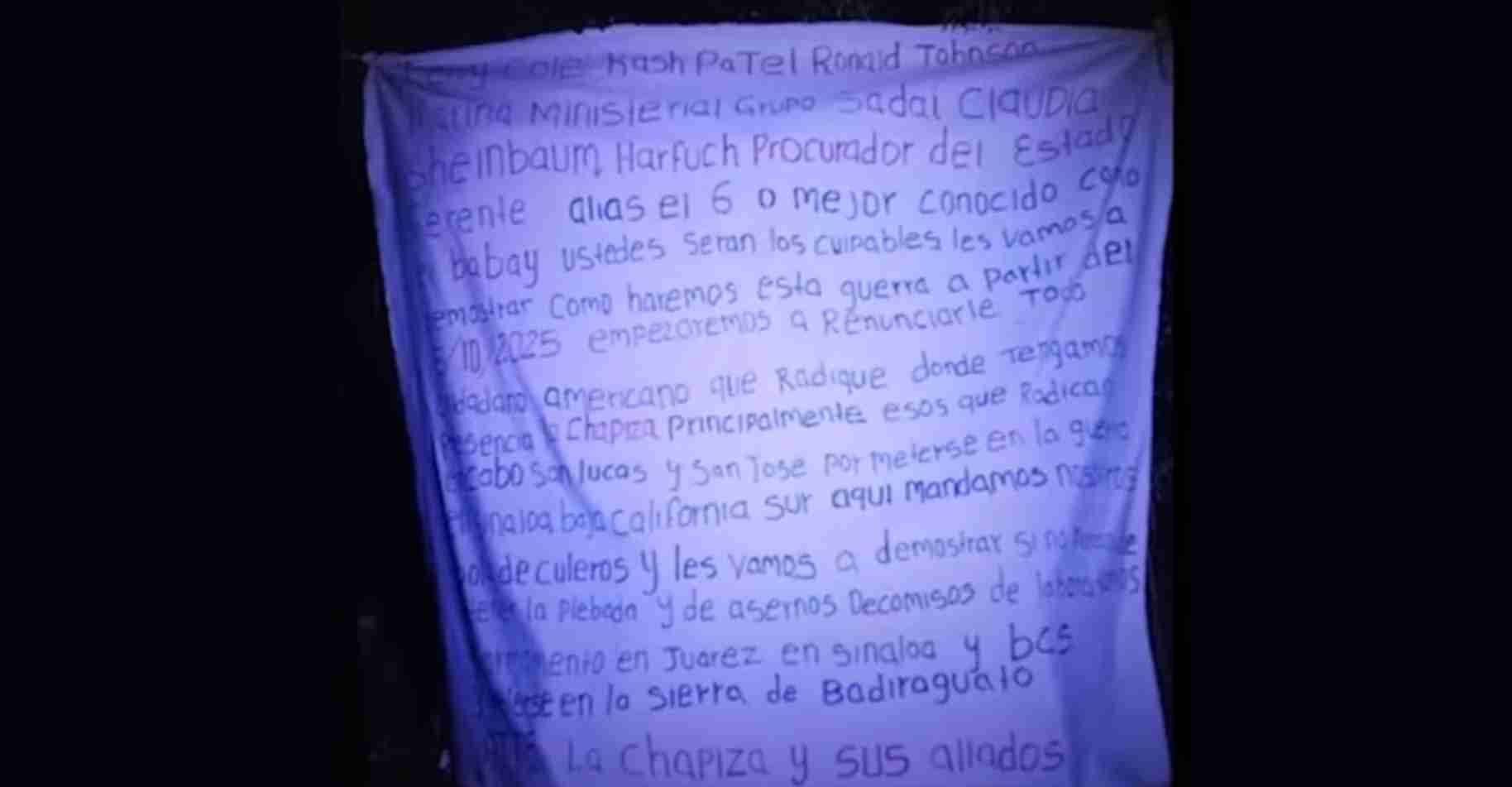
Los Cabos narco-banners reportedly warn Americans to stay away as officials deny postings; Sinaloa Cartel threats spark travel concerns
In October 2025, social media circulated images and videos of alleged narco-banners in Los Cabos threatening Americans, but Baja California Sur authorities say they found no concrete proof the banners were publicly posted, prompting investigations and travel concerns.
- Alleged banners circulated online in October 2025 claiming a campaign by La Chapiza against U.S. citizens in San José del Cabo and Cabo San Lucas.
- Authorities deny verified postings — Baja California Sur officials report no concrete proof of public banners and continue investigations.
- Psychological warfare — experts note narcomantas are a known cartel tactic to intimidate and influence behavior.
- Travel guidance — U.S. security advisers urge travelers to consult the Mexico travel advisory and enroll in STEP before trips.
What was reported
Photos and videos that circulated on social media in October showed cloth banners with Spanish-language threats explicitly naming U.S. citizens and warning they would be targeted in San José del Cabo and Cabo San Lucas. The posts attributed the messages to La Chapiza, a splinter aligned with the Sinaloa Cartel, and claimed the group declared “a war on all Americans residing in areas where we have a presence.” Several outlets and clips helped the material spread beyond local channels to U.S. audiences concerned about tourist safety.
Coverage and clips linked to the social posts include a report summarized in Fox News: “Narco-banners reportedly threaten Americans in vacation hot spot where cartels rule like mafia” and a translated video report available as YouTube video report (translation and footage). Additional coverage aggregated the social material for U.S. readers (see AOL coverage).
Local response and investigations
Baja California Sur authorities, including the state attorney general’s office, state they did not find evidence the banners had been posted publicly. Officials said investigators performed field checks and that some images may have been removed before investigators arrived, complicating verification. Police and the attorney general’s office say inquiries will continue and emphasize that public warnings must be based on verified facts.
Officials’ stance: law enforcement officials insist on verification before issuing public alerts, but residents and business owners say the uncertainty itself generates fear.
Narco-banners as a tactic
Narcomantas (narco-banners) are a long-standing tactic used by Mexican organized crime groups to announce territory, threaten rivals, intimidate officials, and send messages to communities. In Baja California Sur, researchers and local reporting cataloged dozens of similar banners placed in 2025, though not all singled out foreigners or U.S. citizens.
Even when a banner’s physical posting is not independently verified, the perception of threat can alter behavior — shaping local economies and social life without direct confrontation.
Expert views: psychological warfare and real risks
Security analysts and former U.S. officials say the use of narco-banners fits a broader pattern of cartel intimidation and psychological warfare. Whether every banner is verified or not, public messaging allows cartels to test local control and pressure governments and communities. Some analysts also warn that Mexican crackdowns on cartel activity can prompt short-term escalations in threats or violence as groups react.
Travel guidance and the Mexico travel advisory
U.S. citizens considering travel to Los Cabos or other parts of Mexico should consult current guidance, including the official Mexico travel advisory issued by the U.S. State Department. Security experts recommend travelers:
- Monitor local news and security updates and register with STEP (Smart Traveler Enrollment Program).
- Avoid isolated areas, use vetted transportation providers, and keep travel plans private on social media.
- Verify cancellation and evacuation coverage with travel providers and insurers, and maintain emergency contacts.
Reporting and verification challenges
This episode illustrates how quickly material can spread online and how difficult it can be to verify. Images and videos may be posted and removed before investigators reach a scene; social platforms can amplify claims before officials confirm them, increasing public alarm even when official checks find no evidence. News organizations and authorities say they will seek independent verification and urge the public to treat social media claims with caution until investigations conclude.
Implications for Redding, California
Economic impact: Many Redding residents travel to Mexico for vacation or own second homes there. Perceptions that Los Cabos is less safe could reduce bookings, affect travel businesses, and prompt real estate cancellations or added security demands.
Political consequences: The reports are likely to intensify calls for enhanced border security and closer U.S.–Mexico law enforcement cooperation among conservative audiences and local leaders. The tension between social media claims and official denials may spur demands for better intelligence and accountability.
Social effects: Families with ties to Los Cabos may experience anxiety. Churches, community groups, and businesses that organize travel could reconsider plans, and uncertainty may ripple through local social networks.
Cultural relevance: For many in Northern California, Los Cabos is a familiar getaway. The notion of cartel factions threatening Americans evokes concerns about law, safety, and governmental responsibility.
Practical applications for local residents
- Check the Mexico travel advisory and enroll in STEP before travel.
- Confirm travel insurance and evacuation coverage with providers and insurers.
- Stay at well-known resorts, use vetted transportation, and avoid informal taxis.
- Keep travel plans private on social media and maintain local emergency contacts.
- If relatives live in Los Cabos, encourage them to follow local news and report suspicious activity.
Sources and further reading
- Fox News: “Narco-banners reportedly threaten Americans in vacation hot spot where cartels rule like mafia”
- YouTube video report (translation and footage)
- AOL coverage of social media reports
- Mexico Travel Secrets: catalog of threatening banners in Baja California Sur
Investigations in Baja California Sur remain underway. U.S. authorities continue to advise Americans to monitor official travel guidance and the Mexico travel advisory when planning travel.



