
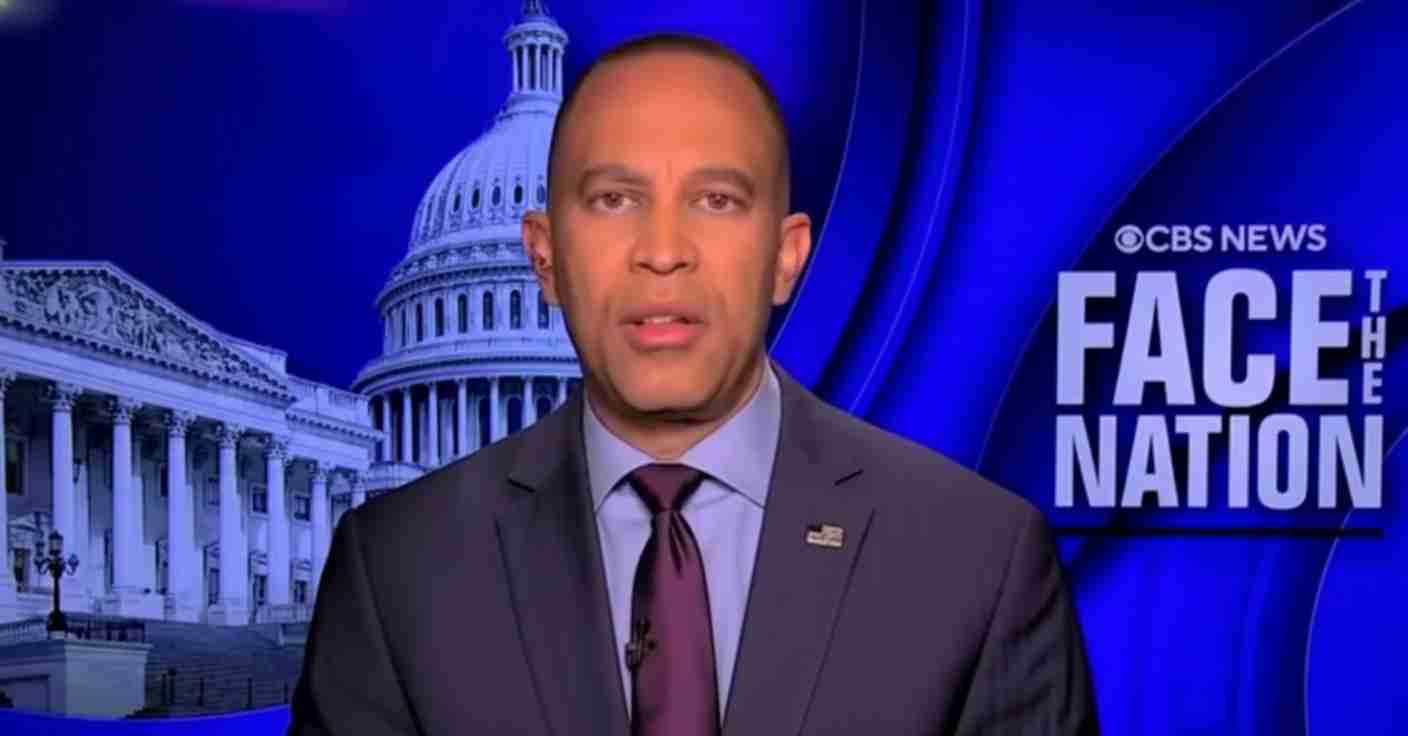
Jeffries Spars With CBS Host Over “Rigged” Midterms, Defends Claim on Partisan Maps
House Minority Leader Hakeem Jeffries clashed with a CBS host after warning Republican-led mapmaking could “rig” the 2026 midterms. He said his target is partisan gerrymandering, not denial of certified results, prompting GOP attacks and analyst clarification.
Key takeaways
- Jeffries warned that aggressive redistricting in GOP-controlled states could effectively “rig” the 2026 midterms, as reported in coverage including a Fox News video and an AOL article.
- Jeffries says his concern is partisan mapmaking, not rejecting certified outcomes — he stated,
“There are no election deniers on our side.”
- Republicans counter by citing Jeffries’ 2016 remarks about legitimacy after Russian interference; analysts say that context differs from post-2020 election denial (Time report).
- Democrats pledge a nationwide push to block what they describe as efforts to “steal” midterms through mapmaking, per Jeffries’ office post.
What Jeffries said on CBS and at briefings
On CBS’ Face the Nation, Jeffries warned that redistricting in states such as Texas and North Carolina could be drawn to entrench GOP power and reduce competition. Video excerpts of the exchange are available via a Fox News video and clips reposted by AOL.
At press briefings, Jeffries repeatedly framed his language around partisan gerrymandering — drawing lines to reduce competition — and emphasized that Democrats accept certified results. Short clips of his remarks have been posted to YouTube and YouTube Shorts. He and House Democrats say they will respond “from coast to coast” to what they call map-based attempts to steal midterms, according to a Jeffries’ office post.
Republican response and the election denier debate
GOP leaders seized on Jeffries’ past remarks after the 2016 election — when he raised legitimacy concerns amid reports of Russian interference — arguing that history contradicts his present denial of election deniers among Democrats. That critique is laid out in a detailed Time report.
Analysts and reporters caution that the debate conflates two separate issues: documented foreign interference and partisan gerrymandering are not equivalent to the post-2020 campaign to overturn certified results. Experts note Jeffries’ 2016 comments were about foreign influence, not the baseless overturn effort after 2020 (Time).
Gerrymandering, election integrity, and what the terms mean
Gerrymandering concerns focus on whether maps let one party win a disproportionate share of seats relative to votes. Tactics include packing opposition voters into a few districts and cracking them across many. The result is fewer competitive races and less accountability.
By contrast, election denial denotes refusing to accept certified outcomes without evidence. Since 2020 the term has been mainly applied to those claiming elections were stolen and seeking to overturn certified results. Mixing the two terms can obscure the policy question Jeffries raises: maps can skew fairness even when ballots are counted and certified properly (see Time).
Analyst note: Labeling critique of mapmaking as “election denial” conflates institutional tactics with postelection subversion; accurate language matters for policy responses.
Why the dispute matters now
Several Republican-led state legislatures are actively redrawing maps ahead of the 2026 midterms. Democrats warn those maps could lock in GOP control of the U.S. House, shifting federal priorities and affecting funding for communities. Republicans counterattack to reframe the debate around whether Democrats question election legitimacy.
Jeffries has made this a central House Democratic message and pledged nationwide responses, including public briefings and legislative pressure — with clips of his remarks available on YouTube.
Implications for Redding, California
Although California uses its own redistricting process, national map fights can influence which party controls the U.S. House and therefore federal policy and funding that affect the North State. Below are five ways the Jeffries debate could matter locally in Redding and Shasta County:
- Political consequences: National gerrymanders could shape which party sets federal priorities and funding that matter to local projects.
- Local campaigns and turnout: Talk of “rigged elections” can mobilize or demobilize voters depending on messaging and trust.
- Message and trust: Distinguishing unfair maps from election denial is crucial for maintaining confidence in local processes; clear communication matters.
- Practical effects on services and dollars: House control influences federal grants for wildfire response, infrastructure, and rural health programs important to Redding.
- Local oversight and engagement: Citizens should follow state and county redistricting and election administration to protect local interests.
Reporting and source notes
This story draws on coverage and primary statements from multiple outlets and official sources. Video of the CBS exchange and related coverage were posted by Fox News and AOL. Jeffries’ public remarks and his office posting about responding to redistricting came from a Jeffries’ office post. Analysts’ context and GOP attacks on Jeffries’ past comments appeared in Time. Additional clips and remarks are available on YouTube and YouTube Shorts.
Reporting to watch
Voters and local officials in Redding should track three key items:
- Major map filings and legislative actions in battleground states that Jeffries cited — drafts and hearings are often posted on state legislative websites and covered by local press.
- Statements from members of Congress on federal election law or funding linked to redistricting fights.
- Local voter outreach and information from county election officials explaining how maps do — or do not — affect Redding ballots.
Source links and clips
For source detail and direct statements, see these primary clips and reports: Fox News video, AOL article (Face the Nation exchange), YouTube clip, Jeffries’ office post, YouTube Shorts, AOL piece (recruiting), Time analysis, CBS News coverage, and additional YouTube clip.



