
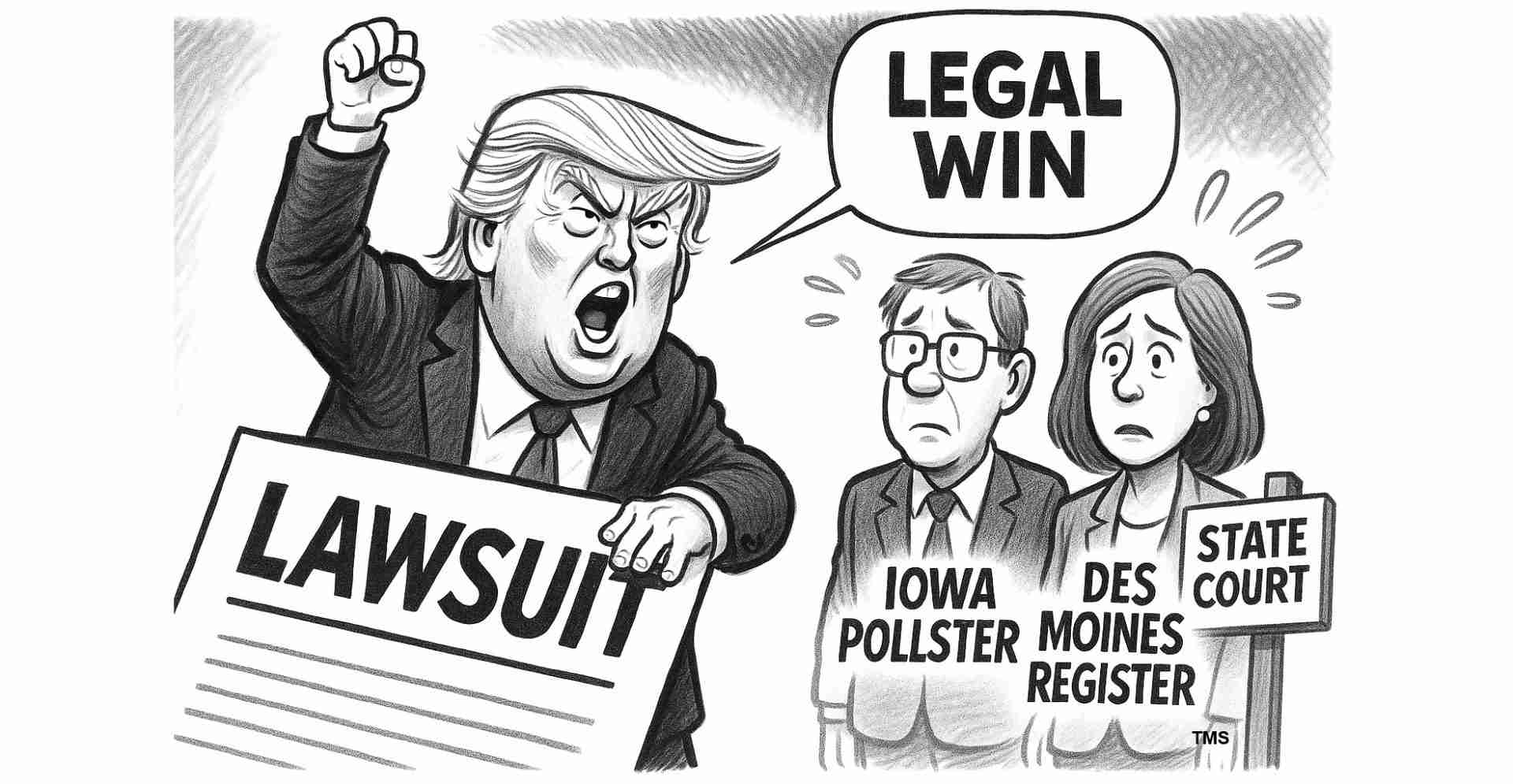
Trump wins procedural victory as Eighth Circuit sends his suit over Iowa poll back to state court
Donald Trump scored a procedural win as the Eighth Circuit sent his suit over an Iowa presidential poll back to state court, allowing him to refile claims that a late 2024 Des Moines Register poll was manipulated.
- Appeals court moves case to state court: The Eighth Circuit reversed a federal court decision and dismissed the federal case without prejudice so Trump can refile in Iowa state court (Fox News).
- Claims of manipulation vs. First Amendment defenses: Trump alleges intentional election interference by the pollster and the Des Moines Register; defenders argue polling is protected speech and call the suit SLAPP-like (FIRE).
- Timing matters: Trump filed one day before Iowa’s new anti-SLAPP law took effect, a factor that may shape the state-court proceedings (Des Moines Register).
What the Eighth Circuit ruled
The Eighth Circuit found the federal court erred in keeping the removed suit in federal court. It ordered dismissal without prejudice, clearing the path for Trump to refile his claims in Polk County or another Iowa state forum. This is a procedural decision about forum, not a judgment on whether the poll was manipulated (Fox News).
Claims in the suit and legal defenses
Plaintiff’s theory: Trump’s complaint describes the final Des Moines Register poll as “brazen election interference,” alleging the late poll was leaked and manipulated to create the appearance of momentum for Democrat Kamala Harris and to shift voter perception. The suit seeks damages and orders aimed at preventing what Trump calls “deceptive polls.” (Fox News).
Defense response: J. Ann Selzer and the Des Moines Register deny misconduct, saying the poll used normal methods, that full methodology and crosstabs were shared, and that the result was an outlier rather than proof of manipulation. Selzer has made data public, acknowledged the miss, and subsequently left election polling (Fox News).
First Amendment and SLAPP concerns
Media and free-speech lawyers warn courts typically protect opinion, analysis, and reporting under the First Amendment. The Foundation for Individual Rights and Expression argues the case is effectively a SLAPP designed to chill ordinary polling and reporting; FIRE says polling is protected political speech and that consumer-protection claims risk punishing routine journalistic activity (FIRE).
Procedural and strategic stakes
Why this is strategic: This is a procedural win: it decides the forum but not the merits. State court could be more hospitable to state-law claims, yet raises complex constitutional questions. Because Trump filed just before Iowa’s anti-SLAPP law took effect, parties will evaluate motions, discovery fights, and whether to seek rapid dismissal under that statute (Des Moines Register).
Responses from the parties
Trump’s camp: The campaign has accused the late-stage poll of being “fabricated entirely” and says it intends to pursue the matter fully in court (FIRE).
Selzer and Gannett: They maintain the methodology and deny intentional wrongdoing. Gannett argued for federal jurisdiction given the national profiles but said it would accept state-court adjudication if ordered by the appeals court (Fox News).
Why this matters beyond the headlines
The case tests the boundary between state consumer-protection law and constitutional free-speech protections. If state courts allow fraud-style claims against pollsters and media, it could change how political reporting and polling are produced and published. Conversely, successful First Amendment defenses would reinforce broad protections for political speech and polling.
Implications for Redding, California
Economic impact: Local newsrooms and pollsters in Redding rely on the freedom to publish polling. A state-court ruling permitting consumer-fraud claims could raise legal risk and costs, potentially reducing independent polling availability.
Political consequences: Local Republican leaders and conservative voters may view the Eighth Circuit’s ruling as a curb on forum-shopping and an opportunity to press for transparency in polling.
Social and cultural effects: Civic groups use polling for outreach; increased legal risk could reduce available data. The dispute also feeds local debates about media trust and accountability.
Practical takeaway: The immediate effects in Redding are limited — this is procedural — but local campaigns, committees, and journalists should monitor the state-court case for how it might reshape polling publication and legal exposure.
What to watch next
- Whether Trump refiles in Polk County or another Iowa state court and how quickly (Fox News).
- How Iowa’s new anti-SLAPP law is applied and whether defendants seek early dismissal under it (Des Moines Register).
- The constitutional arguments FIRE and other First Amendment groups will press if the case proceeds in state court (FIRE).
- Any new disclosures about the poll’s methodology, crosstabs, or communications that bear on intent or manipulation (Fox News).
Sources
Reporting and legal filings referenced in this article include coverage and statements from Fox News, the Des Moines Register, and the Foundation for Individual Rights and Expression (FIRE).



