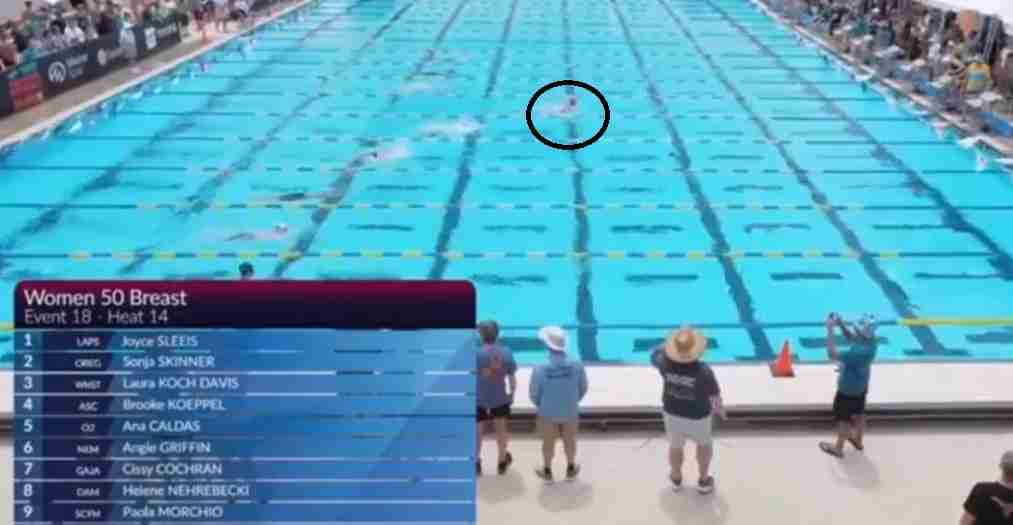
Trans swimmer Ana Caldas banned by World Aquatics, stripped of results after refusing sex verification test
World Aquatics has suspended transgender swimmer Ana Caldas (also known as Hannah) until October 2030 and erased her competitive results from June 2022 to October 2024 after she refused a sex verification test, citing privacy.
- Sanction imposed: World Aquatics suspended Ana Caldas until Oct. 2030 and cancelled her results from June 2022 to Oct. 2024. (Sources: Star Observer, AOL, Fox News)
- Reason: World Aquatics said Caldas violated integrity and gender eligibility rules and provided false information about classification requirements. (Sources above)
- Privacy stance: Caldas said she refused invasive genetic/chromosomal testing to protect intimate medical details and accepted the sanction as the cost of that stance. (Source: Star Observer)
What World Aquatics says and the rules at issue
World Aquatics updated its gender eligibility policy in 2022 to narrow eligibility for women’s competition. The policy requires transgender women to have transitioned before puberty — defined as before age 12 or before reaching Tanner Stage 2 — to have undergone hormone therapy, and to maintain testosterone below 5 nmol/L to compete in women’s events. The rules also require documentation about transition timing and medical treatment for those seeking women’s classification.
World Aquatics framed the policy as necessary to protect fair competition among women and to preserve safety in some sports. (Sources: AOL, Fox News)
Why Caldas was sanctioned
World Aquatics says Caldas breached the federation’s integrity code related to gender eligibility and provided false information about classification requirements. The action followed complaints after a U.S. Masters Swimming meet in San Antonio where Caldas won five gold medals in the women’s 45–49 age group.
“I felt betrayed,” rival swimmer Wendy Enderle told media, reflecting how some competitors reacted to the lack of disclosure.
The federation’s findings led to a ban through October 2030 and the annulment of competitive results from June 2022 to October 2024.
Caldas’ response: privacy and cost concerns
Ana Caldas accepted the sanction and publicly explained her refusal to submit to the requested testing as a matter of privacy and medical consent. She called certain chromosomal or genetic tests invasive, expensive and not reasonably required for recreational competition.
“The price I have to pay to protect my most intimate medical information. I’m happy to pay that price – for myself and for all the women who don’t want to undergo invasive testing.”
– Ana Caldas (statement reported by Star Observer)
Caldas also noted that recommended tests were costly, not always covered by insurance for recreational athletes, and intrusive given the level of competition in masters events.
Legal and policy background
The Caldas decision occurs amid broader legal fights over transgender athlete eligibility. High-profile cases, including swimmer Lia Thomas’ challenge to World Aquatics rules, underscore tension between inclusion, privacy and fairness. The Court of Arbitration for Sport dismissed Thomas’ challenge, reinforcing that international federations can impose strict eligibility standards for elite competition. (Source: CBS News)
Perspectives from athletes and advocacy groups
Reactions are divided. Some athletes and women’s sport advocates argue stricter rules protect fair competition in women’s categories. Organizations such as the Independent Council on Women’s Sports (ICONS) have raised concerns about physiological advantages if transgender women who transitioned after puberty compete in adult women’s events. (Source: Star Observer)
Other advocates emphasize medical privacy and the invasiveness of chromosomal or genetic screening, saying forced testing could set a troubling precedent.
Fact check: what the sanction means
- Length of ban: Suspended from competition through October 2030. (Sources: Star Observer, AOL, Fox News)
- Results struck: All competitive results from June 2022 to October 2024 removed. (Sources above)
- Reason: Refusal to comply with a sex verification request tied to World Aquatics’ gender eligibility rules and related integrity code findings. (Sources above)
How this plays into wider debates
The Caldas ruling has reopened debates about:
- Fairness in women’s sport: Concerns that post-puberty transition can leave lasting physiological differences that affect outcomes.
- Privacy and medical consent: Fears about forced genetic or chromosomal screening and athletes’ right to keep medical details confidential.
- Rule design: How sports bodies balance inclusion with standards athletes can reasonably meet and verify without undue intrusion.
Implications for Redding, California
Redding’s local swim clubs, school programs, and masters leagues may feel ripple effects:
- Local competitive fairness: Clubs and schools may revisit roster policies and tournament rules to clarify eligibility and transparency.
- Masters and recreational leagues: Organizers could face pressure to change sign-up processes or verification for championship events, raising costs and privacy concerns.
- Policy and school boards: School districts in Shasta County may be asked to clarify local rules balancing fairness with anti-discrimination obligations.
- Community debate: The case provides material for local advocacy and political discussion, particularly among voters focused on women’s sport fairness.
- Practical impact on athletes: Female swimmers may view the ruling as protecting competitive equity, while transgender swimmers could face restricted access or pressure to undergo verification.
- Administrative costs: Stricter verification mirroring World Aquatics could create legal, administrative and financial burdens for small clubs.
Reporting next steps
As of the latest reporting, there is no public record of an appeal by Caldas or any change to the World Aquatics decision. Readers interested in follow-ups should watch for statements from local swim clubs, the Shasta County school district, and USA Swimming’s regional offices.
Media reports and statements used in this story include: Star Observer, AOL, Fox News, and CBS News.