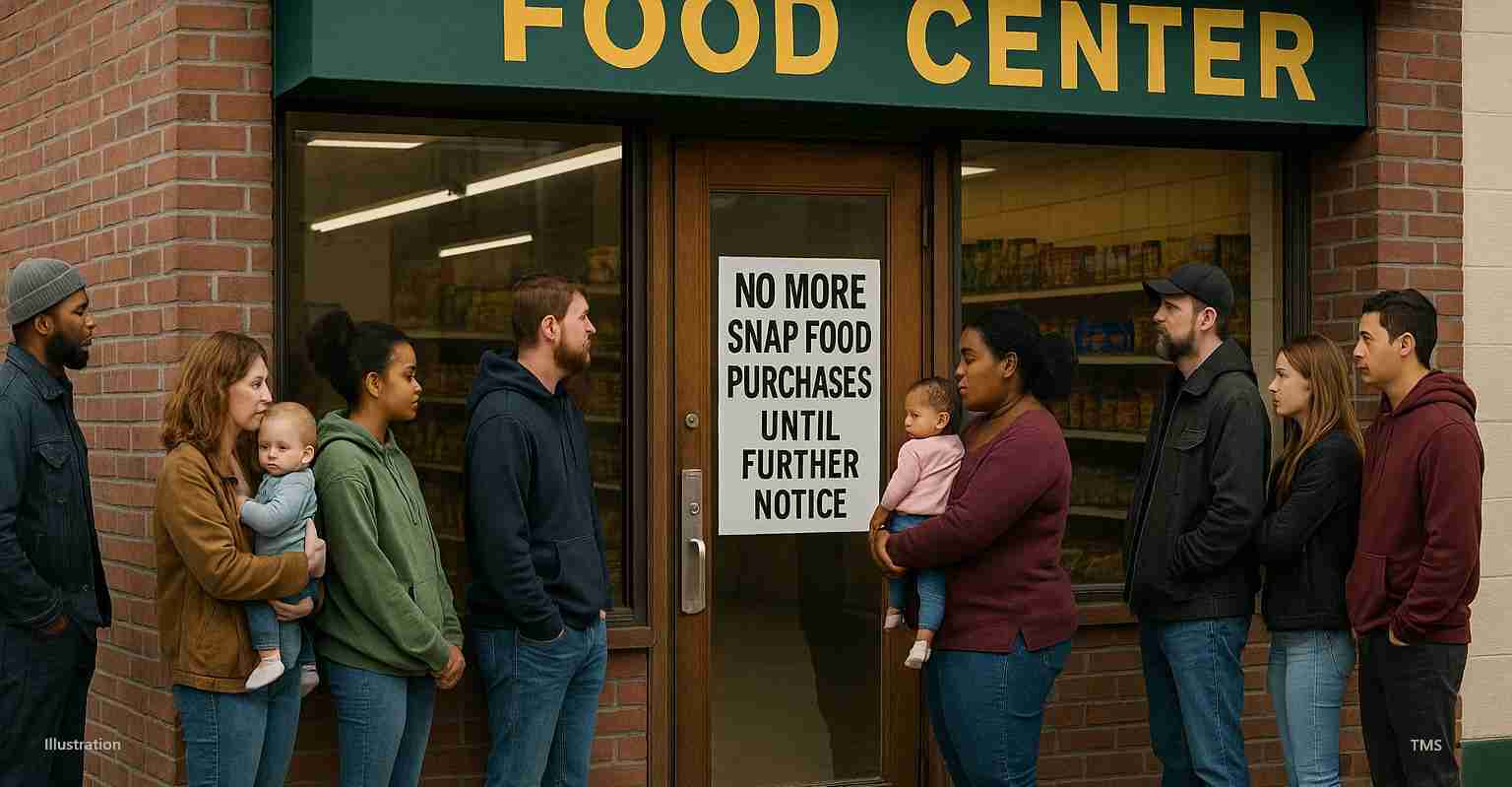
Democrats under fire as SNAP benefits suspended in shutdown fight; 42 million Americans face interruption, EBT cards may go dark
A federal shutdown has halted November 2025 SNAP payments, suspending benefits for about 42 million Americans and risking EBT card outages that could prevent access to remaining balances until federal funding is restored this week.
Key takeaways
- SNAP November benefits paused: Monthly SNAP payments will not be issued starting Nov. 1, 2025, affecting roughly 42 million people (paproviders.org, mydss.mo.gov).
- EBT outages possible: Point-of-sale transactions may be denied after Oct. 31 even for cards with balances (paproviders.org).
- States still accept applications: Agencies will process paperwork but cannot load November benefits until federal funding returns (mydss.mo.gov).
- Local charities will be strained: Food banks, churches and pantries expect surges and resource shortages (paproviders.org, mydss.mo.gov).
What happened
A funding standoff in Washington left certain federal programs without appropriations. Because SNAP is funded entirely by the federal government, the U.S. Department of Agriculture instructed state agencies to pause issuance of November SNAP benefits, effectively suspending routine monthly distributions beginning Nov. 1, 2025.
The suspension affects approximately 42 million Americans who use SNAP for groceries — including low-income families, seniors and children. State offices will continue business functions such as accepting applications and processing cases, but they cannot load benefits onto EBT cards or issue new payments until Congress restores funding (paproviders.org, mydss.mo.gov).
Why EBT cards might be inoperable
SNAP benefits are delivered through Electronic Benefit Transfer (EBT) cards tied to federal payment and authorization systems. If federal funding is halted, payment routing and transaction authorization may stop, meaning point-of-sale terminals could decline EBT transactions even for cards with remaining balances.
“Recipients are advised to check balances and be prepared that EBT systems may not process transactions after Oct. 31.” — state guidance summary (paproviders.org)
State advisories emphasize verifying current balances and transaction histories now and planning for contingencies while funding is unavailable (paproviders.org).
Political fallout and who is being blamed
The lapse stems from broader budget negotiations in Congress. Both parties share responsibility for the impasse: Democrats are criticized for failing to secure protections for safety-net programs, while Republicans are blamed for refusing stopgap measures that could have kept programs funded.
Because SNAP is closely associated with social-safety priorities, Democrats have faced intensified scrutiny in the public debate. Observers note the pause was ordered due to the federal funding halt rather than a state decision, but the optics of millions losing food assistance have placed political pressure on elected officials across the spectrum (paproviders.org, mydss.mo.gov).
How states and providers are responding
State human services agencies urge calm while preparing for increased demand. Agencies say they will continue processing paperwork and will reactivate benefits as soon as federal funds are restored. Meanwhile, local food banks, church pantries and community groups are mobilizing emergency plans.
Warning: Community providers warn that non-SNAP resources are limited; a rapid influx of households could exhaust supplies and require rationing or shorter service hours (paproviders.org, mydss.mo.gov).
Advice for recipients
- Check balances now: Review account balances and transaction history; unused SNAP funds on EBT cards remain spendable unless systems go offline (paproviders.org).
- Contact state or county offices: Reach out to your county assistance or state SNAP office for localized updates — agencies will still accept applications (mydss.mo.gov).
- Tap emergency supports early: Contact local food banks, churches and emergency programs soon, as supplies will likely be strained (paproviders.org).
Implications for Redding, California
Economic impact: Redding-area families dependent on SNAP may experience immediate strain. In Shasta County and surrounding communities, hundreds to thousands rely on monthly SNAP benefits; a pause will likely increase demand at county emergency services and nonprofit food pantries (paproviders.org, mydss.mo.gov).
Political consequences: Local conservative voters and leaders in Redding may press elected officials to secure quick action in Washington, and SNAP disruptions could become a focal issue in local debate about budget priorities and accountability.
Social effects and cultural relevance: Schools, churches and charities should prepare for surges in demand; seniors and families may face trade-offs between food and medicine. In a community that values mutual aid, neighbors and faith-based groups will be critical, but many warn private charity cannot substitute for extended federal support.
Practical steps for residents: Check EBT balances, assemble short-term food plans, donate time or groceries if able, and coordinate with local food banks to prevent overloading a single provider (paproviders.org, mydss.mo.gov).
What to watch next
SNAP benefits will resume only after Congress passes a funding bill and the government reopens. State agencies will follow USDA guidance to restore benefits as soon as funding is re-authorized. Watch which lawmakers act to restore food aid and which delay — SNAP has become a central issue in public debate as the shutdown continues (paproviders.org, mydss.mo.gov).
Sources: paproviders.org/snap-benefits-paused-starting-november-1/, mydss.mo.gov/federal-shutdown-impacts