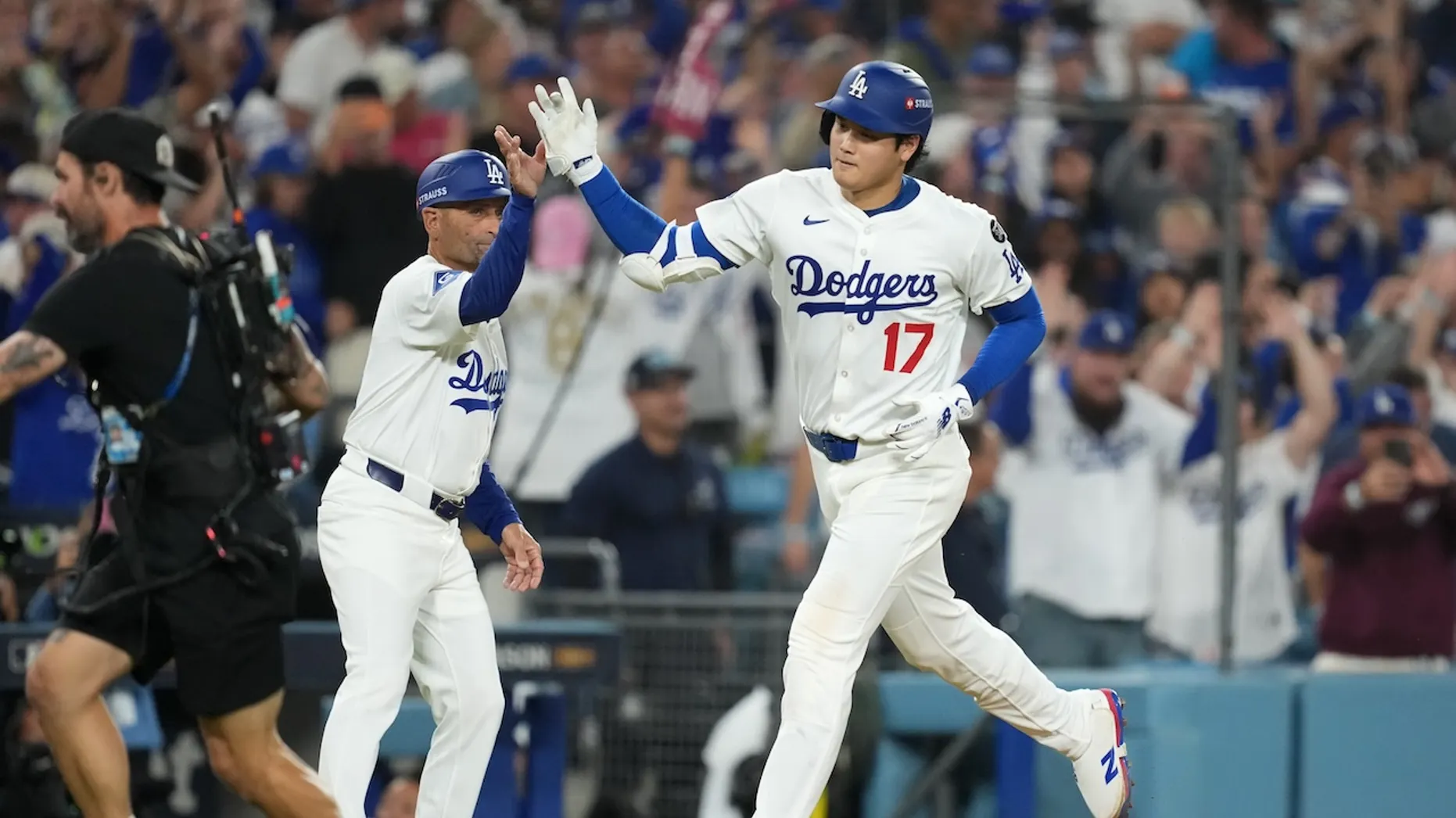
Shohei Ohtani’s Historic Two-Way Night Sends Dodgers Back to the World Series — “Unreal” NLCS Game 4 Performance Seals Sweep
Shohei Ohtani’s two-way mastery propelled the Los Angeles Dodgers to a sweep of the Milwaukee Brewers in Game 4 of the 2025 NLCS, as Ohtani hit three home runs and struck out 10 while pitching six shutout innings.
- Three homers and a dominant start: Ohtani hit three home runs and delivered 6 shutout innings with 10 strikeouts.
- Series result: Dodgers complete sweep of the Brewers and advance to the World Series (Dodgers World Series 2025).
- Awards and legacy: Ohtani named NLCS MVP and joined rare postseason company with a historic two-way game.
- Questions ahead: Workload, matchup strategy and long-term health for a two-way star will shape World Series planning.
Historic performance: Ohtani’s two-way mastery
Spectacle and statistics: Shohei Ohtani opened Game 4 with the first-ever postseason leadoff home run by a pitcher and added two more long balls, each well over 400 feet (one measured at 469 feet and another left Dodger Stadium). On the mound he produced a six-inning, two-hit shutout with 10 strikeouts (6 IP, 2 H, 0 R, 3 BB, 10 K; 3-for-4, 3 HR, 3 RBI).
Contemporaneous coverage captured the moment as ESPN, Sports Illustrated and the Los Angeles Times documented the feat in real time.
Statistical and historical context
Ohtani joined an exclusive postseason group as one of only a dozen players to hit three home runs in a playoff game, and he became the first pitcher to start a postseason game with a leadoff homer — achievements that instantly entered the record books.
Across the NLCS his three homers combined for 1,342 feet of flight, one ranking among the longest postseason shots in Dodger Stadium history. He finished the series as NLCS MVP, ending a prior postseason slump and emerging as the central figure in the Dodgers’ run.
Game narrative and managerial decisions
Moment-by-moment: Ohtani struck out the side in the first inning on the mound, then came to the plate and hit the historic leadoff home run — a momentum-swinging sequence that stunned Milwaukee and energized Dodger Stadium.
Managerial context: Dodgers manager Dave Roberts publicly backed Ohtani’s ability to turn around his postseason form before Game 4; Roberts’ decision to start Ohtani and allow him to go deep into the outing paid immediate dividends. The performance now forces tactical questions for the World Series: how to maximize Ohtani’s two-way value while protecting his arm and long-term availability.
Media and fan reaction
National headlines called the night “epic” and “unreal,” while social media and local coverage captured scenes of elation at Dodger Stadium. Analysts described the outing as “mind-blowing” and “one of the greatest two-way performances of all time.”
“Arguably the best player in baseball history,” the Los Angeles Times wrote, reflecting the cultural weight of Ohtani’s night.
Legacy and records verified
Reporting confirms several historic markers from Game 4:
- First-ever: First pitcher in MLB history to start a postseason game with a leadoff home run (ESPN).
- Three-homer club: One of roughly a dozen players to hit three homers in a playoff game (ESPN).
- Double-digit K: His 10 strikeouts marked his first double-digit playoff K game as a Dodger starter (ESPN).
- Series accolades: NLCS MVP honors across reporting from Sports Illustrated and other outlets.
Questions going forward: workload, matchups, and health
Medical and strategic trade-offs: Pitching six shutout innings and delivering a three-homer night is rare in October. Dodgers medical staff, coaches and front-office leaders will need to balance the short-term advantage of using Ohtani extensively with the long-term goal of preserving his health for the Series.
Opponents will also rethink rotation, bullpen deployment and lineup strategy to blunt a dual-threat like Ohtani, making matchup planning a central storyline as the Dodgers head into the World Series.
Implications for Redding, California
Economic impact: Local businesses in Redding can expect increased traffic on Dodgers World Series nights — sports bars, eateries and retail outlets selling MLB merchandise should see higher demand.
Civic pride and youth sports: Ohtani’s night feeds community morale and could inspire interest in two-way play at the youth and high-school levels; coaches will need to balance inspiration with careful workload management and safety concerns.
Political and civic use: Local leaders may leverage heightened attention for community events, watch parties and to promote small-business initiatives tied to the World Series.
Verification and sources
This report relies on contemporaneous accounts and box-score records published by national outlets. For full game statistics and contemporary commentary see reporting from ESPN, Sports Illustrated, and the Los Angeles Times. Background on Ohtani’s career and awards is available via his public profile on Wikipedia.
The evidence shows Shohei Ohtani’s NLCS Game 4 was more than a single great night — it was a two-way blueprint likely to shape managerial strategy, fan engagement and youth coaching in communities such as Redding, where the balance of competitive grit and civic pride resonates strongly.