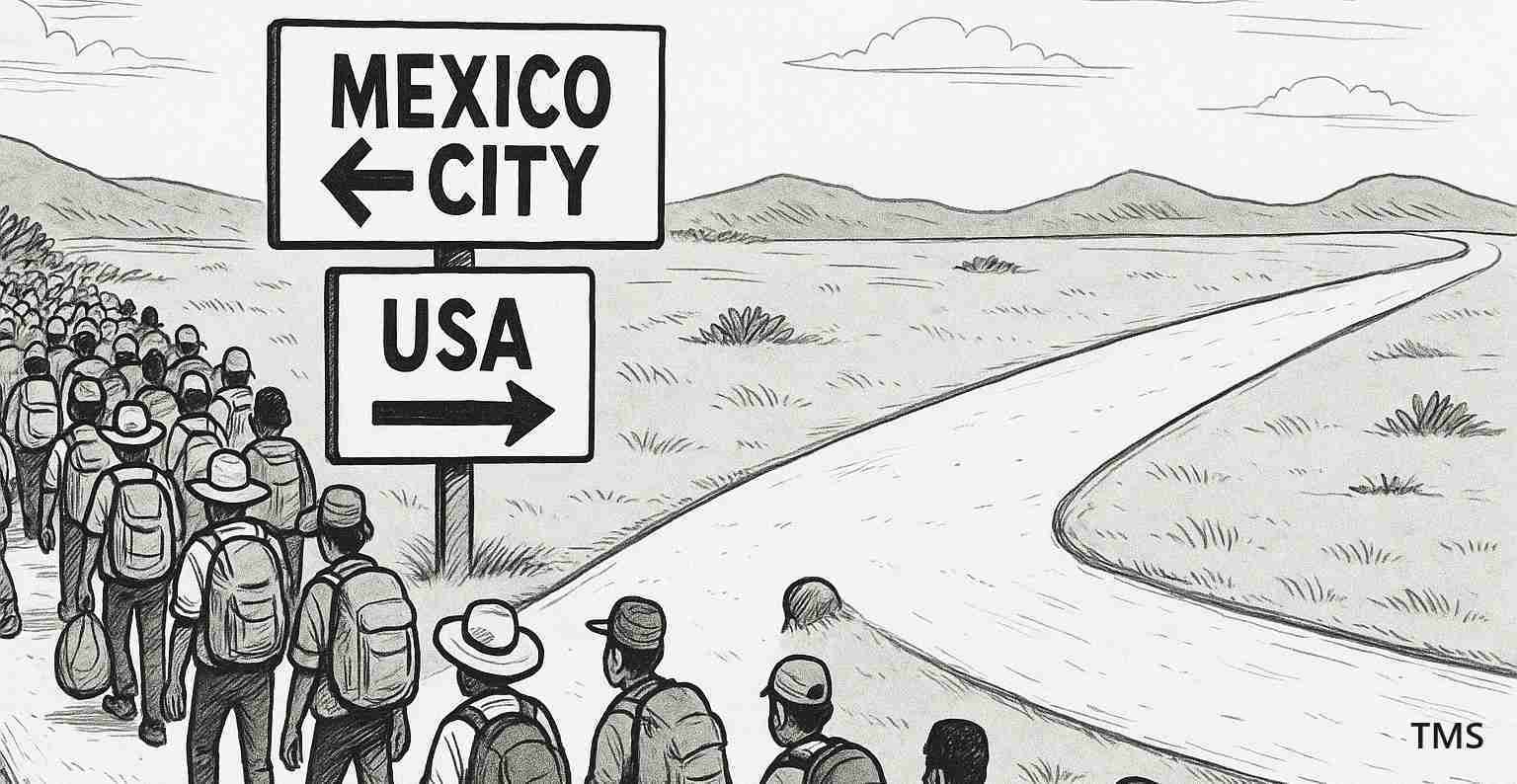
Cuban-led caravan of about 1,200 heads for Mexico City as Trump-era policies reshape migration routes
A caravan of about 1,200 migrants, led by Cubans, is traveling north from Tapachula, Chiapas, toward Mexico City, reflecting how tougher U.S. immigration policies have pushed many to view Mexico as a destination rather than merely a transit country.
Key takeaways
- About 1,200 migrants, led by Cubans with travelers from Honduras, Ecuador, Brazil, Haiti, Nicaragua and Venezuela; reporting drew on Mexico News Daily and Anadolu Agency.
- Route and hardship: migrants face an estimated 1,100-kilometer journey to Mexico City on foot, contending with heat, hunger, dehydration and risks of abuse or extortion (Mexico News Daily).
- Shift in intent: many now plan to remain in Mexico rather than attempt entry to the United States, a change tied to stricter border enforcement implemented during the Trump administration (Mexico News Daily, Anadolu Agency).
Main reporting
Key information
Size and make-up: Observers estimate roughly 1,200 migrants in the caravan, dominated by Cuban nationals but including people from Honduras, Ecuador, Brazil, Haiti, Nicaragua and Venezuela. Primary reporting is available from Mexico News Daily and Anadolu Agency.
Route and hardships: Leaving Tapachula, Chiapas, the group faces a roughly 1,100-kilometer journey to Mexico City on foot — confronting extreme heat, limited food and water, and risks of abuse, extortion and theft as documented by Mexico News Daily.
Mexico’s response: Authorities have increased troop deployments in southern border areas and stepped up raids on migrant camps as part of efforts to limit movement and comply with diplomatic pressure from the United States (Anadolu Agency).
Why this caravan marks a change
Investigative reporting and advocates trace the shift to years of stepped-up U.S. enforcement that limited legal avenues. Programs and systems used to regulate asylum and legal entry — including curtailed access to mechanisms like the CBP One app during the Trump era — made reaching the United States harder, prompting many to reassess their goals and consider settling in Mexico (Mexico News Daily).
“Migrants are trapped,” local advocates say, citing long asylum waits, limited work options and scams that leave people with few legal paths forward.
Advocates report waits of up to 10 months for asylum processing in Tapachula, limited access to formal work, and exploitation by fraudulent agents — factors pushing groups to leave for Mexico City (Mexico News Daily).
Composition and vulnerabilities of the group
Notably Cuban-led: Unlike earlier caravans dominated by Central Americans, this group has a prominent Cuban presence; many Cubans see Mexico as a place to apply for asylum, work, or move away from dire border-town conditions (Anadolu Agency).
The journey increases vulnerability: extreme weather, scarce supplies and the danger of assault, extortion or theft — especially for women, children and unaccompanied minors (Mexico News Daily).
Mexico as destination, not just transit
Observers note a clear pattern: with U.S. border policies denying or restricting asylum and legal entry, Mexico increasingly functions as a destination. Returns, denials, and pressure on Mexico to hold migrants have shifted many migrants’ calculus — turning what was once a transit route into a potential place to settle (Anadolu Agency).
Policy posture: The administration of President Claudia Sheinbaum has emphasized enforcement — troop deployments, camp raids and arrests — rather than comprehensive integration pathways for migrants (Anadolu Agency).
Local dynamics and political pressure
Mexico’s tougher posture is partly a response to sustained diplomatic and economic leverage from the United States; threats of tariffs and policy pressure have pushed enforcement increases in Mexico without creating full legal pathways for admission or integration (Anadolu Agency).
Harassment of helpers: Human rights workers assisting migrants have faced pushback; the arrest of Luis Garcia Villagran, described by advocates as an organizer and critic of anti-migrant policies, highlights the fraught environment for those helping migrants move or resettle (Anadolu Agency).
Conditions in Tapachula that spark movement
Tapachula has become a bottleneck: newcomers often find few jobs, long waits for paperwork and asylum processing, and little official help. Fraud and extortion by unscrupulous agents compound hardship, driving waves of migrants north toward larger cities like Mexico City where informal job markets and migrant networks offer some support (Mexico News Daily).
Long-term regional effects
Analysts warn this pattern could persist: as Mexico absorbs more migrants who once aimed for the U.S., cities will face increased demand for housing, services and labor integration — reshaping regional migration dynamics and U.S.–Mexico diplomacy for years to come (Mexico News Daily, Powerline Blog analysis).
Implications for Redding, California
Economic impact
- Labor and jobs: If Mexico becomes a longer-term destination, immediate pressure on U.S. border communities may ease, but shifts in regional flows could still affect labor availability and wages in sectors like agriculture and construction in areas such as Redding.
- Fiscal consequences: Federal border enforcement costs might ease if northward flows decline, yet local governments in California, including Shasta County, could face indirect effects tied to remittances and changing humanitarian needs.
Political and policy effects
- Policy validation and limits: For conservative readers in Redding, the caravan underscores that strict enforcement can deter attempts to reach the U.S. border but also redirects migration, suggesting debates should include enforcement and regional partnerships.
- Local politics: Changing migration patterns may influence campaigning and priorities around law enforcement, federal border measures and support for local humanitarian coordination.
Social and community impact
- Humanitarian concerns: Redding groups — churches, charities and families — may still be affected through ties to migrants abroad or returning migrants seeking support.
- Cultural ties: Remittance flows and family reunifications could shift local demographics, affecting schools, community services and cultural events.
Practical considerations for residents
- Safety and public services: This caravan alone is unlikely to change immediate local safety conditions in Redding; the key lesson is that enforcement alters routes and timing but does not end migration.
- Civic engagement: Conservatives in Redding interested in immigration may engage lawmakers on comprehensive approaches that combine border security, foreign aid and diplomacy to manage long-term flows and humanitarian outcomes.
Source links for follow-up reporting
Reporting note: Journalists followed the caravan’s departure from Tapachula and interviewed migrant advocates and local officials. Key reporting and analysis for this article drew on Mexico News Daily, Anadolu Agency, and independent commentary including Powerline Blog.