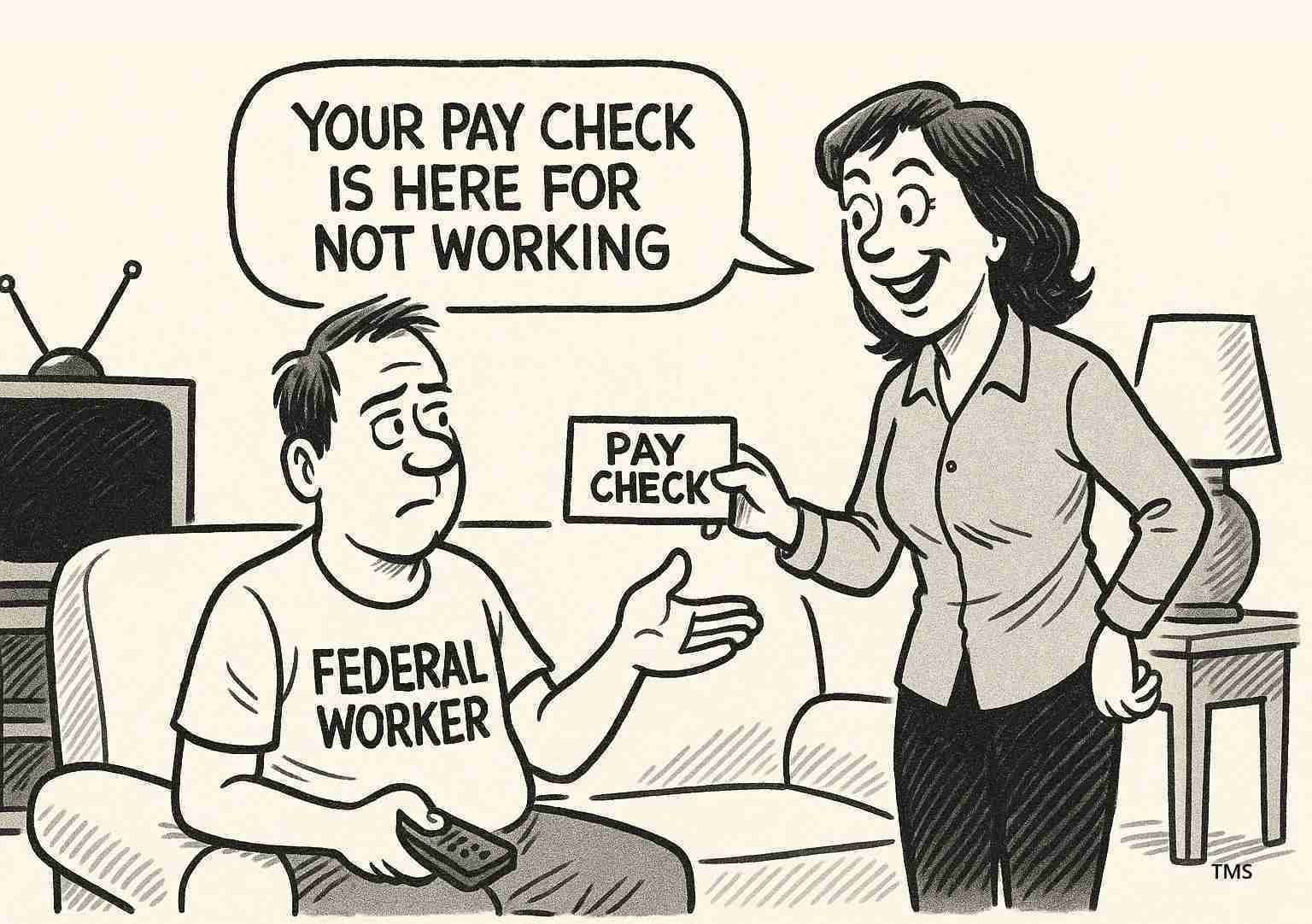
Schumer shutdown already cost taxpayers $1.2B in backpay for employees not working, law guarantees pay once funding is restored
A 2019 law guarantees retroactive pay for furloughed federal workers, meaning shutdowns still obligate taxpayers to cover wages once funding is restored — a policy that contributed to an estimated $1.2 billion backpay bill tied to recent closures.
Key takeaways
- Automatic backpay: Most furloughed federal employees receive retroactive pay under the Government Employee Fair Treatment Act of 2019.
- Estimated immediate cost: Public estimates put mandated backpay for recent closures at about $1.2 billion for workers not on the job.
- Partisan framing: The phrase “Schumer shutdown” is a political label used by some Republicans to blame Senate Democrats.
- Broader impacts: Shutdowns also cause lost productivity, delayed services and contract disruptions that affect local economies like Redding, California.
How the 2019 law works and who gets paid
The Government Employee Fair Treatment Act of 2019 changed congressional practice by making furloughed workers’ backpay automatic when funding is restored. Instead of requiring a separate bill to authorize retroactive pay, the law ensures that once a continuing resolution or appropriations bill passes, federal employees are paid for the days they were off the job.
That means taxpayers ultimately fund wages for work not performed during a shutdown, a choice intended to protect employees from political budget fights but one that also eliminates payroll savings as a deterrent.
Source: details and public statements
Where the $1.2 billion taxpayer figure comes from
The $1.2 billion figure aligns with public estimates tied to prior shutdowns — including the 2018–2019 closure — that calculate the payroll owed to furloughed workers when a deal is reached. Republican House communications have circulated that number to illustrate the immediate fiscal hit of mandated backpay.
Note: Estimates vary by shutdown length and how many employees are furloughed; backpay totals can reach into the billions depending on circumstances. The $1.2 billion snapshot focuses on mandated payroll backpay and not the full economic cost.
Source: Republican House statement
Political context and the label “Schumer shutdown”
The phrase “Schumer shutdown” is partisan messaging used by some Republicans to assign responsibility for a funding impasse to Senate Democrats and Senate Majority Leader Chuck Schumer. It is not a neutral term and is intended to shape public perception and accountability narratives.
For conservative audiences, the label emphasizes fiscal accountability; for others it can read as political finger-pointing rather than an objective description of causes.
Why shutdown backpay matters for taxpayers
Because the 2019 law guarantees retroactive pay, shutdowns do not reduce payroll costs — they merely shift timing. Critics argue this removes a fiscal deterrent against shutdowns: if furloughed employees will be made whole, one major immediate cost disappears, potentially weakening lawmakers’ incentives to reach timely budgets.
Supporters counter that the law is a fairness measure: many federal employees depend on steady pay and should not be penalized for congressional impasses.
Broader costs beyond backpay
Backpay is the easiest cost to quantify, but shutdowns create additional, often larger, economic harms:
- Lost productivity: Paused agency work slows projects, permitting and regulatory reviews.
- Delayed services: Citizens and businesses face interruptions and slower responses.
- Contract disruptions: Government contractors and small businesses can suffer cash-flow hits.
- Administrative restart costs: Reopening operations and clearing backlogs adds expense.
Analysts and watchdogs note these indirect effects can exceed immediate backpay totals over time.
Source: discussion of backpay mechanics and related fiscal effects
Impact on federal employees and fairness debate
Fairness argument: Proponents say automatic backpay prevents long-term financial harm to workers living paycheck to paycheck.
Fiscal-discipline concern: Opponents argue it reduces pressure on lawmakers, as one immediate cost of a shutdown — payroll savings — is eliminated, potentially encouraging more frequent or prolonged funding standoffs.
Implications for Redding, California
Economic impact
Local payroll and consumer spending can be disrupted when federal workers or contractors in the Redding area experience furloughs. Although backpay eventually restores wages, timing gaps can strain small businesses, slow tourism tied to federal land management and disrupt grant-funded projects.
Political consequences
Conservative leaders in Redding may highlight figures like $1.2 billion to press for stricter budget discipline and to assign blame using terms such as “Schumer shutdown.” These messages can shape local voter priorities on fiscal responsibility.
Social effects
Even with backpay, immediate hardships matter: families may miss payments while waiting for retroactive wages, and nonprofits often must stretch resources to cover temporary gaps in services.
Cultural relevance
Redding’s conservative-leaning community values both fiscal responsibility and support for working families, creating political tension between protecting employees and curbing taxpayer costs.
Practical applications for residents
- Businesses should plan for cash-flow disruptions and consider short-term financing options during budget fights.
- Residents can contact elected officials to press for timely appropriations and balanced reforms.
- Community groups can prepare local safety nets to assist families facing short-term hardship.
Source: reporting and analysis of the federal backpay requirement and public estimates