
Zuckerberg AI glasses fail in public Meta Connect 2025 demo, exposing limits of wearable AI
At Meta Connect 2025, Mark Zuckerberg’s live demo of Ray‑Ban AI smart glasses repeatedly failed — skipping cooking steps and dropping a WhatsApp call — exposing current limits of wearable AI and raising questions about software and servers.
- High-profile demo meltdown: Zuckerberg’s live Ray‑Ban glasses demo stumbled in front of a large audience, drawing laughter and criticism — Futurism: Mark Zuckerberg AI glasses demo fails.
- Multiple failures explained: The AI assistant skipped cooking steps and a WhatsApp call interface failed to appear; Meta points to a configuration bug and server overload rather than Wi‑Fi — CNET: Bad luck for Zuckerberg, Engadget: Meta CTO explains the cause.
- Root cause: Meta CTO Andrew Bosworth said a voice command activated Live AI on many devices and overwhelmed a development server — a “self-inflicted DDoS” — TechCrunch: Meta CTO explains why the demos failed.
What happened on stage: the AI smart glasses demo that went wrong
At Meta Connect 2025, Zuckerberg presented Ray‑Ban high-resolution frames and promised an on-device AI assistant that could identify objects and provide step‑by‑step guidance in real time. The live cooking segment was intended to showcase that capability.
During the cooking demo, a content creator asked for step‑by‑step help. Instead of guiding through each step, the assistant leaped ahead, skipped instructions, and produced fragmented responses. The audience reacted with awkward laughter and audible groans — an exchange widely covered by the press, including Futurism: Mark Zuckerberg AI glasses demo fails.
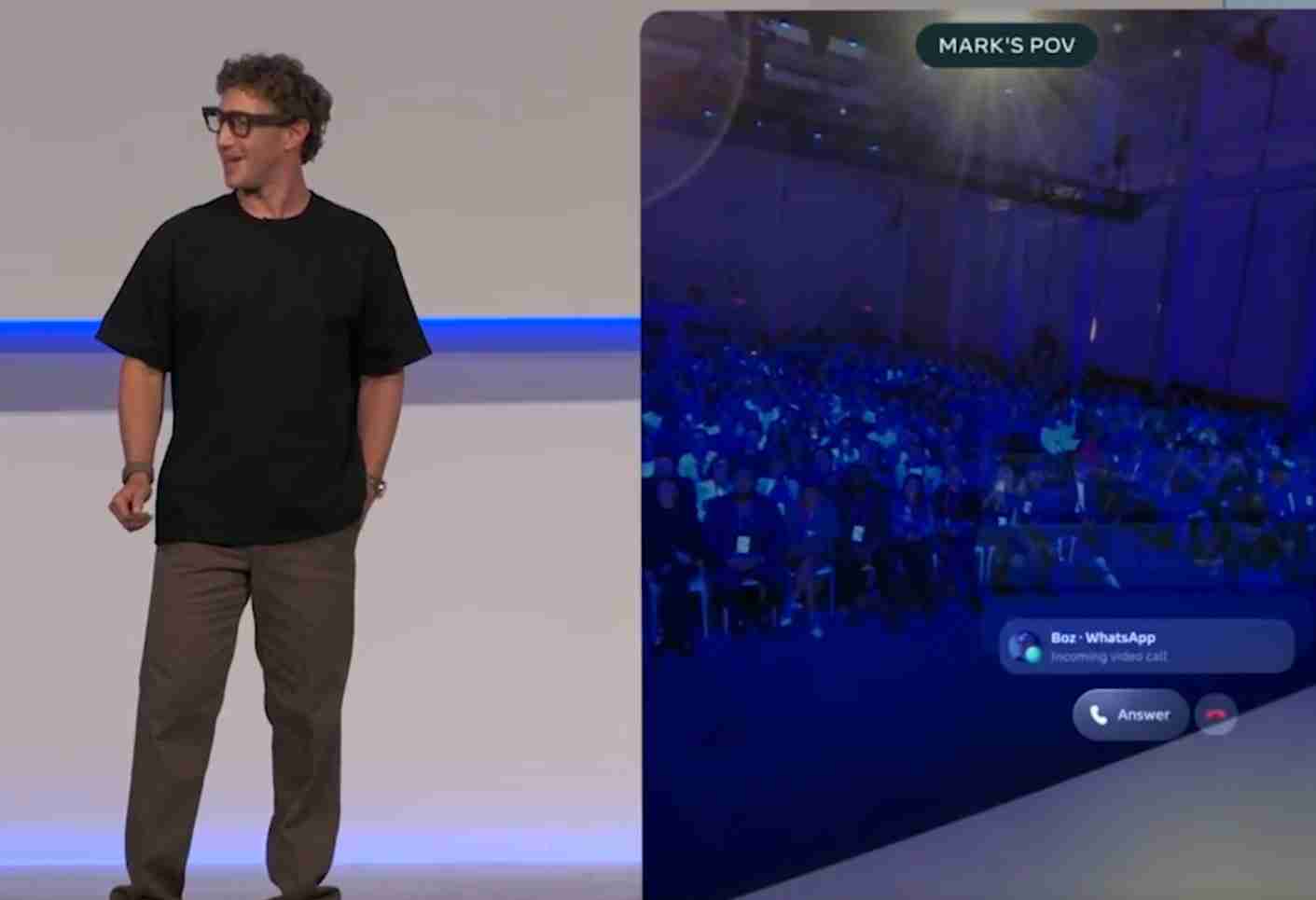
Later, a WhatsApp video call attempt failed: the glasses did not display the answer option and the screen went dark. That pause was replayed across social and news clips and analyzed by outlets including CNET: Bad luck for Zuckerberg and Engadget: Meta CTO explains the cause.
Early theories: Wi‑Fi chaos or something else?
Observers and onstage participants initially blamed the packed hall and thousands of devices for Wi‑Fi congestion — a common cause of flaky live demos. That hypothesis seemed plausible while issues unfolded live.
Meta’s investigation shifted the narrative. Engineers found a software and configuration problem: a voice command — reportedly “Hey Meta, start Live AI” — triggered Live AI across many Ray‑Ban units in the hall, not just the demo pair. Those devices sent near‑simultaneous requests to a development backend, overwhelming it. CTO Andrew Bosworth called the result a “self‑inflicted DDoS” and emphasized the issue was server‑side rather than ordinary Wi‑Fi congestion — Engadget, TechCrunch.
Meta also identified a separate bug that caused the display to go dark during the WhatsApp call, preventing the call‑answer UI from appearing at a critical moment — as reported by CNET.
What Meta says and how the company framed the problem
Meta framed the faults as demo‑specific and not representative of typical consumer experience. Executives stressed the chain of unusual, coincident events during a high‑profile presentation rather than an inherent defect in the AI models or hardware.
Still, Meta acknowledged mistakes: publishing infrastructure pointed to a development server (a configuration error) and a voice command could affect many units at once, revealing insufficient isolation between demo controls and devices in the field — issues Meta says it will address — Engadget, TechCrunch.
Industry reaction: skepticism and lessons for live AI demos
Tech writers called the episode an embarrassing moment for a company heavily invested in AI and wearables. Analysts used it to argue that AI hardware still struggles in real‑world conditions, especially when demos depend on centralized services or shared servers — see coverage from Futurism.
Security experts pointed out that centralized commands and insufficient dev/prod separation create single points of failure; a single voice trigger can cascade into large outages if systems lack isolation and safeguards.
Commentators also warned that high‑pressure demos are poor venues to test systems that rely on many moving parts and live networks — a point explored in analysis pieces such as Meyka: Zuckerberg’s AI glasses demo ends in embarrassing tech fail.
Why this matters for everyday users and lawmakers
The demo’s visible failures raise practical concerns: could a voice command reach many devices in a crowd and create privacy or safety issues? Could untested interactions among devices, servers, and networks disrupt services?
Regulators watching Meta’s AI hardware bets may take note; the incident could fuel calls for clearer standards on testing, data routing, transparency, and fail‑safes for devices that interact with the public in real time.
Implications for Redding, California
Economic impact
Local businesses — especially retailers and service providers in Redding — should watch how wearable AI products are rolled out. Stores selling Ray‑Ban AI glasses or offering tech support could see returns and service calls if early units have bugs. Meta’s long‑term investments could still lead to future sales, but early missteps may slow local consumer interest.
Tourism and outdoor recreation depend on reliable tech for navigation or translation; unreliable gadgets that fail publicly could damage consumer trust locally.
Political consequences
Conservative voters in Shasta County and the Redding area may view the demo as evidence of big tech overreach. The episode supports arguments for stricter accountability, clearer safety standards, and oversight of firms deploying AI into everyday life. Local policymakers may feel pressure to seek tighter rules on testing and transparency.
Social effects
Privacy‑conscious residents will likely cite the incident as a reason for skepticism. Wearable AI raises questions about who controls data streams and how easily devices can be affected in crowded places. Conversely, tech‑savvy residents may push for local training so users understand device limits and safe practices.
Cultural relevance
Redding’s DIY, self‑reliant culture may make residents less tolerant of tech that promises convenience but fails when needed. The Meta Connect fail reinforces local values around testing, accountability, and getting things right before public rollout.
Practical applications
- First responders and county agencies exploring wearables should demand rigorous field testing to avoid reliance on fragile networks or single servers.
- Local schools and vocational programs could use the episode as a case study in tech ethics, network design, and resilient system engineering.



