
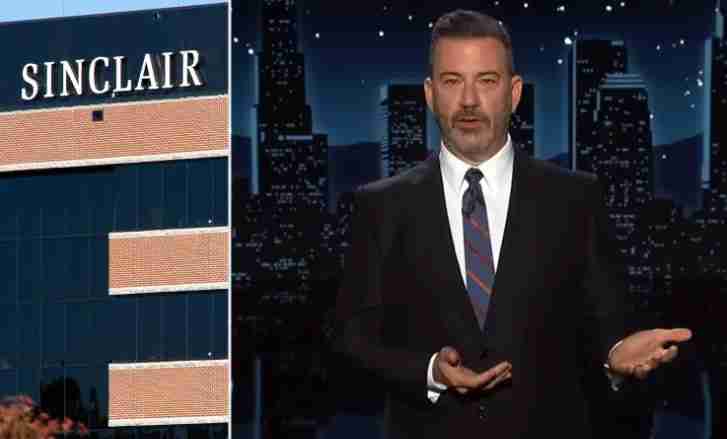
Sinclair Pulls ‘Jimmy Kimmel Live!’ from 39 ABC Affiliates, Citing Host’s Comments; Talks with ABC Continue
Sinclair Broadcast Group has removed “Jimmy Kimmel Live!” from its 39 ABC affiliate stations, replacing the late-night slot with local news while negotiations with ABC continue after controversial comments by the host tied to the Charlie Kirk assassination.
- Sinclair preempted the show on 39 ABC affiliates and will air local news in the slot while it negotiates with ABC — Sinclair Broadcast Group announcement.
- ABC briefly suspended Kimmel and then moved to reinstate the program; Sinclair says it will wait for further accountability — TMZ report.
- Sinclair demands an apology and donations to Charlie Kirk’s family and Turning Point USA, and has called for nationwide removal of the show — Gayety coverage.
- Unions and national figures warn of censorship, raising broader concerns about broadcaster power and free speech — Washington Examiner.
Background: what prompted Sinclair’s decision
The move followed comments by Jimmy Kimmel on his late-night program that linked the suspected shooter in the Charlie Kirk assassination to right-leaning politics. Reports indicated Kimmel implied the shooter had “MAGA” ties despite reporting that suggested different political leanings for the suspect. ABC briefly suspended Kimmel amid the backlash and then moved to return the show; Sinclair refused to follow suit for its affiliates. See initial coverage from Whiskey Riff and further reporting at TMZ.
Sinclair’s public statement
“Beginning Tuesday night, Sinclair will be preempting Jimmy Kimmel Live across our ABC affiliate stations and replacing it with news programming. Discussions with ABC are ongoing as we evaluate the show’s potential return.”
Vice Chairman Jason Smith characterized Kimmel’s remarks as “inappropriate and deeply insensitive at a critical moment for our country,” saying Sinclair has a duty to “foster respectful, constructive dialogue.” (Gayety).
What Sinclair is asking for
- Formal apology and donations: Sinclair has requested a public apology from Kimmel and a financial contribution to Charlie Kirk’s family and Turning Point USA (Gayety).
- Nationwide removal or accountability: Sinclair demanded ABC remove the show nationwide or demonstrate professionalism and accountability before any reinstatement on Sinclair stations (Gayety).
Industry and political reaction
Labor unions representing writers and performers condemned Sinclair’s action as censorship. The Writers Guild of America and SAG-AFTRA warned that the blackout threatens free speech and sets a precedent that could chill creative expression; SAG-AFTRA called the decision “the type of suppression and retaliation that endangers everyone’s freedoms.” (Gayety).
Regulatory and political voices also weighed in: FCC Chair Brendan Carr criticized Kimmel’s remarks as “truly sick” and suggested potential regulatory scrutiny, while political leaders from both parties framed the episode in terms of media responsibility and pressure on outlets. Coverage includes Whiskey Riff and Gayety.
Other station groups such as Nexstar have reportedly preempted the program in certain markets, further disrupting ABC’s late-night lineup (TMZ, Gayety).
Current status and practical effects for viewers
Sinclair is maintaining the blackout of “Jimmy Kimmel Live!” across its ABC stations and is filling the late-night slot with local or syndicated news programming while talks with ABC continue. That leaves viewers in Sinclair markets without the late-night show on the local over-the-air ABC affiliate. Viewers can still access the program via streaming platforms, national feeds, or non-Sinclair ABC affiliates carried on cable or satellite in some markets (Whiskey Riff, TMZ).
Why this matters: media censorship and free speech debates
The incident intensified national discussion about the influence of broadcast owners and the limits of speech on television. Supporters of Sinclair argue stations must hold on-air talent accountable for sensitive statements; critics say withholding programming is censorship that grants corporate owners disproportionate control over public discourse. Unions and Hollywood groups framed Sinclair’s action as an attack on creative freedom, while Sinclair and its supporters framed it as accountability (Gayety, Washington Examiner).
Implications for Redding, California
Economic impact
Advertising and revenue shifts: If Redding viewers rely on a Sinclair-owned ABC affiliate, late-night ad inventory changes may alter rates and reach. Dollars could shift to local news production or syndicated content, and stations that add local news may need additional staffing or resources — short-term costs that could produce long-term audience gains (Whiskey Riff).
Political consequences
Local political messaging may leverage the debate over media bias and free speech. Conservative viewers in Redding could view Sinclair’s action as defending accountability, and campaigns may incorporate the issue into election-season narratives.
Social effects
Audience trust will be tested: some will applaud Sinclair’s approach, while others will decry it as censorship. Local stations must clearly explain programming decisions to preserve credibility and navigate a divided viewership.
Practical applications for residents
- How to watch: Residents who rely on a Sinclair-owned affiliate can switch to streaming apps, cable or satellite packages that carry non-Sinclair ABC feeds, or watch Kimmel online.
- Local news coverage: The preemption may produce more late-night local reporting, sports updates, or community stories — potentially useful for viewers seeking local content (Whiskey Riff).
Sources and further reading
Ongoing talks between Sinclair and ABC will determine whether the blackout ends, expands, or transitions to a different resolution. For Redding residents, immediate concerns are where to watch and how local stations will reallocate the late-night slot to serve community needs.



