
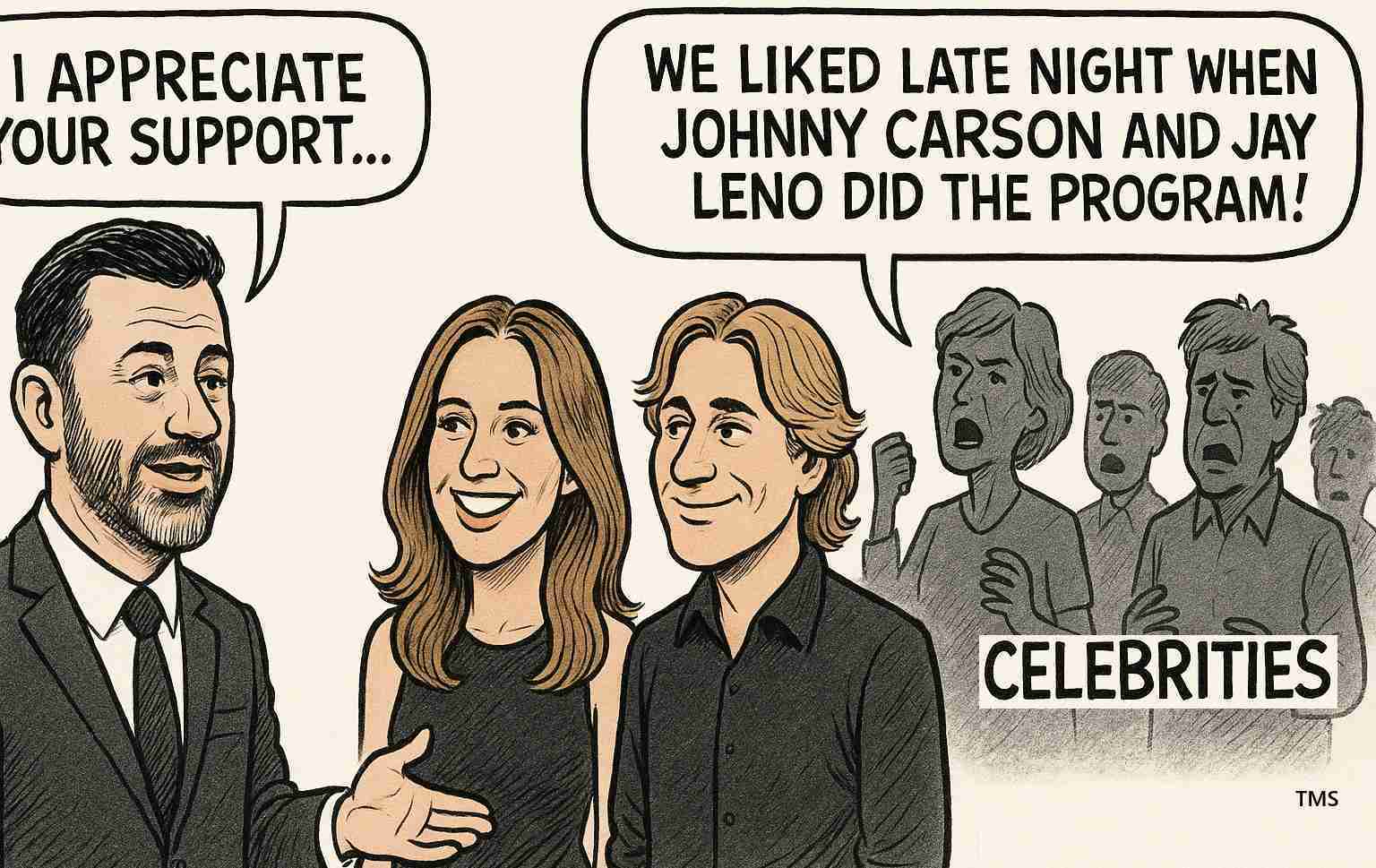
Jimmy Kimmel cancellation sparks fierce Hollywood split as late-night debate returns to Carson vs. Leno era
ABC’s mid-2025 cancellation of “Jimmy Kimmel Live!” has reopened a fierce Hollywood debate over late-night’s role, splitting stars, writers, advertisers and viewers between politically engaged hosts and a return to the neutral, entertainment-first Carson/Leno model.
Key takeaways
- ABC ended “Jimmy Kimmel Live!” in mid-2025, citing shifting viewer habits, advertiser caution and cost pressures (Times Media Service).
- Hollywood is split: supporters defend Kimmel’s political voice; opponents favor a nonpartisan, Carson/Leno-style return.
- Audience divide: analytics show about a 50-50 split—older viewers favor nonpolitical late-night; younger viewers prefer issue-driven hosts.
- Networks and advertisers are weighing brand safety and revenue stability against cultural relevance for younger demographics.
Kimmel’s style and why it matters
Jimmy Kimmel built a late-night brand that mixed celebrity interviews, sketches and pointed political commentary. Over the last decade, his monologues and interviews regularly addressed health care, gun violence, immigration and presidential politics. For many viewers and celebrities, that mix was a welcome use of a high-profile platform; for others, it became a turnoff.
Supporters say Kimmel used the platform responsibly to spotlight urgent problems and hold power to account. Actors and musicians quoted in coverage praised his interviews for pushing issues into public view and for blending emotion with journalistic urgency. Industry allies argue that when news and politics dominate the national conversation, late-night hosts who engage those topics provide an important public function.
“When national debate is unavoidable, a late-night host who speaks to it can amplify issues and hold leaders accountable,” — summarized view from supporters cited by Times Media Service.
Critics and the call for a return to Carson/Leno
Opponents — including veteran comedians and family-friendly stars — argue political late-night has driven viewers away from network television. They point to the Johnny Carson and Jay Leno models, hosts who favored broad jokes, celebrity banter and musical guests while avoiding hard political takes.
Critics contend late-night should be an escape from partisan battles, restoring a nightly ritual that once united audiences across the political spectrum and attracted steady advertisers.
“Late-night should let viewers tune out politics and laugh together,” — common refrain among opponents quoted in reporting.
Industry perspectives: networks, advertisers and writers
Network executives told Times Media Service the decision to end Kimmel’s show stemmed from several pressures: declining linear ratings, audience fragmentation to streaming and clips, and advertiser sensitivity to controversy. Advertisers prioritize predictable, brand-safe environments; controversy around political segments has sometimes prompted sponsor pullback.
Writers, producers and talent scouts are monitoring which model will dominate. Internal industry surveys cited in reporting indicate roughly 60% of network decision-makers and late-night writers expect future shows to trend back toward “safer,” less divisive comedy to capture broader audiences, while about 40% argue that maintaining an edgy, politically engaged tone is essential to staying relevant with younger viewers.
Polling and audience split
Media analytics cited by Times Media Service show approximately a 50-50 nationwide split in viewer preference. Older viewers (35 and up) skew toward classic, nonpolitical late-night entertainment; younger viewers (18–34) frequently prefer hosts who address current events and take firm stances on issues. This demographic split carries direct consequences for advertisers and local affiliates that depend on consistent audience numbers for ad revenue.
Examples on both sides of the debate
In public remarks after the cancellation, high-profile entertainers aligned with both positions. Supporters praised Kimmel’s willingness to confront issues and elevate causes. Opponents urged a return to harmless humor and celebrity-driven interviews to repair network ratings and restore broad appeal.
Industry nuance: the split is not strictly ideological — some left-leaning hosts have favored lighter programming when ratings dipped, and some conservative performers have used topical humor when it fit audiences. The central question remains whether late-night’s mission is to reflect cultural debates or to provide a neutral, communal winding-down space.
The legacy models: Johnny Carson and Jay Leno
Carson and Leno crafted shows designed to be comfortable, familiar and broadly welcoming. Their monologues focused on general-interest jokes and interviews emphasized entertainment rather than politics. Advocates for a Carson/Leno comeback argue networks would benefit from programming that avoids polarizing content and prioritizes musical acts, comedy sketches and celebrity interviews.
Supporters point to the financial stability that broad appeal once delivered as a blueprint for rebuilding a mass late-night audience.
The cultural stakes and future of late-night TV
The debate over Kimmel’s cancellation is a proxy for television’s role in a polarized country. If networks pivot back to nonpolitical formats, expect more shows emphasizing entertainment value and cross-demographic jokes. If they maintain or expand politically engaged late-night, networks will cater to highly engaged, issue-driven viewers and accept a more fragmented audience.
Practical realities also shape choices: family-friendly content attracts a wider advertiser base, and a neutral tone can make clips easier to repackage across platforms without triggering boycotts.
Sources and attribution
Reporting for this story relied on Times Media Service interviews with industry executives, writers and talent agents, public statements from entertainers, and media analytics cited to illustrate audience trends. Specific voices and aggregate polling results referenced here are drawn from Times Media Service reporting and industry sources available to the publication.
Implications for Redding, California
Economic impact: Local advertisers and affiliates in markets like Redding will feel ripple effects. A shift back to Carson/Leno-style late-night could increase the value of late-night ad slots and stabilize TV ad rates. If late-night remains politicized and ratings fragment, local stations may see lower late-hour ad revenue, pushing media buyers toward digital platforms.
Political consequences: For conservative viewers in Redding, the cancellation and debate reinforce concerns about national outlets skewing politically. A return to nonpolitical late-night would likely be welcomed by many local conservatives and could become a talking point for local politicians.
Social effects: Late-night tone affects routines. In Redding, where many viewers favor traditional family and community norms, a less political late-night could increase shared viewing and reduce polarizing dinner-table conversations. Younger residents preferring politically engaged content could migrate to streaming and niche online shows.
Practical applications: Local stations should monitor network decisions and adjust scheduling and ad packages. Redding businesses should reassess late-night ad buys in light of potential programming changes. Community organizations and local entertainers might pursue guest slots or locally targeted segments to ensure hometown representation if national late-night pivots toward broadly appealing formats.



