Hakeem Jeffries Skips Vigil: “I had a meeting” — Jeffries 4-Word Answer Raises Questions After Charlie Kirk Vigil at Capitol
House Minority Leader Hakeem Jeffries gave a terse, four-word explanation — “I had a meeting” — for skipping the Capitol vigil honoring Charlie Kirk, prompting questions about Democratic turnout, optics, and leadership after the conservative activist’s killing.
Key takeaways
- Jeffries’ reply: When asked why he did not attend the vigil, Jeffries answered simply, “I had a meeting.” Source: Fox News.
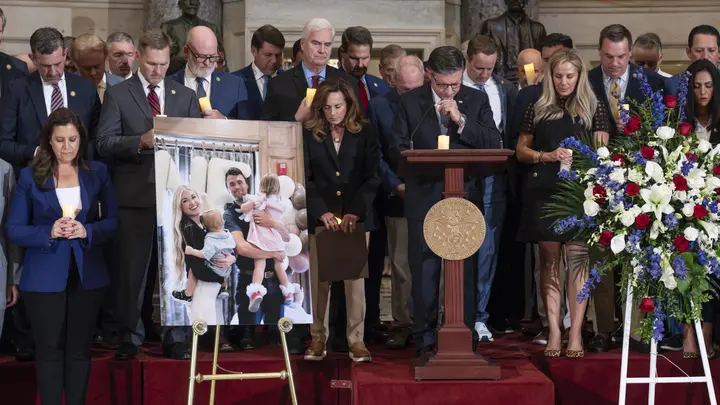
- Location: The vigil was held in Statuary Hall to honor Charlie Kirk, who was killed at a campus speaking event in Utah. Source: Fox News.
- Partisan split: Dozens of Republican lawmakers attended while only a handful of House Democrats were present; top Democratic leaders, including Jeffries, did not attend. Source: Fox News.
- Follow-up exchange: When pressed about low Democratic turnout, Jeffries said, “I don’t know,” and suggested reporters ask individual Democrats. Source: Fox News.
Details
Jeffries’ brief response and the press exchange
At an afternoon press appearance in the Capitol, reporters asked House Minority Leader Hakeem Jeffries why he had not attended the vigil held in Statuary Hall. His reply was short: “I had a meeting.” That four-word answer halted the initial line of questioning but prompted fresh scrutiny over priorities and public perception.
“I had a meeting.” — Hakeem Jeffries
Reporters pressed further about the notably low Democratic turnout. Jeffries responded, “I don’t know,” and directed questions to individual House Democrats about their reasons for attending or not attending. He did not name the meeting that kept him away or indicate whether it conflicted with other congressional obligations. (Source: Fox News.)
Attendance at the Charlie Kirk vigil and partisan split
The memorial in the U.S. Capitol’s Statuary Hall drew substantial Republican participation. Dozens of GOP lawmakers were photographed and recorded paying respects to Charlie Kirk after his assassination at a campus event in Utah. In contrast, only a small group of House Democrats attended, including:
- Rep. Tom Suozzi
- Rep. Marie Gluesenkamp Perez
- Rep. John Larson
- Rep. Jimmy Panetta
- Rep. Debbie Dingell
- Rep. Chris Pappas
- Rep. Don Davis
Notably absent were the top four House Democrats in leadership, including Jeffries. Republicans and conservative commentators have seized on the optics, arguing such moments call for bipartisan solidarity after a politically motivated killing. House Speaker Mike Johnson downplayed the partisan framing, emphasizing the event’s intended bipartisan nature and saying he was not disappointed by Democratic attendance. (Source: Fox News.)
“I was not disappointed by Democratic turnout,” — House Speaker Mike Johnson
Why the brief answer matters: optics, leadership and expectations
For many observers, the question is straightforward: when a high-profile activist is killed in a violent attack, should congressional leaders attend a Capitol vigil? Critics say the absence of top Democrats paired with strong Republican turnout conveys the wrong message about national mourning and congressional unity. Supporters of Jeffries point to legitimate scheduling conflicts — committee work, constituent meetings, or classified briefings — and argue that not every absence indicates indifference.
Messaging matters. The terse “I had a meeting” answer left little room for explanation and created an opening for opponents to frame the narrative as avoidance or indifference. Clearer communication about scheduling or reasons for absence, critics say, would have reduced the optics problem.
Security, free speech and campus unrest: the broader context
The vigil followed the assassination of Charlie Kirk at a campus speaking event — an incident that amplified concerns about security at public events, campus safety, and political violence. Lawmakers on both sides have been asked to respond to those threats. For constituents who prioritize free speech and safe public discourse, visible legislative mourning can serve as reassurance that threats to open debate are taken seriously.
At the same time, elected officials must balance competing duties. Jeffries’ one-line explanation suggests a scheduling conflict, but critics note that naming or describing the meeting could have defused speculation.
Source attribution and reporting notes
This report draws on contemporaneous press coverage of the event and of Jeffries’ remarks. Key reporting and coverage of Jeffries’ answer and the vigil are available from Fox News.
Implications for Redding, California
Economic impact
Direct economic effects in Redding are expected to be minimal. However, the national conversation about political violence and campus safety can influence local economies tied to events and college activities. If security concerns rise, local venues and universities may increase spending on security, crowd-control staffing, and event insurance — costs often passed to organizers and attendees.
Political consequences
For conservative voters in Redding, the episode may reinforce distrust of Democratic leadership in Washington. Local Republican campaigns and community leaders could use the story to argue that national Democrats prioritize internal meetings over public displays of unity, mobilizing turnout ahead of county and congressional elections.
Social effects
The episode may deepen local political divides. Talk radio, editorial pages, and social media in the Redding area could amplify the story, framing it either as partisan coldness or as a matter of scheduling. Families and neighbors may use the story as a focal point for broader debates about respect, civility, and public officials’ responses to tragedy.
Cultural relevance
Redding’s community values often emphasize free speech, personal responsibility, and support for law enforcement. Some residents may view the absence of top Democrats as a cultural slight; others will advocate for measured responses that avoid politicizing grief.
Practical applications for residents
- Community organizers, faith leaders, schools, and colleges can host memorials or forums that bridge partisan divides and focus on safety and free speech.
- Voters can contact regional members of Congress to ask whether their offices attended the Capitol vigil or took other actions addressing the incident and related safety concerns.
- Local leaders may host panels on campus safety, free speech, and nonviolence to respond constructively.
Reporting and accountability
Local outlets and opinion platforms in Redding may follow up by asking regional members of Congress to explain their positions and actions. Such scrutiny can clarify for constituents how national controversies translate to local priorities and conduct.
Sources
Primary source for reporting on Jeffries’ remarks and the vigil: Fox News.