
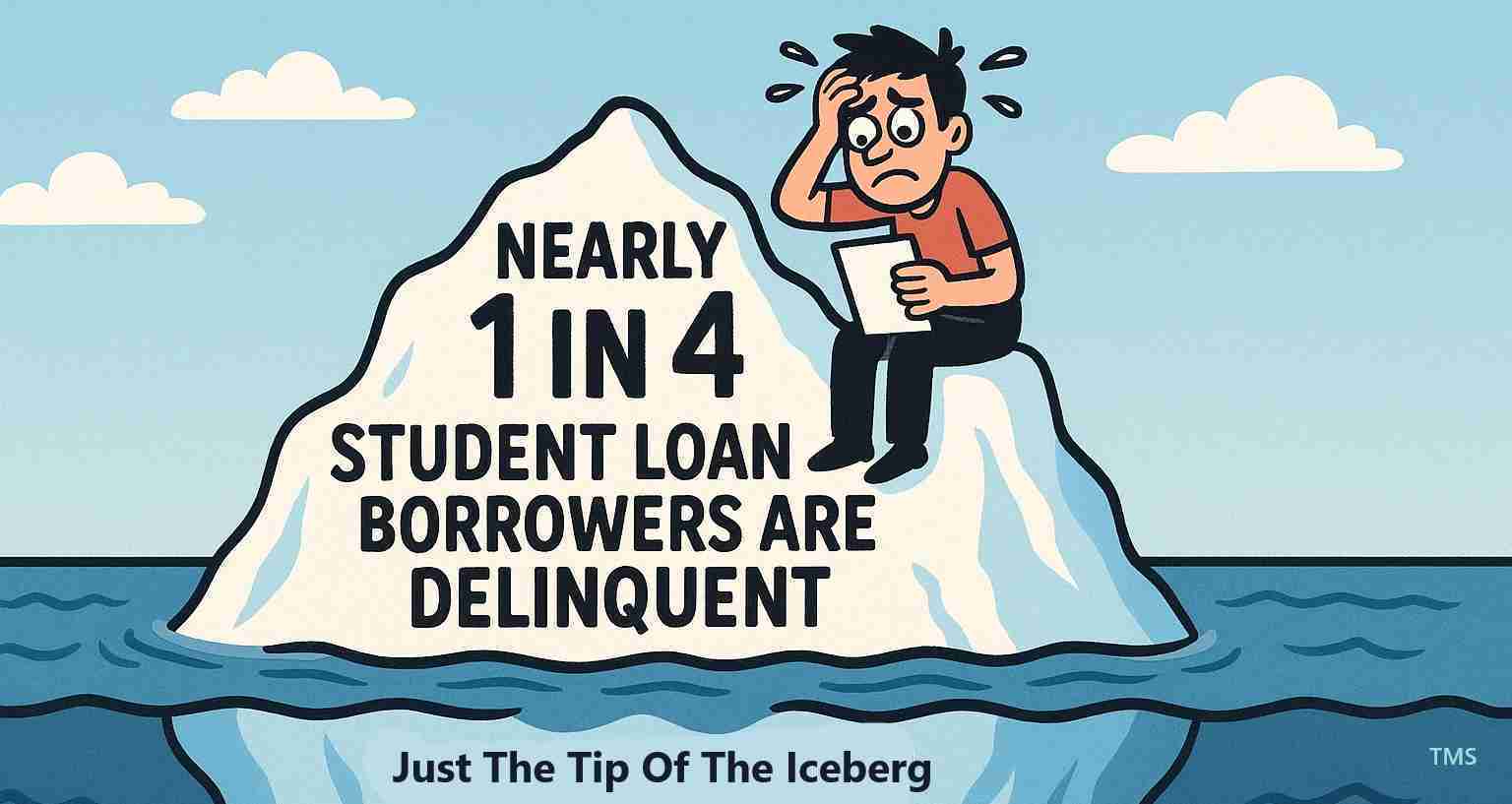
Student loan delinquencies surge nationwide in 2025, older borrowers hit hardest
Student loan delinquencies across the United States have reached unprecedented levels in 2025, heavily impacting borrowers nationwide. Official reports confirm a significant surge in missed payments, with older Americans disproportionately affected, facing increased risk of default and severe financial consequences.
- Record jump: As of April 2025, federal borrowers 90+ days delinquent climbed to historic levels, driven by the end of the pandemic moratorium.
- Older borrowers worst hit: Serious delinquency rose fastest for those 50+, who face heightened default risk and fixed-income pressures.
- Credit and collections consequences: Millions have seen major credit-score declines; resumed collections can lead to garnishment and benefit offsets.
- Local impact: Communities such as Redding, California may face reduced spending, increased demand for counseling, and political debate over targeted relief.
National data: the scale of the surge
Official and industry data show a stark reversal of pandemic-era improvements. TransUnion reports that as of April 2025, 31% of federal student loan borrowers were 90+ days delinquent, a record level and roughly a 50% jump since February 2025 — data summarized by TransUnion. At the same time, the Federal Reserve Bank of New York’s aggregate figures — summarized in reporting by Fox Business — show about 10.2% of student loan balances were 90+ days past due in Q2 2025, reversing pandemic-era gains.
Why the numbers jumped: end of the moratorium and resumed collections
After 2020 federal policy paused most federal student loan payments and stopped reporting delinquencies to credit bureaus, many borrowers avoided immediate credit harm while incomes adjusted. That pause ended late in 2024 and, in 2025, payments, interest accrual and reporting resumed — the primary catalyst for the swift rise in missed payments. Multiple analyses point to the restart of active collections and reporting as the main driver (Fox Business; TransUnion).
Older borrowers: the sharpest climb in delinquencies
A defining feature of the current wave is its disproportionate effect on older Americans. Serious delinquency (90+ days past due) rose fastest for borrowers aged 50 and above: by mid-2025 roughly 18% of borrowers 50+ were seriously delinquent, up from about 10% in 2019. For comparison, serious delinquency rates are about 14% for ages 40–49, 11% for ages 30–39, and 8% for ages 18–29 — figures detailed by reporting from the Times of India.
Why older borrowers struggle more:
- Late-life or family-related loans: Many took on debt later for career changes or to help children attend college; expected income gains often did not materialize (Times of India).
- Fixed incomes and retirement pressure: Near-retirees face tighter budgets; renewed payments force trade-offs between debt and essentials.
- Lower awareness of relief: Enrollment in income-driven plans and other protections is uneven, leaving many vulnerable when payments resume (Times of India).
Consequences: credit damage, defaults and long-term risk
The financial fallout is already visible. Counseling groups report that more than 2.2 million borrowers experienced credit drops exceeding 100 points, while over a million saw declines of at least 150 points tied to student loan delinquency (Parachute Credit Counseling). Lower credit scores affect homebuying, auto loans, insurance rates and rental access.
“Once collections resume, interest accrues and enforcement steps — including garnishment and offsets — can quickly push vulnerable borrowers into default,” analysts warn, highlighting risks for seniors on fixed incomes (TransUnion; Times of India).
Policy and relief options: what borrowers and policymakers can do
Experts urge immediate action to avoid default. Options include enrolling in income-driven repayment plans, requesting temporary hardship forbearance, or seeking counseling to negotiate alternatives. However, uptake varies and administrative hurdles can slow relief (Times of India; Parachute Credit Counseling).
For policymakers, proposals include targeted outreach to older borrowers, simplifying income-driven plans, clearer communications about consequences, and protections that prevent garnishment of essential fixed benefits. Observers stress balancing fiscal responsibility with measures to avoid pushing seniors into poverty (TransUnion; Fox Business).
Sources and reporting notes
This report draws on industry and media analyses: TransUnion, reporting on Federal Reserve Bank of New York findings summarized by Fox Business, counseling analysis from Parachute Credit Counseling, age-group reporting from the Times of India, and background on long-term impacts from New America.
Implications for Redding, California
Economic impact
Redding and Shasta County could see older borrowers tighten budgets, reducing spending on retail, services and home repairs. Local lenders and landlords may face more residents with weakened credit, potentially increasing rental instability and lowering tax receipts (Parachute Credit Counseling).
Political consequences
The spike among older voters is likely to surface in local and statewide politics. In Redding’s conservative electorate, there may be greater demand for targeted protections for seniors and streamlined access to relief rather than broad forgiveness. Local leaders who push for clearer federal rules and easier enrollment in income-driven plans could gain support (TransUnion).
Social effects and community risk
Nonprofits and social services may see increased demand for financial counseling, housing assistance and emergency aid as older borrowers face reduced income or credit. Churches, community centers and consumer counselors can be key to outreach and assistance (Parachute Credit Counseling).
Practical steps for Redding residents
- Check your status now: Log in to the federal loan portal or contact your loan servicer to confirm if payments are due or if an account is delinquent (TransUnion).
- Explore income-driven repayment: Older borrowers on limited income may qualify for plans that lower monthly payments and reduce default risk (Times of India).
- Seek local counseling: Redding nonprofits and consumer credit counselors can help review options and apply for relief — organizations such as Parachute Credit Counseling provide resources to limit credit damage.
- Act on collection notices: If you receive notices about garnishment or federal offsets, respond quickly to dispute or request temporary relief to avoid long-term harm.
Reporting note: National and financial-data sources informed this article. Local interviews and additional reporting are being pursued to illuminate community impacts in Redding. Sources used include TransUnion; Fox Business; Parachute Credit Counseling; Times of India; and New America.



