
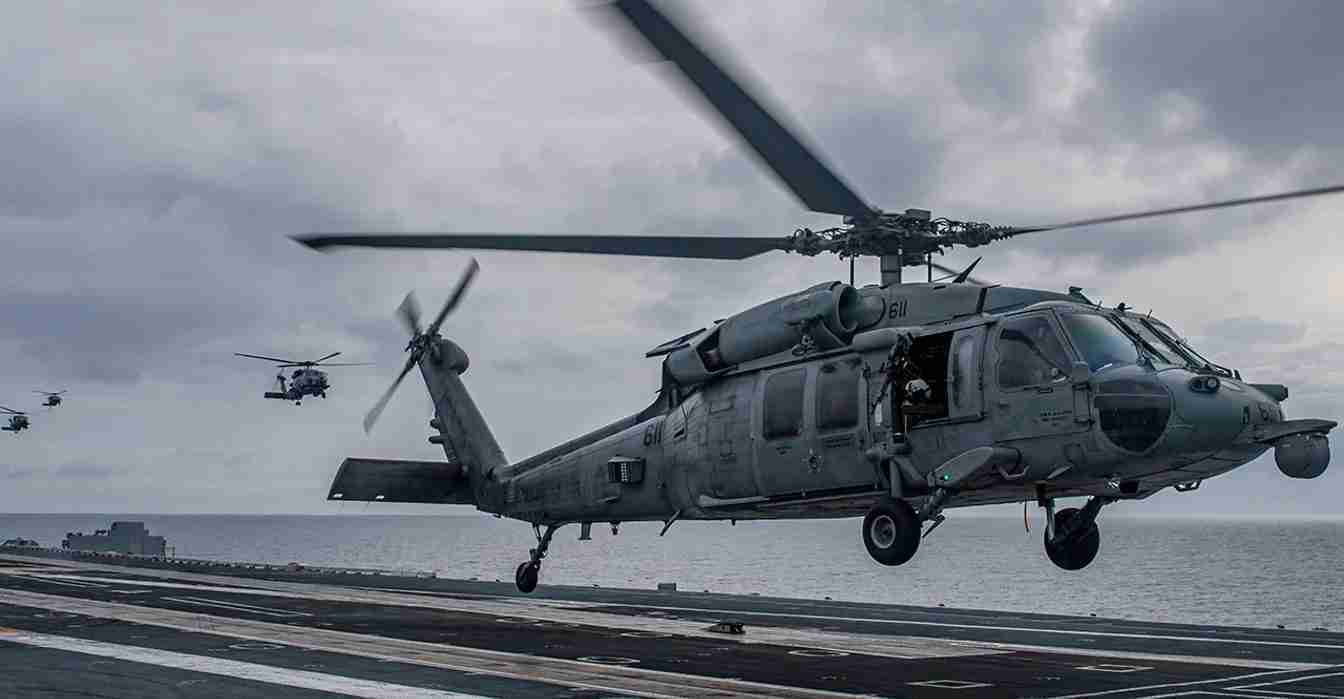
Two Navy aircraft from USS Nimitz go down in South China Sea; all crew rescued in separate incidents
Two U.S. Navy aircraft from the carrier USS Nimitz — an MH-60R Sea Hawk and an F/A-18F Super Hornet — crashed in the South China Sea on October 26, 2025; all five crew were successfully rescued, uninjured.
Key takeaways
- Two separate mishaps: an MH-60R Sea Hawk crashed at about 2:45 p.m., and an F/A-18F Super Hornet crashed roughly 30 minutes later while operating from USS Nimitz.
- All crew recovered: Carrier Strike Group 11 search-and-rescue teams recovered three helicopter personnel and two jet aircrew; all five are reported stable and uninjured.
- Squadrons and ship: The Sea Hawk was with HSM-73 (“Battle Cats”); the Super Hornet was with VFA-22 (“Fighting Redcocks”); both operated from USS Nimitz during an Indo-Pacific deployment.
- Investigations under way: The U.S. Pacific Fleet has opened formal investigations; no causes or evidence of hostile action have been released.
What happened, according to official and open sources
The two mishaps occurred within minutes of each other while USS Nimitz (CVN 68) was operating in the South China Sea. Open-source aviation outlets and military reporting compiled video and official statements to establish the timeline and immediate actions.
The MH-60R Sea Hawk entered the water at approximately 2:45 p.m. local time during routine operations; its three-person crew was recovered quickly. About 30 minutes later, an F/A-18F Super Hornet crashed during a separate mission; search-and-rescue assets retrieved the two-person jet crew. Both rescues were reported successful and without injuries.
Reporting and timelines were provided by outlets including TheAviationist, Stars and Stripes, and publicly posted video of search-and-rescue activity on YouTube.
Squadrons, ship and deployment context
The MH-60R was assigned to Helicopter Maritime Strike Squadron 73 (HSM-73, “Battle Cats”), while the F/A-18F crew served with Strike Fighter Squadron 22 (VFA-22, “Fighting Redcocks”). Both aircraft were operating from the USS Nimitz, the Navy’s oldest active aircraft carrier, which has been on an extended Indo-Pacific deployment.
The incidents occurred during transit through the strategically sensitive and contested South China Sea, a region of heightened attention due to territorial disputes and freedom-of-navigation operations. The timing and location of the mishaps add strategic sensitivity to routine operational risk.
Rescue response and crew condition
Carrier Strike Group 11’s search-and-rescue teams reacted rapidly, launching rescue helicopters and coordinating shipboard assets to recover aircrew. Three personnel from the helicopter and two from the Super Hornet were recovered and reported in stable condition.
Visual evidence posted publicly documents the rapid search-and-rescue response, underscoring standard Navy procedures for aircraft mishaps at sea.
Detailed reporting on the rescues is available through Stars and Stripes and TheAviationist, while video clips show SAR assets in action (YouTube footage).
Investigations and what is known so far
The U.S. Pacific Fleet has announced formal investigations into both crashes. At this stage, officials have not released findings or causes. Naval aviation investigations typically include wreckage recovery, maintenance record review, and crew interviews and can take weeks to months to conclude.
Officials and reporters note that, to date, the incidents are being treated as accidents and there is no public indication of foreign involvement or hostile action.
Why the incidents matter now
The near-simultaneous loss of two aircraft from a single carrier highlights the inherent risks of carrier aviation and raises questions about maintenance, training, and aging platforms. The USS Nimitz, the Navy’s oldest active carrier, is nearing the end of its service life, which adds scrutiny to fleet readiness and sustainment practices.
Because the mishaps occurred in the contested South China Sea during an Indo-Pacific deployment, they carry strategic implications beyond immediate operational concerns, drawing attention from military planners, policymakers, and international observers.
Official communications and reporting limits
Public announcements have primarily come through U.S. Pacific Fleet channels and military reporting outlets. Reporting was affected by reduced government social media activity during a U.S. government shutdown, which limited immediate official statements. Independent outlets such as TheAviationist and Stars and Stripes provided timelines, squadron information, and rescue details based on available briefings and visual evidence.
Implications for Redding, California
Economic impact: Redding’s veterans, military families and defense contractors could be indirectly affected if investigations point to maintenance or parts issues; local contractors and service businesses may see increased demand.
Political consequences: Local leaders in this conservative-leaning area may press for transparency on fleet readiness and accelerated investment in replacement platforms; expect calls for accountability from elected officials and community groups.
Social effects: The community of veterans and reservists will follow the story closely; confirmation that all five crew were rescued will bring relief but may renew concerns about sailor safety on aging vessels.
Cultural relevance & practical applications: The incidents may spur renewed emphasis on STEM and aviation-maintenance education in local schools and colleges as leaders link workforce development to national security needs.
Sources and further reading
- TheAviationist: “USS Nimitz loses Sea Hawk and Super Hornet”
- Stars and Stripes: “Navy aircraft crash in South China Sea”
- Video of search-and-rescue and incident coverage
Ongoing coverage will track official investigation updates from U.S. Pacific Fleet, Carrier Strike Group 11, and the individual squadrons HSM-73 and VFA-22. Local leaders in Redding and Northern California veterans’ groups have been contacted for comment and are expected to respond as formal findings are released.



