
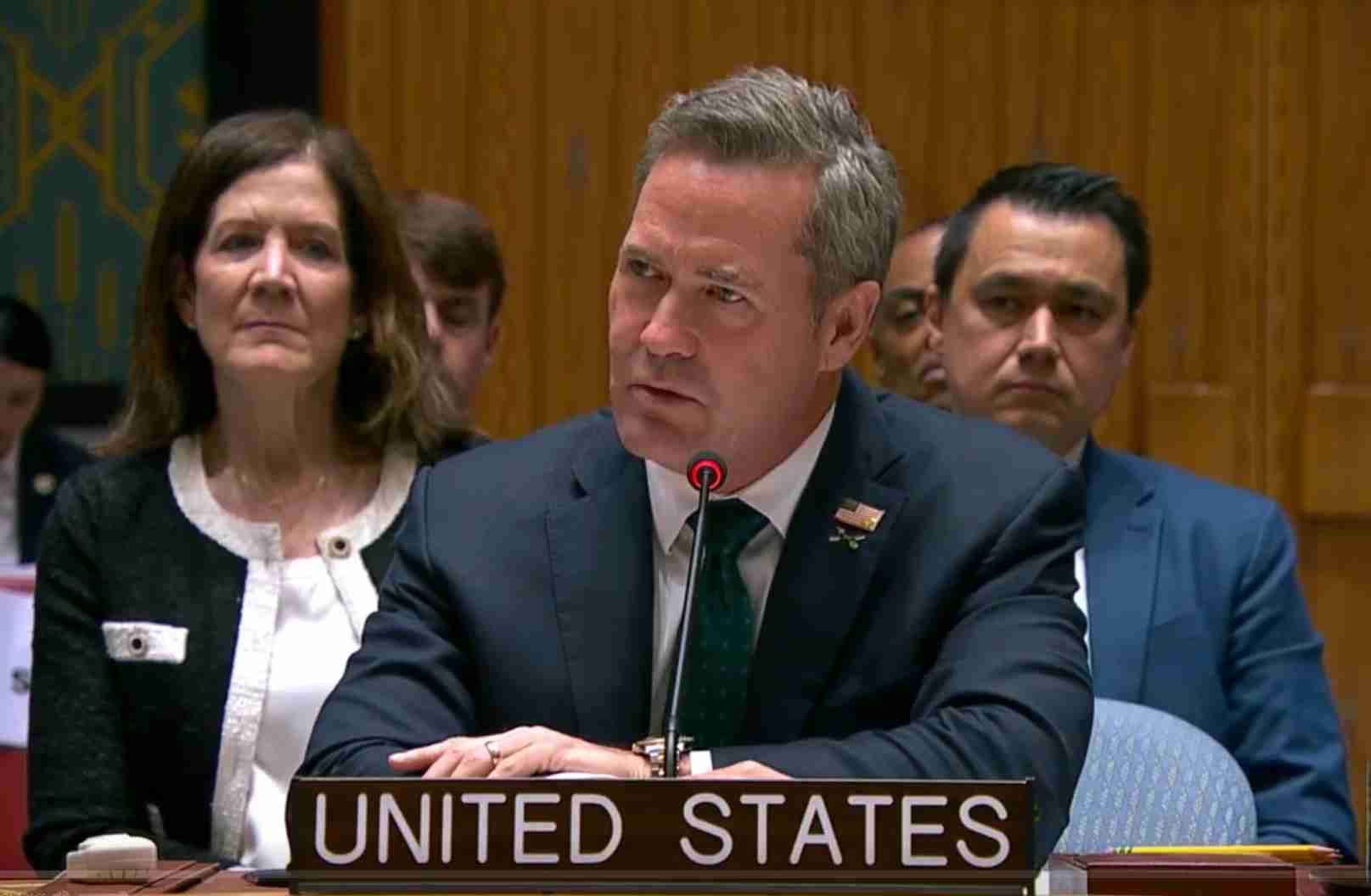
U.S. Envoy Vows to Defend “Every Inch” of NATO After Three Russian MiG-31 Jets Enter Estonian Airspace
U.S. Ambassador to the United Nations Mike Waltz pledged firm U.S. defense of NATO territory after three Russian MiG-31 jets illegally entered Estonian airspace near Vaindloo Island on Sept. 19, 2025, prompting NATO and U.N. emergency meetings.
Key takeaways
- Three armed Russian MiG-31 fighters crossed into Estonian airspace for about 12 minutes, up to 10 km in, near Vaindloo Island on Sept. 19, 2025.
- NATO response: Italian F-35s scrambled; Swedish and Finnish rapid-reaction aircraft shadowed and escorted the jets back to international airspace.
- Diplomacy: Estonia invoked Article 4; NATO and the U.N. convened emergency meetings; U.S. Ambassador Mike Waltz vowed to defend “every inch” of NATO territory.
- Contested facts: Estonia presented radar and photo evidence; Russia denies a violation and calls the claims fabricated.
What happened, in plain terms
Estonian officials say three Russian MiG-31 jets turned off their transponders, ignored calls from NATO controllers and crossed into Estonia close to the small island of Vaindloo for about 12 minutes on Sept. 19, 2025. Estonia showed radar screenshots and photos to back up the claim and called the episode a “crystal clear” breach of its airspace during a U.N. press briefing.
NATO aircraft, including Italian F-35 fighters from the Baltic Air Policing mission, scrambled to intercept. According to allied briefings, the Russian jets left after being escorted back toward international airspace by NATO and partner aircraft.
Sources cited by officials: U.N. press briefing; Security Council Report analysis; EstonianWorld evidence chart.
Why Estonia and NATO say this matters
Estonia framed the flight as part of a pattern of increasingly bold Russian movements near NATO borders. Estonian Foreign Minister Margus Tsahkna said this was the fourth such incursion into Estonian airspace in 2025 and described it as part of broader pressure on NATO’s eastern flank.
NATO members treat any unauthorized entry into a member’s airspace as a serious breach that can test the alliance’s ability to respond rapidly and coherently. Estonia invoked Article 4 of the NATO treaty, requesting consultations because it viewed the incursion as a threat to national security.
U.S. reaction and Mike Waltz NATO pledge
At an urgent U.N. Security Council session, U.S. Ambassador to the United Nations Mike Waltz warned:
“The United States will defend every inch of NATO territory.”
Waltz’s remarks reaffirmed long-standing U.S. and NATO policy on collective defense and were meant to reassure allies while signaling deterrence to Moscow amid several recent airspace incidents that have raised questions about response speed and deterrence.
Russian response
Moscow denied violating Estonian airspace, saying the MiG-31s were flying international routes and accusing Western nations of exaggeration and “Russophobic hysteria.” Russian officials dismissed the evidence presented by Estonia at the U.N. as fabricated. The dispute underscores how fast facts become contested in tense airspace incidents, with both sides using the episode for competing narratives.
Military and technical details
Estonian radar and photographic evidence shown to U.N. diplomats reportedly placed the three MiG-31s up to 10 kilometers inside Estonian territory for about 12 minutes. The MiG-31 is a high-speed, long-range interceptor capable of carrying air-to-air missiles. According to NATO briefings, the Russian jets had transponders switched off and did not file flight plans, complicating identification and tracking.
NATO scrambled Italian F-35s under its Baltic Air Policing mission; Swedish and Finnish aircraft also assisted in the response.
Related footage and briefings are available in allied and U.N. materials, including a public video briefing documenting allied response efforts: Video briefing and NATO response footage.
Diplomatic fallout and international response
The U.N. Security Council convened an urgent meeting where European NATO members and others backed Estonia and condemned the violation. NATO scheduled a North Atlantic Council meeting for Sept. 23 to discuss next steps. Western officials portrayed the incident as part of a broader campaign by Russia to test NATO’s readiness and resolve on the alliance’s eastern flank.
Responses combined public condemnation, urgent consultations, and increased surveillance of Baltic airspace.
Risk of miscalculation
Analysts warn that incidents like this increase the risk of unintended escalation. Fast-moving aircraft, electronic interference or turned-off transponders, and proximity to national capitals and military assets raise the chance that a mistake could trigger a larger conflict. NATO officials stress clear rules of engagement and rapid communications to reduce misreading intent.
Implications for Redding, California
Economic impact: Though Redding is far from the Baltic, global defense and security policy can affect local jobs and the economy. An uptick in NATO and U.S. patrols could bolster defense spending that benefits contractors and suppliers nationwide, potentially creating contracts for logistics and technology firms tied to California.
Political consequences: The incident may reinforce arguments for a strong defense posture among conservative voters in Redding. Local officials and candidates might cite Mike Waltz’s pledge to support continued U.S. leadership and military readiness.
Social effects: News of NATO tensions can drive interest among military families and veterans in Redding, boosting attendance at community events and forums on national security and veterans’ issues.
Cultural relevance: For communities that value strong national defense, the pledge to defend “every inch” of NATO territory will likely be reassuring and align with local priorities.
Practical applications for residents: Local leaders and first responders should note how global tensions can shift federal funding and priorities. Residents in logistics, aerospace, manufacturing or IT may see new contract opportunities if federal defense spending increases; veterans and military families could see expanded support programs.
Sources and further reading
- U.N. press briefing and Security Council summary
- Security Council Report analysis
- EstonianWorld report and evidence chart
- French UN mission commentary
- Radio Free Europe/Radio Liberty coverage of NATO reaction
- Video briefing and NATO response footage
Note: This report draws on official U.N. briefings, NATO and Security Council analysis, and materials provided by Estonian authorities documenting the Sept. 19 incursion. The episode adds to recent airspace tensions and tests NATO’s ability to defend members quickly and decisively, as underscored by Ambassador Mike Waltz’s pledge and allied military responses.



