
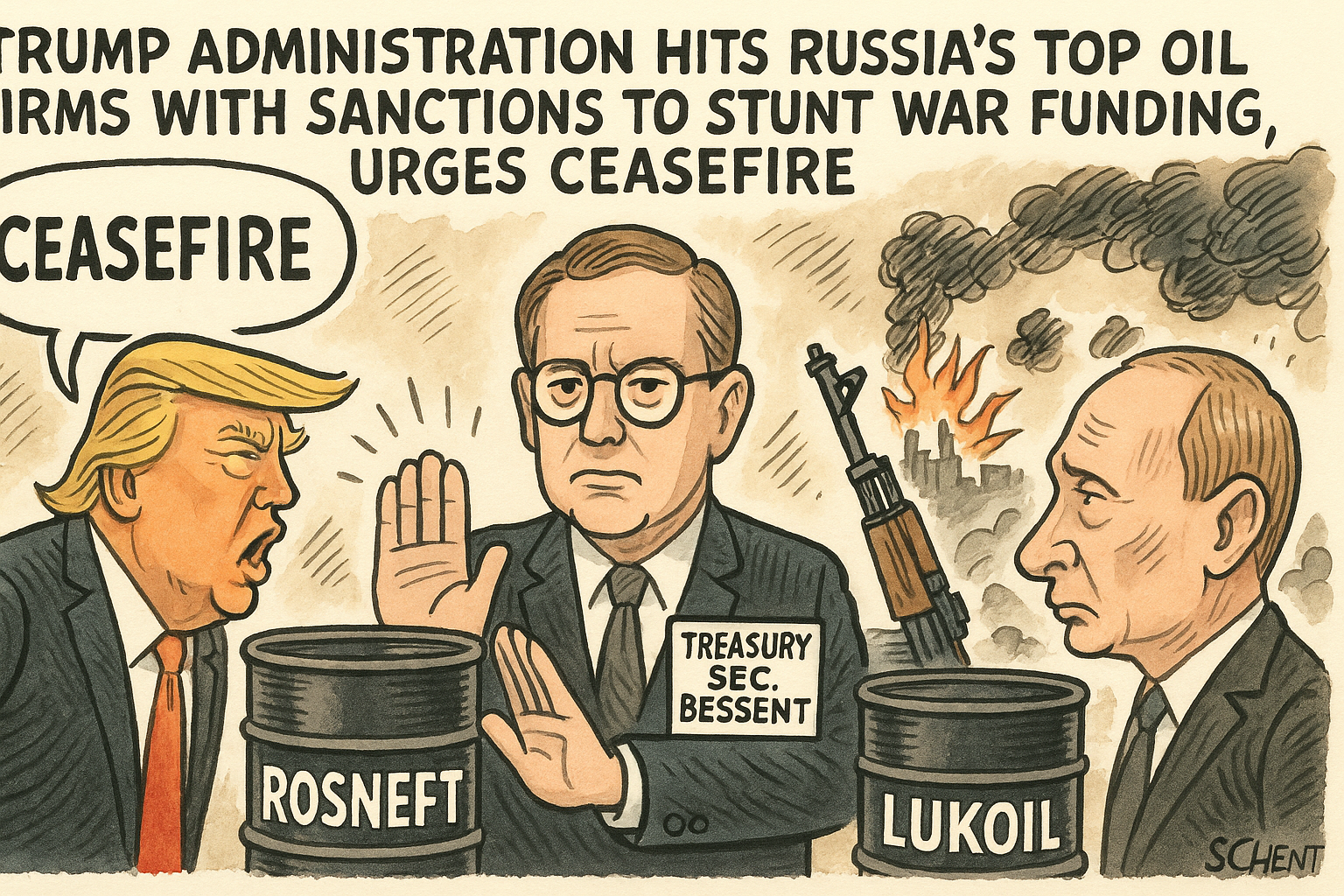
Trump team moves to squeeze Kremlin oil revenues — new sanctions target Rosneft, Lukoil as leverage for Ukraine ceasefire
The Trump administration plans new sanctions in early 2025 targeting Russia’s largest oil firms, Rosneft and Lukoil, aiming to cut revenue that funds the war in Ukraine and pressure Moscow toward a ceasefire through diplomatic leverage.
- Key takeaways:
- The White House is weighing a two-track approach: incentives for peace versus intensified sanctions on buyers and shippers to choke Kremlin revenue.
- Treasury has prepared asset-blocking steps against major Russian oil companies, though public sign-off details remain unclear.
- Markets and local U.S. communities could feel the pain through higher fuel prices and increased costs for emergency services and agriculture.
Key information and reporting
Multiple outlets report the incoming administration intends to impose a new wave of sanctions targeting Russia’s oil sector to press for a ceasefire in Ukraine. Coverage and sources include Charter97, Rigzone, Euromaidan Press, and Transport Topics.
Sanctions options and strategy
Officials describe a debate between two primary approaches:
- Goodwill / incentive path: easing measures if Moscow shows credible steps toward a ceasefire — for example, issuing general licenses for specific transactions or raising the international price cap to permit limited trade while still constraining revenue (sources: Charter97; Rigzone; Euromaidan Press).
- Pressure / choke point path: intensifying secondary sanctions on shippers and buyers, stepped-up maritime enforcement, and actions at transit choke points to more sharply cut Kremlin oil income (sources: Charter97; Rigzone).
“Maximum economic pressure is needed to end funding for the war,” supporters of the harder line argue.
Asset actions, legal steps and political hurdles
Reports indicate Treasury has moved to block assets of major Russian oil producers as part of preparations for a broader sanctions push, though there is no single public document showing final signatory approval. Reporting and analysis cite Transport Topics, Charter97, and Rigzone.
Congressional rules now complicate rapid shifts, making it harder to lift certain Russia sanctions without legislative sign-off — a potential obstacle if the administration moves from pressure to incentives.
Market impact and risks
Immediate market reaction: When prior steps targeted key Russian producers in January 2025, Brent futures rose nearly $5 per barrel. Analysts warn that tighter measures targeting Rosneft, Lukoil, and secondary buyers could push prices higher and increase volatility (Rigzone; Euromaidan Press; Transport Topics).
Higher energy costs would affect American drivers, farms, manufacturers, and local governments buying diesel for emergency response. Policymakers also warn that heavy-handed steps could strain relations with European partners and major Asian buyers like China and India.
Timing and next steps
Watch the expiration of a general license that allows wind-down transactions for Russian energy products, due in mid-March; non-renewal would sharply increase pressure and likely spur further market moves (Transport Topics).
The White House is coordinating with allies; the United Kingdom has joined recent measures aimed at Russia’s oil sector, signaling allied support for coordinated action (Transport Topics).
Who’s shaping the policy
Incoming Cabinet nominees, former officials, and conservative policy groups are central to the strategy. At confirmation hearings, figures such as Secretary of State nominee Marco Rubio emphasized tough measures. Treasury career officials and sanctions veterans — names reported in coverage include Brad Smith and Andrea Gacki — are expected to play enforcement roles (Rigzone; Transport Topics).
Reports also note consideration of broader “maximum pressure” measures that could reapply tough sanctions on Iran and Venezuela as part of a wider energy-policy stance (Rigzone).
Diplomacy and the promise of talks
President Trump has signaled plans for further talks with President Vladimir Putin. The administration appears to favor a dual track of diplomacy plus economic pressure: offering reduced sanctions if Moscow makes serious moves toward a ceasefire, while retaining the option to tighten measures if fighting continues (Rigzone; Transport Topics).
Implications for Redding, California
Economic effects: Residents in Redding may see higher pump and heating fuel prices. Rising crude costs ripple into commuting, deliveries, construction, and agricultural inputs for Shasta County. Small businesses that rely on transport could face tighter margins.
Emergency services & wildfire response: Local fire districts and county emergency services depend on fuel for engines and heavy equipment; higher costs strain budgets and could complicate mutual aid during peak fire season.
Local politics & public sentiment: Redding’s conservative-leaning electorate values energy independence and may support sanctions as leverage, but voters will be alert to any policies that significantly raise living costs.
Jobs & supply chains: While Shasta County is not an oil hub, higher fuel costs affect construction, transport, and agriculture employment and can increase local goods prices.
Practical measures: County managers may review fuel budgets and contingency funding for wildfire season. Households and businesses can take modest fuel-saving steps: vehicle maintenance, combined trips, and inventory planning.
Reporting notes and sources
This article synthesizes reporting from: Charter97 (policy options), Rigzone (wire reporting), Euromaidan Press (summaries), and Transport Topics (asset actions and market impact).
Official actions and staffing remain under review. Some reports indicate the Treasury Department took steps to block assets of major Russian oil firms, while other accounts stress there is no public confirmation that Secretary Scott Bessent or another final signatory has completed formal orders (Transport Topics; Charter97; Rigzone).



