
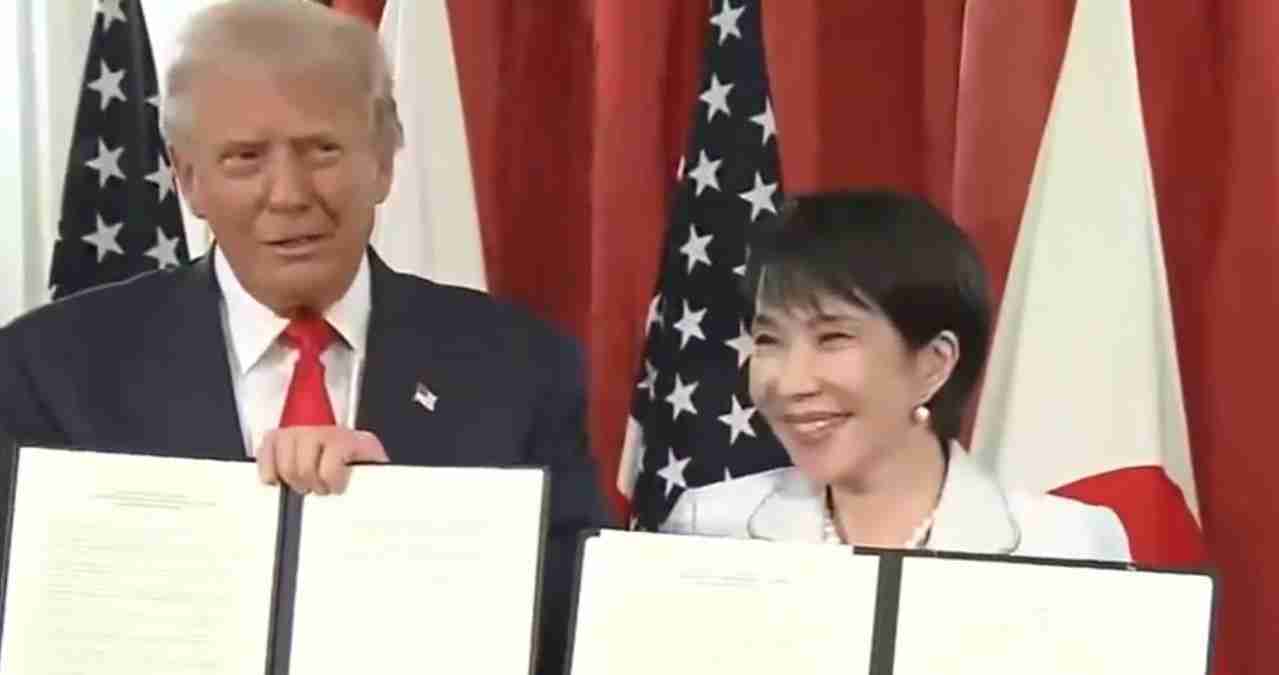
Trump, Japan’s First Female PM Takaichi Sign Rare-Earth, Critical Minerals Pact as Leaders Pledge “New Golden Age” in US-Japan Alliance
President Donald Trump met Japan’s first female prime minister, Sanae Takaichi, in Tokyo, where leaders signed a rare-earth and critical minerals framework to diversify supply chains and pledge a “new golden age” in the U.S.–Japan alliance.
Key takeaways
- Historic diplomatic moment: Red-carpet welcome at Akasaka Palace marked the start of Takaichi’s tenure and emphasized strong U.S.–Japan ties.
- Critical minerals pact: A framework to diversify rare-earth supply, create a Rapid Response Group, and coordinate investment and permitting.
- Economic and security link: Pact ties industrial policy to national defense goals, targeting supply vulnerabilities and reducing dependence on dominant suppliers.
- Local implications: Regions like Redding, California could see indirect economic and job gains if investment and projects flow to U.S. mining, processing and manufacturing.
Main story
Historic welcome and personal diplomacy
The arrival ceremony at Akasaka Palace featured honor guards, military bands and a red carpet, underscoring the symbolic weight of the visit. President Trump called Takaichi’s election “a big deal,” praising the alliance as at its “strongest level.”
Video and official coverage captured the ceremony — see the White House video and a ceremony video for footage of the red-carpet reception.
“A new golden age” — Takaichi invoked a shared vision with Trump, framing the visit as a turning point to expand cooperation beyond security into economic and industrial spheres.
The alliance agreement: symbolism and substance
Officials described a signed implementation document intended to strengthen the overall alliance. Public descriptions said the text was brief and partly symbolic, but the leaders framed the step as a marker of a “golden age” in relations with messaging tailored for domestic and regional audiences.
While some outlets labeled the alliance document largely ceremonial, the visit also produced more concrete economic-security measures discussed below.
Trump–Takaichi critical minerals framework
What it aims to do: The framework targets diversification of rare-earth and critical-mineral supply chains — notably to reduce reliance on dominant processors — and to protect industries ranging from semiconductors and EVs to defense systems.
Reported features include coordinated investment and policy to build transparent markets; joint identification and funding of mining and processing projects within six months; a Rapid Response Group for shortages; streamlined permitting; exploration of joint stockpiling; and measures to counter unfair trade practices. Reporting on this framework is available at Fox Business.
Trade and investment talk: money, cars and leverage
Economic discussions included talk of large-scale Japanese investment in the United States as part of a broader package; some media reports cited potential investment figures — reportedly mentioned as high as $550 billion — and pressure on Japanese auto imports to favor U.S.-made vehicles. Coverage of the meetings and reported investment discussions appears in Arab News and Newstimes.
Diplomatic and cultural gestures
Takaichi announced gifts and ceremonial commitments — including 250 cherry trees for the United States and sponsorship of fireworks for the U.S. 250th anniversary — symbolic moves designed to cement long-term cultural ties. President Trump also addressed U.S. troops aboard the USS George Washington during the visit.
Media and official coverage
Official channels and global outlets provided video footage and commentary. See the White House video and several YouTube clips for arrival and ceremony footage; additional videos include YouTube and YouTube coverage referenced by outlets.
Implications for Redding, California
Economic impact
Redding and Shasta County could see indirect benefits if the framework spurs U.S. mining, processing and manufacturing projects. Local suppliers, contractors and logistics firms may be tapped for work tied to new projects, while demand could increase for parts and services linked to batteries, EV supply chains, and renewable-energy manufacturing.
Jobs and industry
Potential job creation includes technicians, millwrights, plant operators and truck drivers. Local trade schools and community colleges could position graduates for new roles in processing facilities or logistics. If Japanese investment leads to factories or R&D centers, higher-paying manufacturing and engineering jobs may follow.
Political consequences
For conservative voters in Redding, the initiative to diversify away from China may be politically popular. Local officials can use the pact to press for federal support and funding for regional projects that strengthen U.S. industrial capacity and economic security.
Social effects
Industrial growth may stabilize rural economies, support school enrollments, and ease some economic pressures. Communities should plan for workforce training needs and potential housing pressure if large projects attract outside workers.
Cultural relevance
Symbolic ties like the cherry-tree gift and fireworks pledge offer opportunities for civic partnerships, cultural exchange programs, and tourism promotion that local civic groups and veterans organizations can highlight.
Practical applications for residents
- Contractors and suppliers should monitor procurement notices tied to federal mineral-security programs.
- Colleges and job centers can prioritize training for roles in mining, processing and manufacturing supply chains.
- Economic development agencies should pitch Redding as a site for parts, services and workforce support related to projects under the pact.
- Local leaders can press for state and federal investments in infrastructure — roads, power and broadband — to support industrial growth.



