
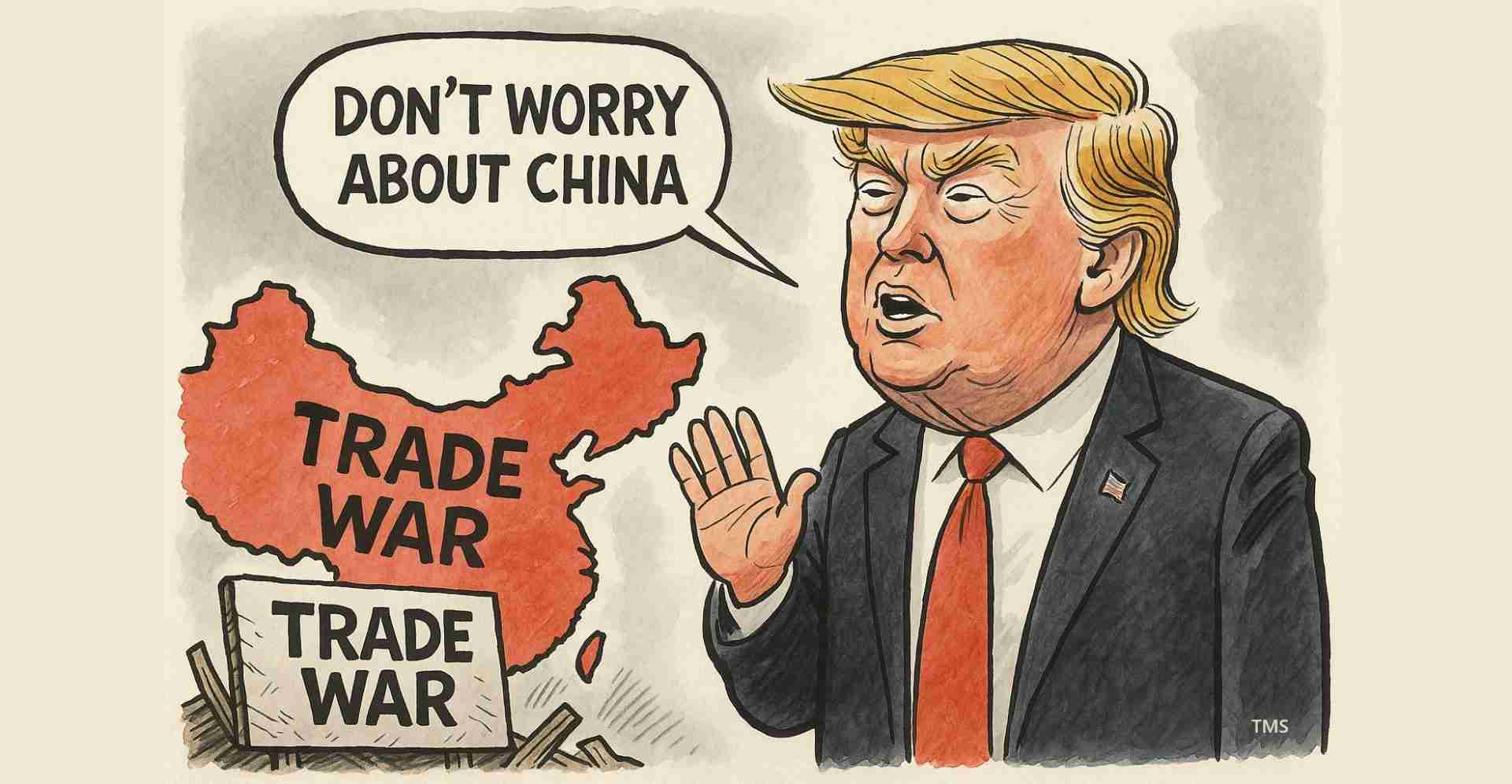
Trump Tells Americans “Don’t Worry About China” After Beijing Fires Back at 100 Percent Tariff Threat; Rare Earth Exports Become New Flashpoint
President Donald Trump’s 100 percent tariff threat against China prompted Beijing to vow countermeasures, including potential limits on rare earth exports, escalating a trade fight that threatens supply chains, markets and U.S. technology and defense production.
- President Trump sought to calm consumers after threatening sweeping tariffs, telling Americans “not to worry about China.” See the Trump remarks (video).
- Beijing warned of countermeasures, including higher tariffs and possible restrictions on rare earth exports that supply critical U.S. technology and defense sectors.
- Markets and supply chains are at risk: investors reacted nervously and firms may accelerate diversification away from China.
Background: How we got here
The U.S.-China trade standoff has escalated over several years through rounds of tariffs, counter-tariffs and sanctions. Successive tariff rounds pushed applied U.S. tariffs and Chinese retaliatory measures higher than in past years, setting the stage for the latest confrontation. For context on the broader dispute, see the background (Wikipedia).
What Trump said and why he moved to calm fears
In a high-profile statement, President Trump threatened a 100 percent tariff on Chinese goods and subsequently sought to reassure the public that Americans should “not worry about China.” Administrations officials framed the move as pressure to secure better trade terms and reduce U.S. dependence on strategic materials produced abroad.
Supporters argue strong tariffs protect U.S. jobs and national security; critics warn of inflationary pressure and supply disruptions. The public remarks are available in the public video.
Beijing’s response: rare earth exports and other countermeasures
Chinese officials called the tariff threat counterproductive and pledged to defend their economic interests with a toolbox of responses, including additional tariffs and potential limits on rare earth exports — materials essential to advanced electronics, electric vehicles, medical devices and defense systems. The Chinese stance was announced alongside warnings they would take “all necessary measures.” Video coverage of the exchange is available here.
Markets and investors react
Markets reacted quickly: stock volatility rose and trade-sensitive sectors showed immediate losses. Analysts cited risks of prolonged tit-for-tat tariffs, supply-chain disruption and higher input costs. Companies exposed to Chinese components and rare earths may speed efforts to diversify suppliers or relocate production.
Policy context and prior escalations
This flare-up follows earlier rounds of escalating tariffs and retaliatory duties. Past rounds raised effective tariff pressure on Chinese goods and prompted Chinese duties on U.S. exports. The pattern highlights how quickly disputes can broaden into strategic sectors such as technology and defense. See the broader timeline and analysis at the trade war background (Wikipedia).
Rare earths as a national security issue
Rare earth elements are central to modern electronics and military hardware. Because China dominates large parts of the rare earth supply chain, restrictions would quickly show the strategic vulnerability of U.S. manufacturers and defense contractors. Experts warn that sudden export limits could disrupt production and military procurement unless alternative sources and processing capacity are rapidly developed. For related coverage, see the news video.
Diplomatic effects and summit uncertainty
The tariff exchange clouded prospects for high-level diplomacy. Reports indicated a planned Trump–Xi summit in South Korea could be in question as both leaders used tariffs and rare-earth policy as leverage. While diplomatic channels remained open, the risk that talks stall increased as rhetoric hardened.
What this means for American consumers and businesses
Higher tariffs and export restrictions typically raise costs for companies reliant on global supply chains, with those costs passed to consumers as higher prices. Firms using Chinese-made components or rare earths could face delays, higher production costs and altered investment decisions about manufacturing locations.
Implications for Redding, California
Economic impact
- Local manufacturers and suppliers: Redding-area firms that supply parts to larger manufacturers may see demand drop if tariffs raise downstream costs, affecting jobs and revenues.
- Agriculture and small businesses: Higher shipping costs and uncertainty can hurt farmers and small enterprises that depend on imported inputs or export markets; equipment and chemicals that use rare earths could become costlier.
Jobs and workforce
- Slowdown in hiring: Regional manufacturers may pause expansions or reduce orders, putting pressure on blue-collar employment.
- Reshoring opportunities: A push to reduce dependence on China could create openings for U.S.-based manufacturing and small-scale reshoring projects if local leaders support incentives and training.
Political and social consequences
- Local politics: Conservative-leaning voters may back tough measures on China; local officials are likely to urge federal support for affected industries.
- Public sentiment: Rising prices or shortages could prompt residents to pressure representatives for action; national security concerns around rare earths may sharpen political debate.
Practical daily effects
- Consumer costs: Shoppers in Redding could face higher prices on electronics and vehicles if costs rise.
- Local supply chains: Repair shops and manufacturers that use specialized, rare-earth-based parts may see longer lead times and higher parts costs.
What local leaders can do
- Push for federal assistance: Advocate for funding to help manufacturers diversify suppliers and invest in domestic mineral processing.
- Workforce and business support: Invest in retraining and incentives to attract manufacturing to Shasta County.
- Public communication: Keep residents informed about likely short-term disruptions and long-term resilience plans.
Sources and further reading
– Trump remarks and Beijing’s response (video)
– Background on the U.S.-China trade dispute and tariff history (Wikipedia)
Reporting note: Further reporting will examine how local businesses in Redding are responding and whether federal measures to protect supply chains or support affected industries will follow as the trade standoff continues.



