
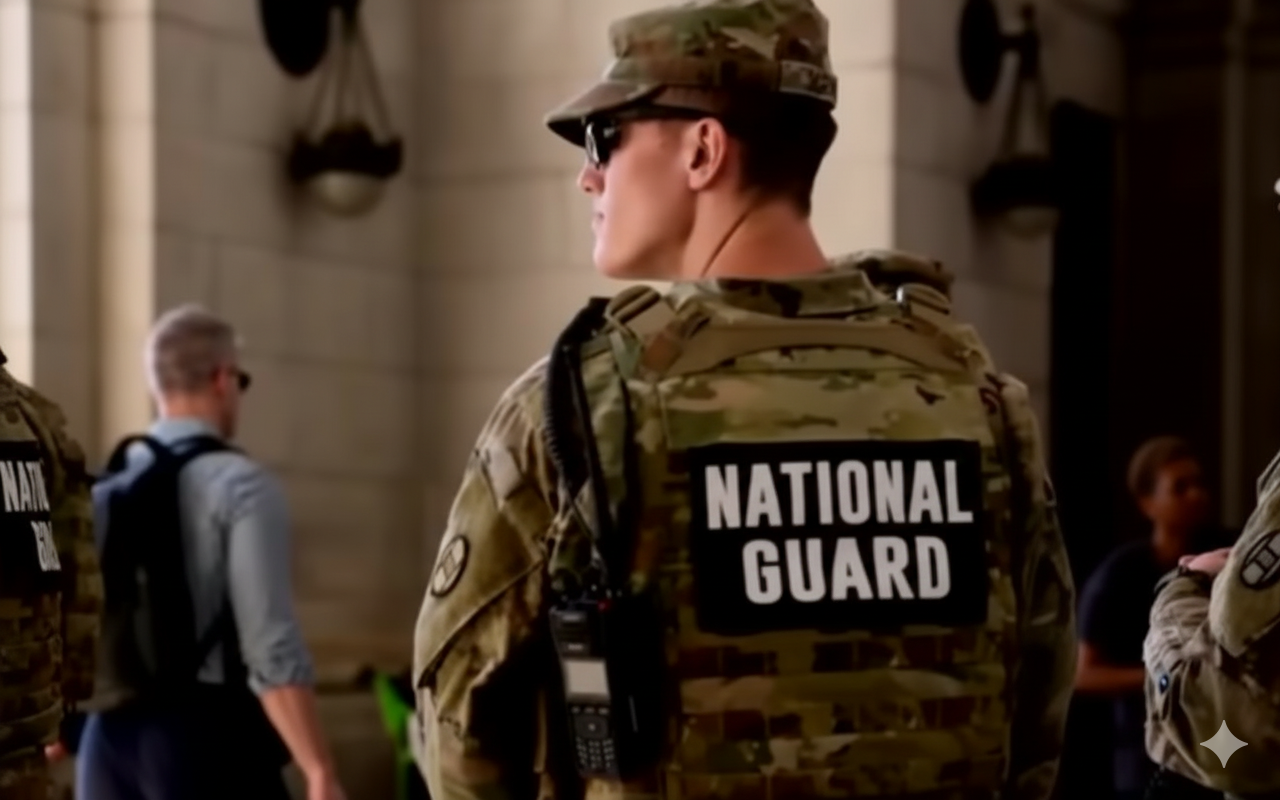
Texas National Guard Deploys 200 to Illinois for 60-Day Federal Protection Mission as Chicago Officials Call Move Illegal
About 200 Texas National Guard troops arrived near Chicago today for an initial 60-day federal mission to protect ICE facilities after anti-immigration protests; Illinois and Chicago officials have sued, calling the deployment unlawful and unconstitutional.
- Federal protection mission: ~200 Texas National Guard troops arrived at the U.S. Army Reserve Center in Elwood for a 60-day assignment to “protect federal functions, personnel, and property.” (Sources below)
- Local legal challenge: Illinois Gov. J.B. Pritzker and Chicago Mayor Brandon Johnson filed a federal lawsuit seeking to block the deployment, saying it is unlawful and escalatory.
- Trigger and context: Deployment followed days of anti-immigration protests and reported confrontations at the Broadview ICE facility; federal officials framed the mission as protection, not law enforcement.
- Wider implications: The legal fight echoes a recent Oregon ruling that blocked a similar Guard deployment and could shape federal-state boundaries for domestic troop use.
Deployment details
Federal officials say the Texas National Guard members were ordered to Illinois to carry out a narrowly defined protection mission: protect federal facilities, personnel and property. The Pentagon confirmed the troops arrived at the U.S. Army Reserve Center in Elwood, roughly 55 miles southwest of Chicago, for an initial 60-day assignment. Photographs published by media outlets showed Guard vehicles staged at the base after arrival.
Trigger: anti-immigration protests near Broadview ICE facility
The deployment followed several days of anti-immigration protests and reported confrontations outside the Broadview ICE facility, where federal officials said protesters boxed in vehicles and at times struck government vans. Those incidents prompted federal authorities to request additional protection for the site and staff.
Local officials’ reaction and legal challenge
Illinois Governor J.B. Pritzker and Chicago Mayor Brandon Johnson publicly condemned the move. Both leaders described the deployment as unlawful and unconstitutional and warned it could inflame tensions. Mayor Johnson said the administration declined to coordinate with city leaders and highlighted his executive action limiting federal use of certain city property, calling parts of Chicago “ICE-free” for specified spaces.
“The administration refused to coordinate with city leaders,” Mayor Johnson said, arguing the deployment was dangerous and unnecessary.
City and state officials filed a federal lawsuit seeking to block the operation. A judge ordered the Trump administration to respond within days and scheduled a near-term hearing. The legal challenge mirrors other court fights over federal Guard deployments — notably a judge in Oregon recently blocked a similar assignment to Portland.
Federal authority and political context
The White House and Pentagon maintain authority to deploy federal forces to protect federal property and personnel. Officials say the deployment was requested at the federal level after reports of threats at the Broadview site. President Trump publicly defended the move and referenced broader powers — including comments about the Insurrection Act — that could expand federal authority if invoked.
Precedents and national implications
Legal experts note the case will hinge on whether the federal government properly invoked its authority and whether the mission crosses into routine law enforcement — an area typically controlled by state and local officials. Courts have begun weighing in: a judge in Oregon blocked a similar deployment to Portland, signaling judicial willingness to limit interstate Guard assignments when states or cities argue federal overreach.
Implications for Redding, California
Although Redding is far from Chicago, the case could ripple to California in several ways:
- Economic impact: Changes in federal authority could affect how federal funds or emergency support are allocated to states and counties, with potential downstream effects on local budgets and grants.
- Political consequences: The dispute sharpens debates over state vs. federal power; local leaders may use outcomes to frame public safety and federal support claims.
- Social effects: News of the deployment can inflame local debates and spur activism on both sides of immigration issues.
- Practical steps for residents: Track the court ruling, watch for local policy shifts in cooperation with federal agencies, and consider civic engagement through contacting elected representatives.
Reporting and sources
This article draws on reporting from multiple outlets. Key sources include Fox News, Military Times, and Sky News. Additional developments, including court filings and Pentagon statements, are expected as the federal government prepares its response to the legal challenge.
Source links
Note: Additional developments are expected as legal filings and official Pentagon statements become available; readers should monitor the cited sources for updates.



