
Social Security Announces 2.8% COLA for 2026 — What the 2.8% Increase Means for Retirees in Redding
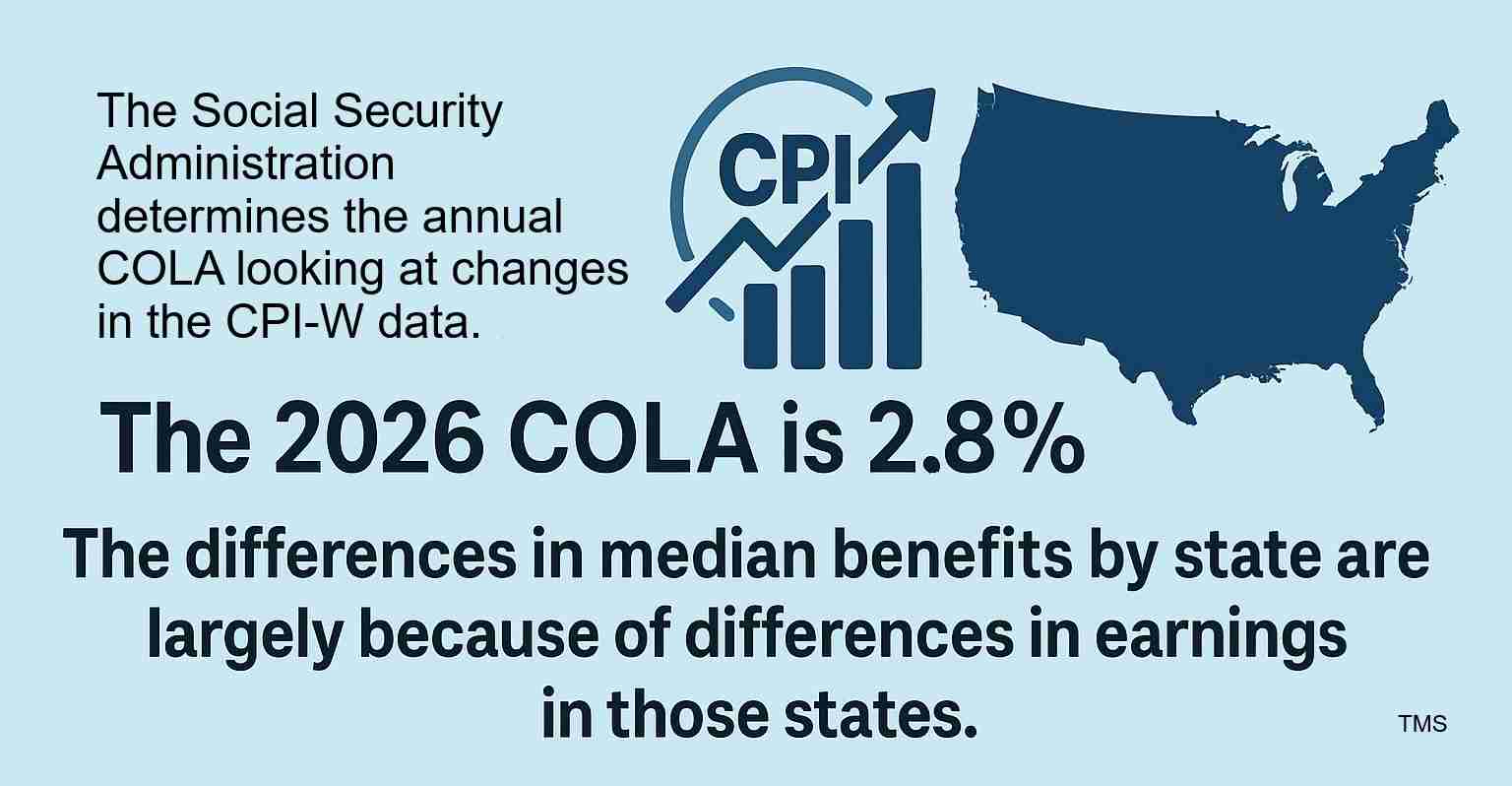
The Social Security Administration announced a 2.8% cost-of-living adjustment for 2026, raising monthly payments for nearly 71 million beneficiaries beginning January 2026 and boosting the average retirement benefit by about $56 per month for many retirees.
Key takeaways
- 2.8% COLA for 2026: Apply to benefits paid in January 2026 (SSI increases effective Dec. 31, 2025).
- Nearly 71 million beneficiaries: OASDI recipients and roughly 7.5 million SSI recipients affected; total impact roughly 75 million Americans.
- Average increase ≈ $56/month: Average retirement benefit rises from about $2,008.31 (July 2025) to roughly $2,064 in 2026.
- Other changes: Taxable maximum rises 5% to $184,500 and earnings limits increase for working beneficiaries.
Key information
COLA rate: The Social Security COLA for 2026 is 2.8%, effective for benefits paid in January 2026 (Supplemental Security Income increases take effect Dec. 31, 2025). See the Social Security Administration press release, the SSA blog, and the SSA COLA page for details.
Who’s affected: Nearly 71 million beneficiaries will see the COLA applied to OASDI (Old-Age, Survivors, and Disability Insurance) benefits; about 7.5 million SSI recipients will see increased payments at year’s end. Total Americans affected is roughly 75 million, since some receive both OASDI and SSI (see the SSA press release and SSA blog).
Average benefit change: The average retirement benefit will rise by about $56 per month, from roughly $2,008.31 in July 2025 to about $2,064 in 2026 (see SSA press release, SSA COLA overview, and related reporting).
Taxable maximum: The taxable maximum — the top amount of earnings subject to Social Security payroll tax — will increase 5% to $184,500 in 2026 (from $176,100 in 2025). See the SSA blog and COLA page.
Earnings limits for workers: Workers under full retirement age (FRA) face a $24,480 limit ($1 withheld for every $2 earned above). Those reaching FRA in 2026 have a $65,160 limit ($1 withheld for every $3 until the month they reach FRA). (See SSA COLA.)
How the COLA is calculated
The COLA uses the Consumer Price Index for Urban Wage Earners and Clerical Workers (CPI‑W). SSA compares the average CPI‑W for July–September 2024 with July–September 2025 to set the adjustment. This method tracks overall price movements but can underweight costs that matter most to retirees, such as medical care and housing (see SSA COLA overview and analysis).
What the numbers mean for beneficiaries
A 2.8% COLA is modest compared with recent years — beneficiaries received 8.7% in 2023, 5.9% in 2022 and 3.2% in 2024. Over the last 10 years, COLAs have averaged about 3.1%, so the 2026 increase is slightly below that average. Still, this marks the fifth straight year with a raise of at least 2.5%.
Social Security officials and reactions
“The COLA is a vital part of how Social Security delivers on its mission” — Frank J. Bisignano, Social Security Commissioner.
Advocates and analysts note that CPI‑W can understate costs for older Americans and push for the Consumer Price Index for the Elderly (CPI‑E), which weights medical costs and housing more heavily and often shows higher inflation for retirees’ spending. The debate continues as policymakers consider whether to change the measure (see Medicare Rights analysis).
Other changes that affect seniors in 2026
- Taxable maximum rise: Earnings subject to payroll taxes increase to $184,500, affecting higher earners and fiscal outlook (see SSA COLA).
- Earnings limits up: Higher thresholds before benefit reductions, which may encourage part‑time work among older Americans (see SSA COLA).
- Medicare premiums: Early projections suggest Medicare Part B premiums could rise by about $21.50, which would reduce net COLA gains for many beneficiaries; official figures come later (see Medicare Rights).
State-by-state variation
Effective increases vary by state because of benefit formulas and local cost factors. Reports identify states where retirees may realize higher boosts based on average benefits and state-specific conditions (see state coverage reporting such as NASDAQ).
Policy context and long-term questions
The 2.8% COLA highlights ongoing questions about measuring inflation for older Americans and Social Security’s long-term solvency. Changes to the CPI used for COLA calculations or payroll tax rules would require congressional action. Analysts often discuss raising the taxable maximum and adjusting benefit formulas as policy options (see American Action Forum analysis).
Implications for Redding, California
Economic impact
Direct income boost: A ~2.8% increase means roughly $56 extra per month for the average beneficiary in Redding. Small increases add up across households and local spending (see the SSA press release).
Local businesses and services: Extra dollars often flow into groceries, utilities, health care, and local shops. In Redding, with a sizable retiree population, modest increases help sustain retail and service sectors, especially in slower months (see state coverage such as NASDAQ).
Political consequences
Local lawmakers may face pressure from constituents concerned about purchasing power and long-term benefit protection. Conservative voters in Shasta County often emphasize fiscal responsibility, and the modest COLA may sharpen local debate about protecting benefits without raising taxes (see policy analysis).
Work incentives: Higher earnings limits could encourage older residents to remain in the workforce, helping local employers address labor shortages.
Social effects
Many Redding seniors live on fixed budgets; rising housing and medical costs may outpace the COLA. The CPI‑W calculation may not reflect retiree spending patterns locally, leaving nonprofits and social services to fill gaps (see Medicare Rights).
Cultural relevance
Seniors in Redding are community anchors through volunteering and civic life. Protecting purchasing power supports those ties and local traditions; voters will watch changes in benefits and costs closely.
Practical applications for Redding residents
- Check payments and timelines: Expect the 2.8% COLA in January 2026; SSI recipients see increases effective Dec. 31, 2025. Review the SSA press release and COLA factsheet.
- Watch Medicare premiums: If Part B premiums rise, net gains shrink — stay alert for official Medicare announcements (see Medicare Rights).
- Review work plans: Older workers collecting benefits should note higher earnings limits for 2026 and consult SSA or a financial advisor before changing work status.
Sources and further reading
- SSA press release
- SSA blog
- SSA COLA overview
- SSA COLA factsheet for 2026
- American Action Forum analysis
- Medicare Rights explanation
- NASDAQ state-by-state coverage
- NSTP summary
Reporting notes
This article draws on Social Security Administration releases and analyses from policy and consumer groups. Primary sources include the SSA press release, the SSA blog, and the SSA COLA pages, supplemented by policy and consumer reporting.



