
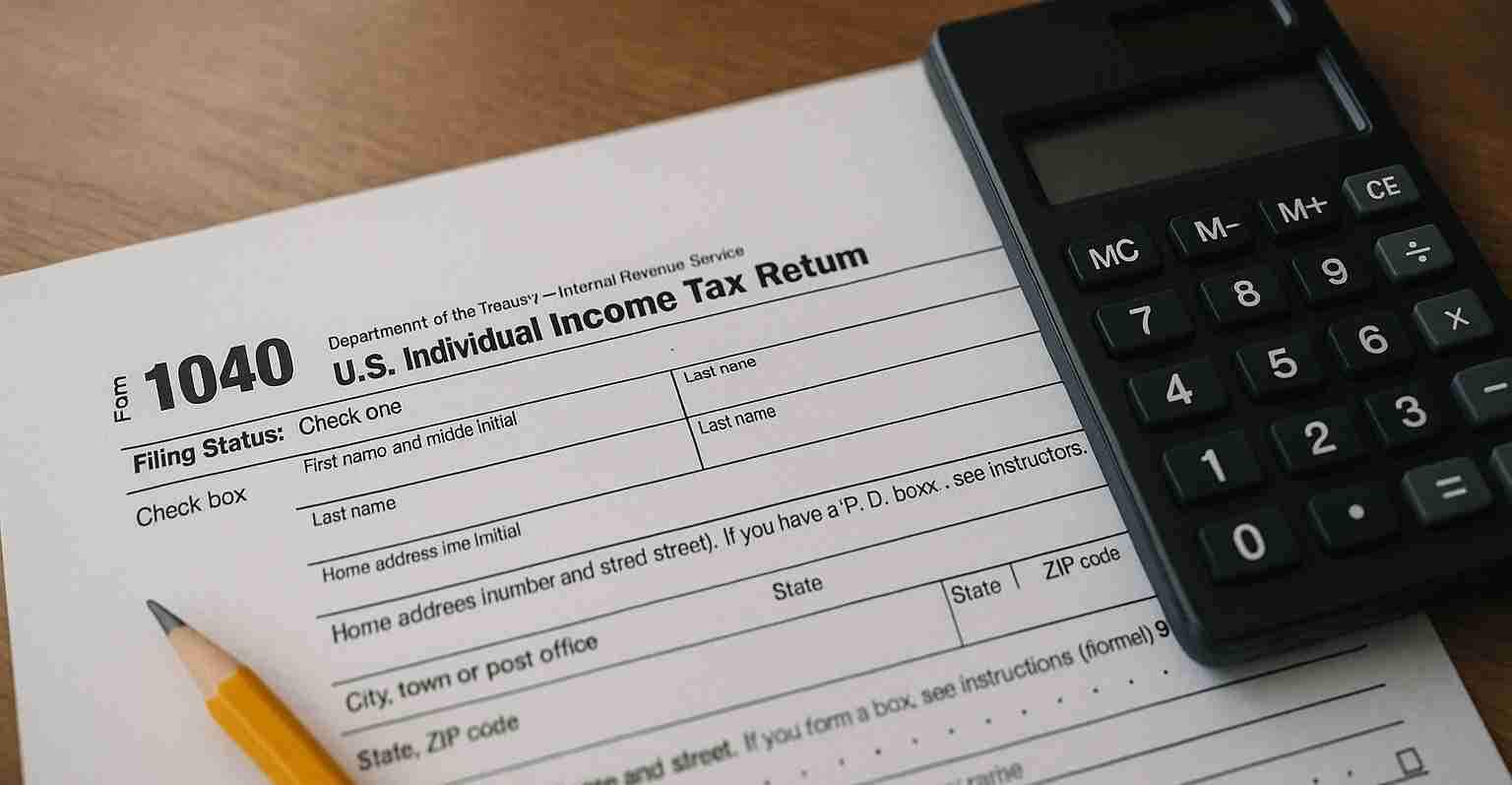
IRS Announces 2026 Tax Adjustments Under OBBBA: Higher Deductions, Updated Brackets, and Targeted Senior Relief
The IRS announced major 2026 tax adjustments combining routine inflation updates with provisions from the One Big Beautiful Bill Act (OBBBA), raising standard deductions, shifting bracket thresholds and adding temporary senior relief that affects returns filed in 2027.
- Higher standard deductions and inflation-adjusted brackets reduce bracket creep and raise thresholds before higher rates apply.
- Seven federal rates remain (10%–37%), but most taxpayers need more income to reach higher brackets.
- Temporary senior deduction through 2028 and permanent TCJA-era provisions locked in by OBBBA.
- Estate exclusion, AMT exemptions, adoption and childcare credits increased, with specific caps benefiting small employers.
What the IRS announced
The IRS released a broad set of inflation adjustments combined with permanent changes tied to the One Big Beautiful Bill Act (OBBBA). The move aims to reduce bracket creep and reflect rising prices while lawmakers used OBBBA to make many Tax Cuts and Jobs Act provisions permanent. The announcement merges routine yearly updates with policy shifts that will shape tax filing for millions when they file 2026 returns in 2027 — see reporting from Fox Business.
Standard Deduction 2026 increases
For tax year 2026 the standard deduction rises again: $16,100 for single filers and $32,200 for married filing jointly. This continues the OBBBA-era shift away from personal exemptions (which remain generally eliminated) and follows the 2025 amounts of $15,750 (single) and $31,500 (joint) reported by H&R Block.
Updated tax brackets for 2026
The IRS adjusted income thresholds across all seven federal tax brackets to account for inflation. The rates remain 10%, 12%, 22%, 24%, 32%, 35% and 37% (a structure made permanent under OBBBA). The revised 2026 thresholds are:
- 10% — up to $12,400 (single) / $24,800 (married filing jointly)
- 12% — over $12,400 / $24,800
- 22% — over $50,400 / $100,800
- 24% — over $105,700 / $211,400
- 32% — over $201,775 / $403,550
- 35% — over $256,225 / $512,450
- 37% — over $640,600 (single) / $768,700 (married filing jointly)
Those inflation adjustments generally let taxpayers earn more before moving into a higher bracket. For example, under the 2026 thresholds a single filer earning $50,000 would face a maximum marginal rate of 12%, versus exposure to 22% brackets under 2025 thresholds — see CBS News.
Special tax relief for seniors
OBBBA creates a temporary targeted benefit for older Americans: taxpayers aged 65 and older may claim an additional deduction up to $6,000 if their adjusted gross income is $75,000 or less (single) or $150,000 or less (married filing jointly). This senior deduction expires after 2028, making it a short-term relief measure (CBS News).
Estate tax and AMT changes
Key threshold increases in 2026 include:
- Estate tax exclusion: rises to $15 million for decedents who die in 2026 (up from $13.99 million in 2025), providing substantial relief for very large estates (Fox Business).
- AMT exemptions: $90,100 for individuals (phasing out at $500,000) and $140,200 for married couples (phasing out at $1 million), shifting how AMT applies to higher-income taxpayers (Fox Business).
Family-related tax benefits
Several family-oriented credits and caps were raised:
- Adoption credit: increases to $17,670 for 2026 (up from $17,280 in 2025), with $5,120 refundable.
- Employer-provided childcare credit caps: raised sharply from $150,000 to $500,000 — or $600,000 for eligible small businesses, potentially boosting workplace benefits (Fox Business).
Elimination of personal exemptions and broader policy shifts
OBBBA made several TCJA provisions permanent and folded them into the new baseline. One major outcome: personal exemptions remain eliminated in favor of higher standard deductions. Some narrow exceptions exist for certain seniors, but for most taxpayers personal exemptions are no longer part of the tax picture (see H&R Block).
What this means in practice
Taken together, the IRS 2026 Tax Adjustments will:
- Adjust withholding and estimated payments for many taxpayers and employers.
- Reduce the risk of bracket creep by raising thresholds and locking in certain rate structures.
- Change long-term planning — estate, retirement and tax planning strategies may need updates given permanent and temporary provisions (Fox Business; CBS News).
Quote: “The adjustment package is intended to reflect inflation and reduce bracket creep while cementing several TCJA-era rules into the baseline,” — reporting and analysis across major outlets.
Implications for Redding, California
Economic impact
Local effects may include lower effective tax burdens for many middle-income earners in the Redding area, which could boost take-home pay. With the Standard Deduction 2026 higher, fewer residents may itemize, simplifying filing but potentially reducing some mortgage interest deductions.
Small businesses in Shasta County stand to benefit from the higher employer childcare credit caps — especially the $600,000 cap available for eligible small employers — which could incentivize expanded workplace childcare programs (Fox Business).
Political consequences
For conservative voters and local officials in Redding, the permanence of many TCJA-era rates and higher standard deductions align with priorities of lower rates and simpler filing. The increased estate tax exclusion will likely be welcomed by business owners and landholders concerned about transferring assets to heirs (Fox Business).
The temporary senior deduction may become a local policy talking point, with some lawmakers pushing to extend or make it permanent and others emphasizing fiscal tradeoffs.
Social and household effects
Seniors on fixed incomes in Redding who qualify for the additional deduction may experience immediate relief, easing budgets for medical and living expenses. Families pursuing adoption or relying on employer-childcare benefits may find increased support from higher credits and caps.
However, households that previously benefited from itemizing—such as those with sizable mortgage interest—may see different outcomes under the higher standard deduction rules (Fox Business).
Cultural relevance and practical steps
Redding’s mix of small-business owners, retirees and families means the adjustments will affect residents unevenly. Practical recommended steps include:
- Review withholding in late 2026 to account for higher thresholds.
- Meet with a tax consultant or CPA to adjust estimated payments and optimize filing strategy.
- Revisit estate plans given the higher estate exclusion and altered AMT thresholds.
- Consult payroll or benefits advisors if you offer or are considering employer-provided childcare benefits (H&R Block).
Sources
Disclaimer: This information is for educational purposes only. Please consult a qualified tax professional or certified public accountant for personalized advice regarding your specific tax situation.



