
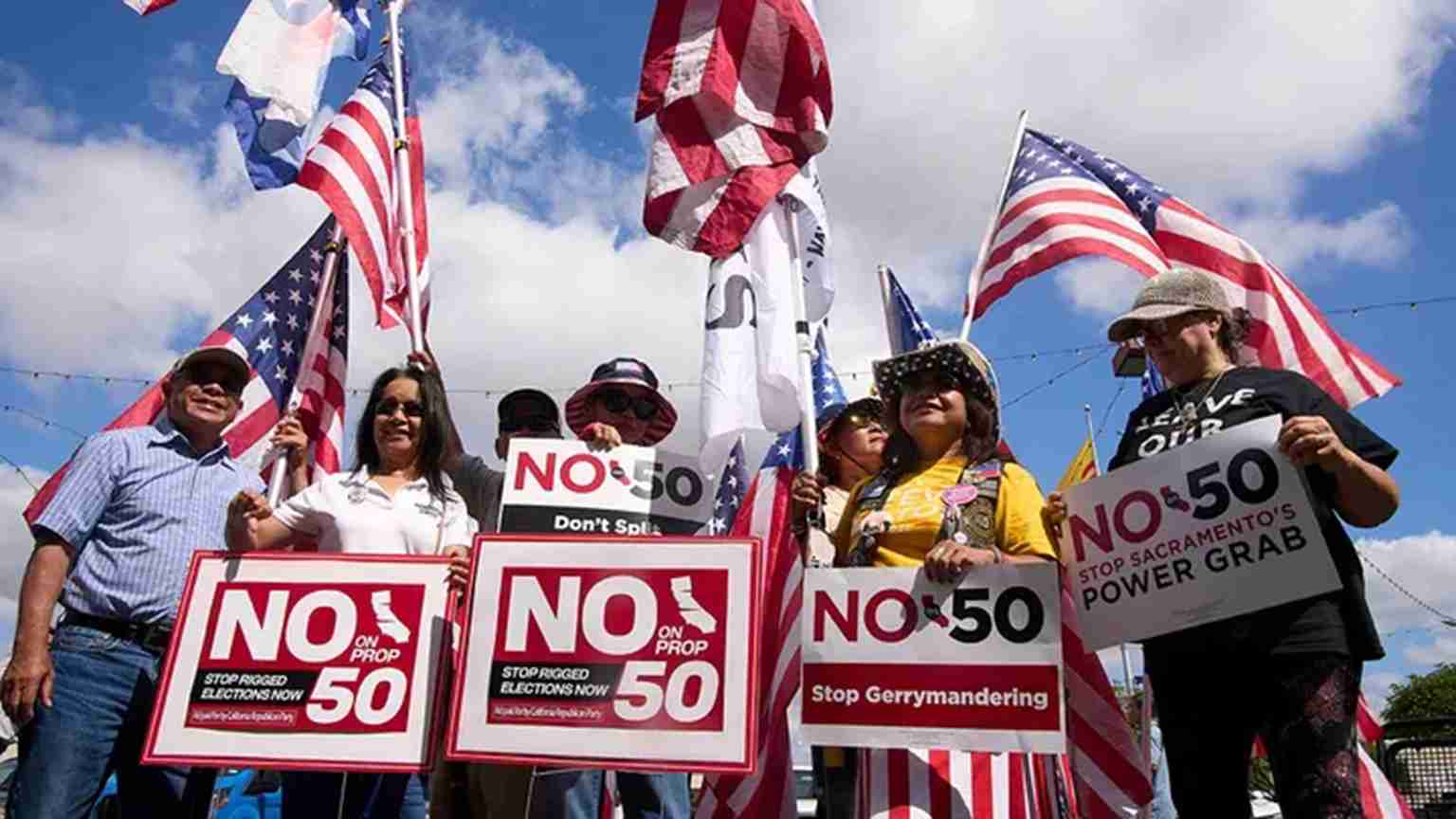
DOJ Intervenes in Suit Accusing Newsom of Racial Gerrymander in California Congressional Map
The Department of Justice has intervened in a Republican-led lawsuit alleging Proposition 50 and California’s new congressional map are an illegal racial gerrymander, seeking an injunction to block the map from being used in the 2026 elections.
- DOJ intervention: Federal lawyers joined a GOP suit arguing Prop 50 enabled race-based districting to advantage Democrats.
- Legal claim: The complaint alleges race was used as a proxy for partisan advantage, violating the Equal Protection Clause.
- Immediate stakes: DOJ asks a court to enjoin the Legislature’s map for the 2026 cycle while litigation proceeds.
- Local impact: Redding and Northern California could see reduced GOP representation and shifts in federal advocacy if the map stands.
What the DOJ alleges
The DOJ’s Civil Rights Division contends that California lawmakers, after Proposition 50, drew congressional lines where race — specifically concentrating Latino voters into particular districts — was the predominant criterion rather than traditional neutral factors. Federal lawyers argue this approach was intended to create more Latino-majority districts likely to elect Democrats, which they say amounts to an impermissible racial gerrymander under the Equal Protection Clause of the Fourteenth Amendment.
The DOJ complaint cites legislative remarks during the redistricting process as evidence of intent, arguing some comments show an effort to counter Republican gains in other states by using racialized district design as a proxy for partisan outcomes.
Reporting on the DOJ’s intervention and the initial allegations appears in outlets such as The San Francisco Standard and the American Center for Law and Justice, which summarize the complaint and quoted remarks cited by federal attorneys.
Why Proposition 50 matters
Proposition 50, approved by nearly 65% of voters, removed the independent redistricting commission and returned map-drawing authority to the Democratic-controlled Legislature. Supporters argued the change was a lawful response to what they called aggressive Republican gerrymanders elsewhere; opponents warned it concentrated power and invited partisan or racial line-drawing.
The DOJ frames Prop 50 not merely as a policy shift but as an action that enabled unconstitutional use of race in mapmaking, and it is asking a court to block the Legislature’s map from taking effect for the 2026 elections while the case proceeds (San Francisco Standard).
Political context and reactions
Governor Newsom and top California Democrats defended Prop 50 and the new map, pointing to the election results and framing the change as a lawful countermeasure to Republican gerrymanders. A Newsom spokesperson dismissed critics: “These losers lost at the ballot box and soon they will also lose in court.” (San Francisco Standard).
Attorney General Pam Bondi: “This is a brazen power grab,” the DOJ-led effort states, arguing the map would silence millions of Californians and entrench one-party rule by using race to engineer partisan outcomes.
Republican plaintiffs welcomed DOJ involvement, warning that without federal intervention the new map could sharply reduce GOP representation — some analyses suggest the GOP delegation could fall from nine seats to as few as four of 52 U.S. House seats in California if the plan stands (LongIsland‑NY).
Legal arguments and stakes
At issue is whether race was the predominant factor in drawing districts. Supreme Court precedent requires strict scrutiny when race is the primary driver of district lines; the DOJ says the Legislature lacks a compelling justification and instead used racial data to secure partisan gains. If a federal court finds the map an illegal racial gerrymander, judges could block it and require remedial redistricting under court supervision prior to the 2026 elections (ACLJ coverage).
The DOJ’s filing will be litigated alongside the existing GOP suit Tangipa et al. v. Newsom, elevating the dispute from a state-only fight to one with federal enforcement resources and potential nationwide legal ripple effects.
Broader implications
Legal scholars warn the case could set new limits on how race and partisan strategy may intersect in redistricting. A ruling for the DOJ could constrain states from prioritizing racial demographics as a means to secure partisan outcomes; a ruling against the DOJ could allow more aggressive use of demographic data.
This litigation occurs amid high-stakes redistricting battles in states such as Texas, Missouri, and North Carolina and could influence tactics and the congressional balance of power after the 2026 elections (Fox News recap).
Implications for Redding, California
Economic impact: A shift in California’s congressional delegation could change local influence in Washington, potentially affecting federal grants, infrastructure dollars, forest management and wildfire assistance that matter to Redding’s economy.
Political consequences: Redding and Shasta County have leaned conservative; fewer GOP seats statewide could reduce local representation aligned with those views, altering advocacy on water rights, logging, and land use.
Social and cultural effects: Redrawn lines can reshape community representation, placing Redding residents in districts with different demographics and priorities. The DOJ’s messaging — that Prop 50 consolidates Sacramento power and uses race in political strategy — will resonate locally among voters concerned about centralized decision-making.
Practical actions for local officials and voters: County election officials and campaigns should monitor the litigation closely and prepare for rapid changes to district lines and outreach plans if courts order last‑minute redistricting before 2026.
Source references
- DOJ intervention and Prop 50 reporting
- Analysis of DOJ claims and GOP suit
- Coverage of DOJ joining GOP lawsuit and reactions
- Reporting on Prop 50 vote share and map effects
- Additional coverage (iHeart WR.AK)
- Context on broader national redistricting fights
What to watch next
Legal proceedings are moving quickly. The DOJ’s intervention makes a federal ruling more likely before the 2026 elections, and readers in Redding should monitor court schedules and local election notices — any ruling could change who represents Northern California in Congress and how effectively local priorities are advanced in Washington.



