Suspect in Charlie Kirk Shooting Said to Have Been ‘Taken Over’ by Leftist Views as FBI Probes Possible Wider Plot
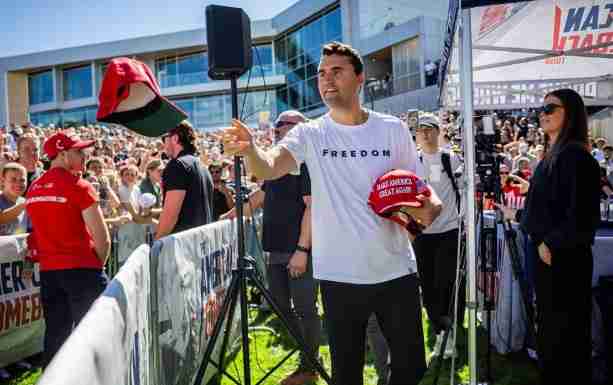
Charlie Kirk, founder of Turning Point USA, was shot Sept. 10, 2025, at Utah Valley University; 22‑year‑old Tyler Robinson was arrested and investigators are examining alleged left‑leaning radicalization and whether a broader plot or network was involved.
- Victim: Charlie Kirk, 31, founder of Turning Point USA, shot and killed Sept. 10, 2025.
- Suspect: Tyler Robinson, 22, arrested roughly 33 hours after the attack in Washington County, Utah.
- Weapon and evidence: A bolt‑action Mauser .30‑06 rifle was recovered; forensic and digital probes are ongoing.
- Investigation focus: FBI is combing digital footprints for signs of radicalization or contacts; no official ideological finding yet.
The shooting and arrest
On Sept. 10, 2025, Charlie Kirk was speaking at Utah Valley University when a gunshot struck him in the neck during a Q&A session. Video shows a shooter firing from the roof of the Losee Center, fleeing across the roof, dropping to the ground and escaping through woods north of the building, according to reporting and public timelines (ABC News timeline of the Kirk shooting; Wikipedia entry summarizing the incident).
Law enforcement mounted an immediate search. Within roughly 33 hours, 22‑year‑old Tyler Robinson was arrested in Washington County, Utah. Authorities recovered a high‑powered bolt‑action Mauser .30‑06 rifle wrapped in a towel in the woods near campus and said they collected physical evidence from the roof and grounds, including a footwear impression consistent with Converse sneakers, palm prints and forearm imprints (ABC News timeline of the Kirk shooting; Wikipedia entry summarizing the incident).
Allegations of ideological motive and family accounts
Since the arrest, public figures and people close to Robinson have described a change in his behavior and politics. Conservative commentator Dan Bongino said Robinson had an “obsession” with Kirk and had been tracking Kirk’s appearances via open‑source information, adding that friends and relatives noticed withdrawal and increased political focus (Dan Bongino appearance).
Political leaders including Vice President J.D. Vance and others have framed the killing as part of rising “left‑wing extremism,” while President Donald Trump and other conservative voices amplified political narratives on social platforms. Those reactions have intensified debate over whether the attack was a lone act of radicalization or tied to a broader network or online echo chamber (Reporting on political reactions and claims of radicalization (WondRadio)).
Investigators caution there is not yet a public, official finding tying the crime to a leftist ideology.
The FBI continues to review Robinson’s digital footprint and communications for proof of radicalization or premeditation and is probing whether he shared plans or intent with others. As of this reporting, no manifesto or explicit public declaration of motive has been released (ABC News timeline of the Kirk shooting; WondRadio reporting).
Evidence and the FBI’s wider probe
Federal and local investigators are focused on both physical and digital evidence. The recovered Mauser rifle is undergoing forensic analysis to confirm it was the murder weapon. Crime scene technicians collected impressions and DNA samples from the rooftop and escape routes; officials said they will compare prints to Robinson’s and any other persons of interest (ABC News timeline of the Kirk shooting; Wikipedia entry summarizing the incident).
A second person was briefly taken in for questioning and later released when no link was established. Authorities have not announced charges beyond the initial arrest or revealed the full scope of evidence against Robinson. The FBI emphasized a methodical investigation to establish motive, timeline and any possible accomplices.
Political response and national debate
Kirk’s killing deepened partisan tensions. Many conservatives cite the case as evidence of growing threats from extremist left‑wing actors and online radicalization, noting reported warning signs—withdrawal, political intensity and an alleged fixation on the victim—as consistent with patterns in other politically motivated attacks (WondRadio reporting; Dan Bongino appearance).
Civil liberties advocates and some observers urge restraint until the FBI completes its work, warning that early attribution of motive can inflame rhetoric and result in misdirected policy responses. The FBI has not publicly confirmed an ideological link and continues to examine all angles (ABC News timeline of the Kirk shooting).
Reporting and unresolved questions
Key outstanding questions include whether Robinson acted alone, whether others encouraged or knew of his plans, and whether his online activity shows organized ties to extremist groups or a lone path to radicalization. Media reporting cites family and friends who say Robinson grew more withdrawn and political, but how that translated into violent intent remains under investigation (Dan Bongino appearance; WondRadio reporting).
Implications for Redding, California
Local leaders and organizers in Redding may face immediate and medium‑term impacts:
- Economic impact: Events that draw national figures typically boost lodging, dining and retail — but higher security costs could deter organizers or change event economics.
- Political consequences: The case is likely to sharpen local campaigns and policy debates, with emphasis on public‑safety measures and penalties for politically motivated violence.
- Social effects: Schools, colleges and faith communities may review protocols for public events and press for clearer reporting channels for concerning behavior.
- Practical steps: Organizers should coordinate with law enforcement, review evacuation and perimeter plans, and strengthen credentialing and threat‑reporting partnerships.
Sources and further reading
Reporting and reference links preserved from original coverage:
- ABC News timeline of the Kirk shooting
- Wikipedia entry summarizing the incident
- CBS News live updates on the shooting and arrest
- Reporting on political reactions and claims of radicalization (WondRadio)
- Dan Bongino’s on‑air comments about the suspect
Reporting by Times Media Service.