
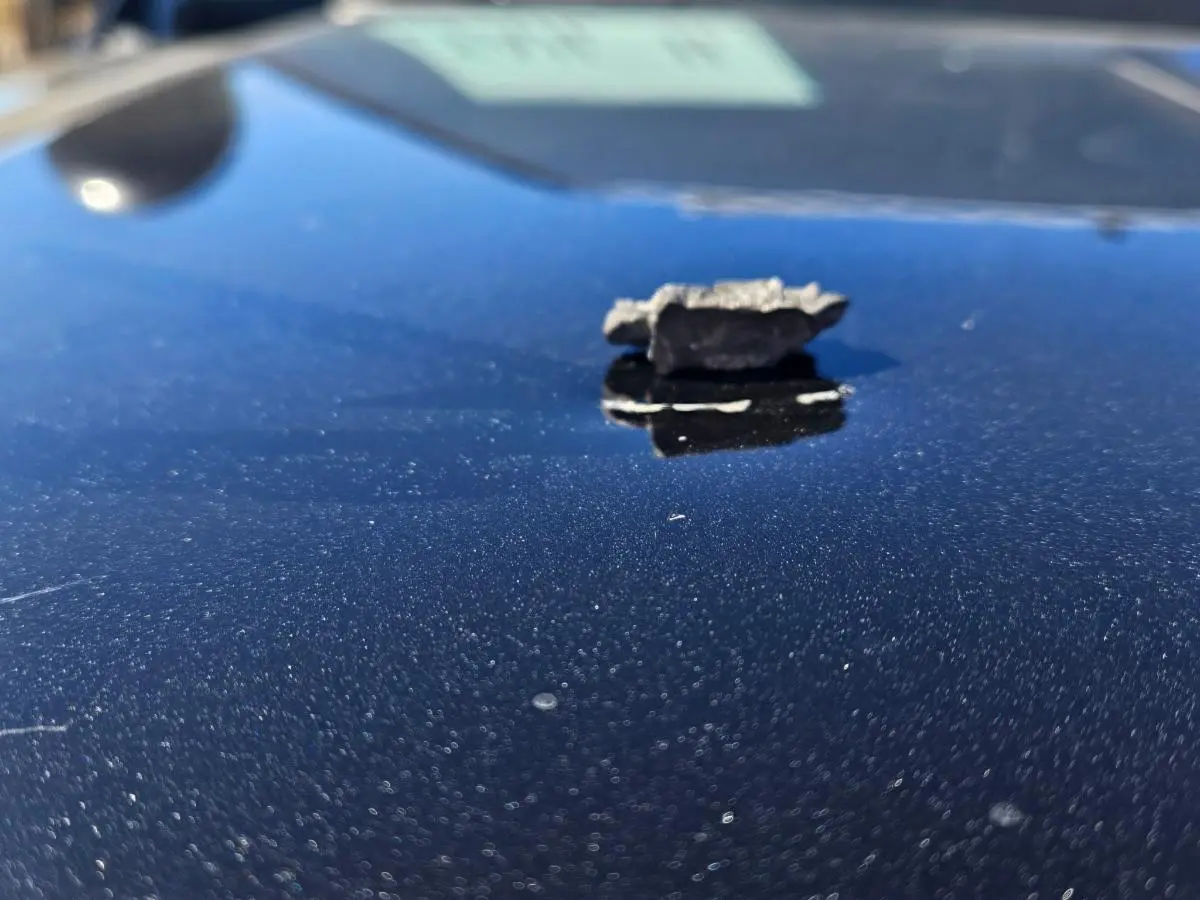
Military ordnance prematurely detonates over I‑5 at Camp Pendleton, shrapnel hits CHP cruiser during anniversary firing
A ceremonial round at Camp Pendleton detonated prematurely over Interstate 5, showering debris that struck a California Highway Patrol cruiser; one officer sustained minor injuries and the Marine Corps and Department of Defense launched a formal investigation into causes.
- What happened: A ceremonial round detonated mid‑air and debris struck a CHP vehicle on I‑5 — confirmed by Camp Pendleton Public Affairs and the California Highway Patrol.
- Injuries and damage: One CHP officer suffered minor injuries from shattered glass and was treated; the patrol car was damaged by shrapnel, no civilian motorists reported hurt.
- Response and investigation: The base halted firings, secured the scene and coordinated with state authorities; the Marine Corps and Department of Defense opened a formal probe citing possible mechanical and human error.
Incident overview
A ceremonial round fired during a large anniversary event at Camp Pendleton was intended to travel over the adjacent stretch of Interstate 5 and land in a designated impact area. The round detonated prematurely while in flight, sending fragments and shrapnel onto the freeway and striking a California Highway Patrol vehicle that was passing beneath the flight path.
Immediate response and safety actions
Camp Pendleton security teams halted the demonstration immediately and coordinated with the CHP to secure the scene. Troops and base command staff assisted with cordons and debris searches while engineers inspected the range and impact zones for secondary hazards.
State and base authorities temporarily closed lanes of Interstate 5 to clear debris and ensure motorist safety. The CHP praised the officer’s quick action and the cooperation with base officials; the base public affairs confirmed the stoppage and scene security.
When and where
The event occurred during a widely publicized anniversary at Camp Pendleton at a firing range that borders Interstate 5, a major north‑south commuter and commercial route. Visibility and proximity to the freeway have long made ceremonial firings sensitive public‑safety events; this incident prompted a swift traffic closure while officials inspected the highway for debris.
Casualties and damage
Officials reported no fatalities. The CHP officer suffered relatively minor injuries—mostly cuts and wounds from broken glass and fragments—and was treated at the scene and later released. The patrol vehicle shows visible pockmarks and dents from shrapnel. No other motorists were reported hurt. Local media captured images of the damaged cruiser and cleared lanes of I‑5 after the incident (NBC San Diego, San Diego Union‑Tribune).
Investigation under way
The Marine Corps and the Department of Defense opened a formal investigation. Early statements indicated a likely combination of mechanical malfunction—possibly a defective fuze—and human error related to firing procedures. Investigators are examining the ordnance, maintenance and inspection records, and the approval chain for the ceremonial firing.
“Investigators will determine whether equipment failure, training, or procedural lapses were responsible,” officials said, emphasizing thorough fact‑finding rather than immediate blame.
Public and military reaction
Local leaders and public‑safety officials demanded answers and stressed protecting civilians and first responders as the top priority. The CHP commended the Marine Corps for quick cooperation at the scene and urged stronger safeguards when live ordnance is used near public roads (CHP).
Community members pressed for clearer public notice of such events and for physical buffer zones or barriers between firing lines and major highways.
Continuing developments and policy changes
In the days after the incident the Marine Corps announced preliminary policy changes: stricter technical checks of fuzes and ordnance, enhanced pre‑firing inspections, and tighter coordination with state law enforcement on firing windows and public notifications. Officials also signaled reviews of whether certain rounds should be allowed to cross public highways.
Federal and state investigators continue to work toward final cause findings; officials cited equipment malfunction and human error in initial statements, with fuller accounting expected after the formal probe (Camp Pendleton Public Affairs; Department of Defense).
Safety, accountability and taxpayer concerns
Many residents and conservative leaders have raised questions about accountability and fiscal stewardship. Calls include requests for equipment audits, written timelines for corrective measures, and transparent reporting so taxpayers can be assured that ceremonies will not put the public at risk.
At the same time, some support the Marine Corps’ willingness to investigate and update protocols; local officials want meaningful transparency to restore community trust.
Implications for Redding, California
Economic impact: Tighter safety rules could restrict training schedules or relocate ceremonial events, potentially reducing military visits and related economic activity in northern California.
Political consequences: Local leaders in conservative areas like Redding may press for firm accountability while continuing to support the troops, seeking clear public reporting from military bases.
Practical applications: Local agencies can use the incident to review emergency response plans, coordinate highway lane closures, medical response and public communication strategies. Residents should expect clearer pre‑event notifications when live demonstrations are planned.
Direct action items for local leaders
- Request written assurances from nearby military installations and state agencies about pre‑event notifications.
- Seek commitments for joint safety drills and shared inspection reports when live ordnance is planned.
- Ask lawmakers for periodic briefings from the Department of Defense on changes to ceremonial firing policies affecting public highways.
Sources and reporting
This article draws on statements and reporting from Camp Pendleton Public Affairs, the California Highway Patrol, the Department of Defense, and regional media coverage from San Diego Union‑Tribune and NBC San Diego. National outlets including Associated Press and Los Angeles Times provided follow‑up coverage.
Note: Officials have emphasized the need for thorough fact‑finding rather than assigning immediate blame; final findings, any disciplinary actions and detailed procedural changes will be released after the formal investigation concludes.



