
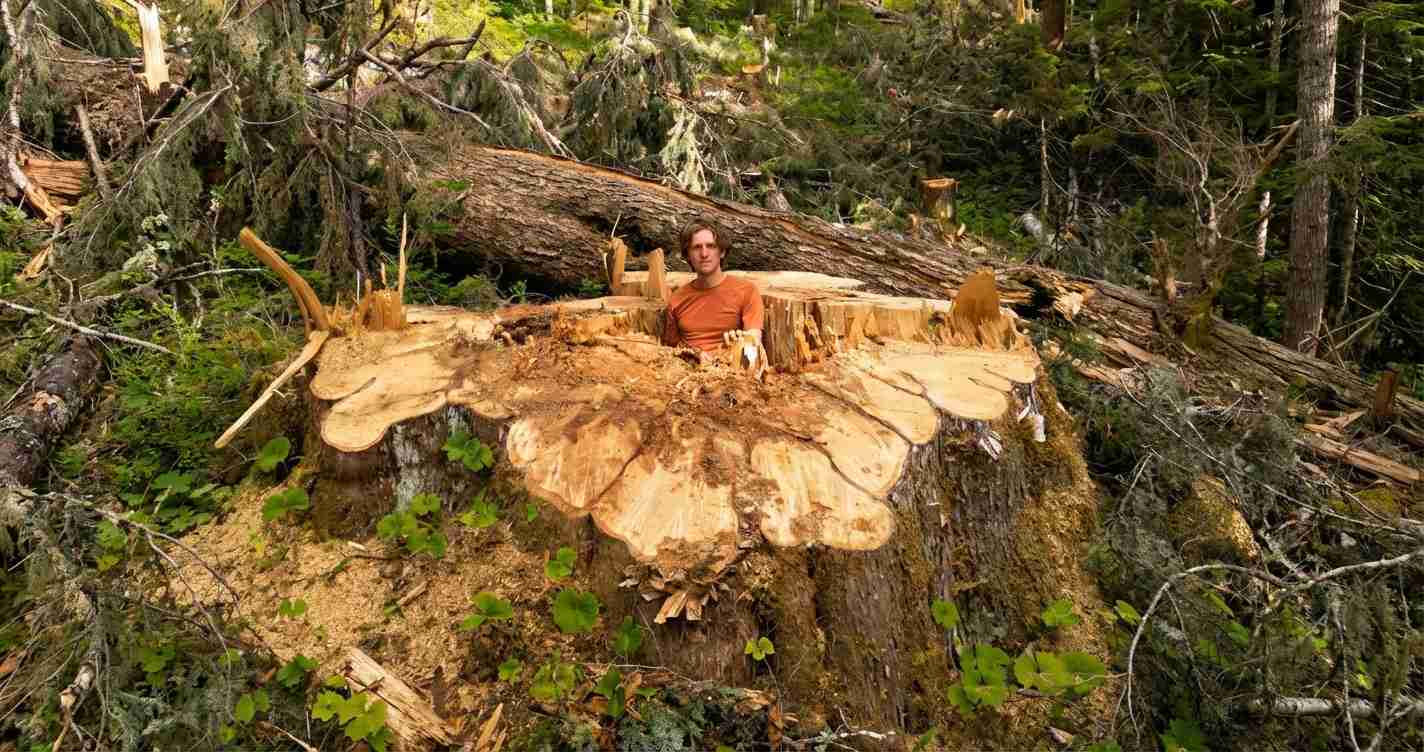
Giant BC yellow cedar felled on Vancouver Island despite Special Tree Protection Regulation, prompting ministry probe
A 2.79‑metre yellow cedar — above the legal specified tree threshold — was cut near Gold River on Vancouver Island, prompting a complaint from activist Joshua Wright and a confirmed investigation by the BC Forests Ministry.
- Specified threshold exceeded: the cedar measured 2.79 m DBH, over the 2.65 m cutoff for yellow cedar under the Special Tree Protection Regulation.
- Investigation opened: Joshua Wright filed a complaint after identifying and spray‑painting the tree; the BC Forests Ministry confirmed a probe is underway (report).
- Enforcement concern: the regulation depends on operator self‑reporting within 30 days, a mechanism critics say creates gaps that can leave big trees vulnerable.
What the law says
British Columbia’s Special Tree Protection Regulation (2020) sets species‑specific size thresholds for protection on Crown land and some private lands. For yellow cedar, the schedule lists 2.65 metres DBH (about 8.7 feet) as the cutoff for a tree to be designated a specified tree.
When a tree qualifies as “specified,” the regulation prohibits cutting, damaging or destroying it and also protects supporting trees within a 56‑metre radius to preserve the immediate stand during primary forest activities. Exemptions exist — including for human safety, operational necessity, road work or recognized cultural uses — but the minister can authorize removals only under those conditions, and operators must notify the ministry after using an exemption.
How the tree was identified and felled
According to media accounts, activist Joshua Wright located the yellow cedar south of Gold River, measured its DBH as 2.79 metres, and spray‑painted the trunk to mark it. Despite the paint and measurement, the tree was felled during a provincially approved logging operation in June. Wright’s complaint led to the ministry confirming an active investigation (Global News report).
“He measured the DBH at 2.79 metres, above the protection threshold,” the complaint states, prompting the ministry probe.
The limits of self‑reporting
A central issue is that the regulation makes the logging operator (or another “responsible person”) the party required to report a specified tree when they first become aware of it. That report must include coordinates and authorization details and is expected within 30 days of awareness (regulation).
Critics argue this creates an inherent conflict: operators may have incentives to delay reporting or to use exemptions, and if a tree is cut before authorities are notified, protections are moot. Local foresters and activists have highlighted enforcement gaps in practice (context).
Exemptions and ministerial power
The regulation grants the minister discretion to exempt specified trees from protection for limited reasons: public safety, operational necessity, road work, or recognized cultural uses. While the law requires notification after an exemption is used, public disclosure is limited, making it difficult for independent observers to determine whether a particular felling was lawful under a granted exemption (Special Tree Protection Regulation).
Industry perspective and provincial context
The 2020 regulation formalized size thresholds where protections were previously limited outside parks. Advocates say it was a step forward; opponents say thresholds may be too low in some areas to protect truly ancient trees. Licensed operators state they comply with the law and emphasize exemptions exist to balance safety and operational realities with conservation goals. The tension between protecting large trees and supporting forestry jobs remains acute on Vancouver Island.
What is not yet known
As of current reporting, the BC Forests Ministry has not disclosed whether a ministerial exemption was invoked for this removal or whether the operator reported the tree within the required timeframe. There is no public record yet of penalties, orders, or corrective actions tied to this specific incident (media report).
How the incident fits into broader Vancouver Island logging debates
Vancouver Island has a long history of conflict over old‑growth protection. Conservationists argue for stronger on‑the‑ground safeguards; industry and rural communities stress jobs and economic stability. This felled cedar — clearly above the specified threshold — is being cited by both sides: critics say the regulation failed in practice, while defenders of industry point to exemptions and operational constraints.
Municipal bylaws, such as Vancouver’s urban tree protection rules, do not apply to Crown land where most commercial logging occurs, limiting local control over these decisions (Vancouver tree protection bylaw).
Implications for Redding, California
- Regulatory design: Rules that depend on self‑reporting can appear robust on paper but weak in practice if independent verification is lacking.
- Forestry and jobs: The case illustrates the ongoing need to balance conservation objectives with local timber economies and worker predictability.
- Wildfire and safety: Tree‑management choices (including protections or removals of supporting trees) affect wildfire behavior and public safety planning.
- Supply chain impacts: Investigations and controversies can affect market confidence; buyers and mills may need to track policy shifts for supply risk.
- Transparency and trust: Citizens and officials often demand clearer public records when exemptions are used and timely disclosure during probes.
Relevant sources and documents
- Special Tree Protection Regulation, BC Laws
- Global News reporting on the felled cedar and complaint
- Background and critique on tree protection history
- Vancouver tree protection bylaw (city context)
Bottom line: The BC Forests Ministry’s investigation will determine whether the felled yellow cedar was removed lawfully under an exemption or whether the protections in the Special Tree Protection Regulation failed due to delayed or absent reporting. Activists and independent monitors call for greater transparency and independent verification so that large, irreplaceable trees are not left solely to industry discretion.



