
Judge Charles Breyer Rules Trump Military Deployment in California Violated Posse Comitatus Act
A U.S. District Court judge found the Trump administration’s 2025 federalization of California National Guard troops and Marines for domestic policing illegal under the Posse Comitatus Act, and permanently enjoined similar future deployments in the state.
- Court finding: Judge Breyer held federalized troops were bound by the Posse Comitatus Act and that arrests, searches, crowd and traffic control and a visible military presence constituted unlawful domestic law enforcement.
- Scope of deployment: In June 2025 about 4,000 California National Guard members and roughly 700 Marines were federalized for operations in Los Angeles and other cities.
- Remedy and limits: The court permanently enjoined similar uses of federalized Guard and Marines in California unless a valid constitutional or statutory exception applies; the judgment was stayed through Sept. 12, 2025, pending appeal.
What the court found and why it matters
Judge Breyer grounded his opinion in the Posse Comitatus Act of 1878, a post‑Civil War law that limits the military’s role in domestic law enforcement. The court found the government “crossed that line” when federalized forces engaged in policing activities.
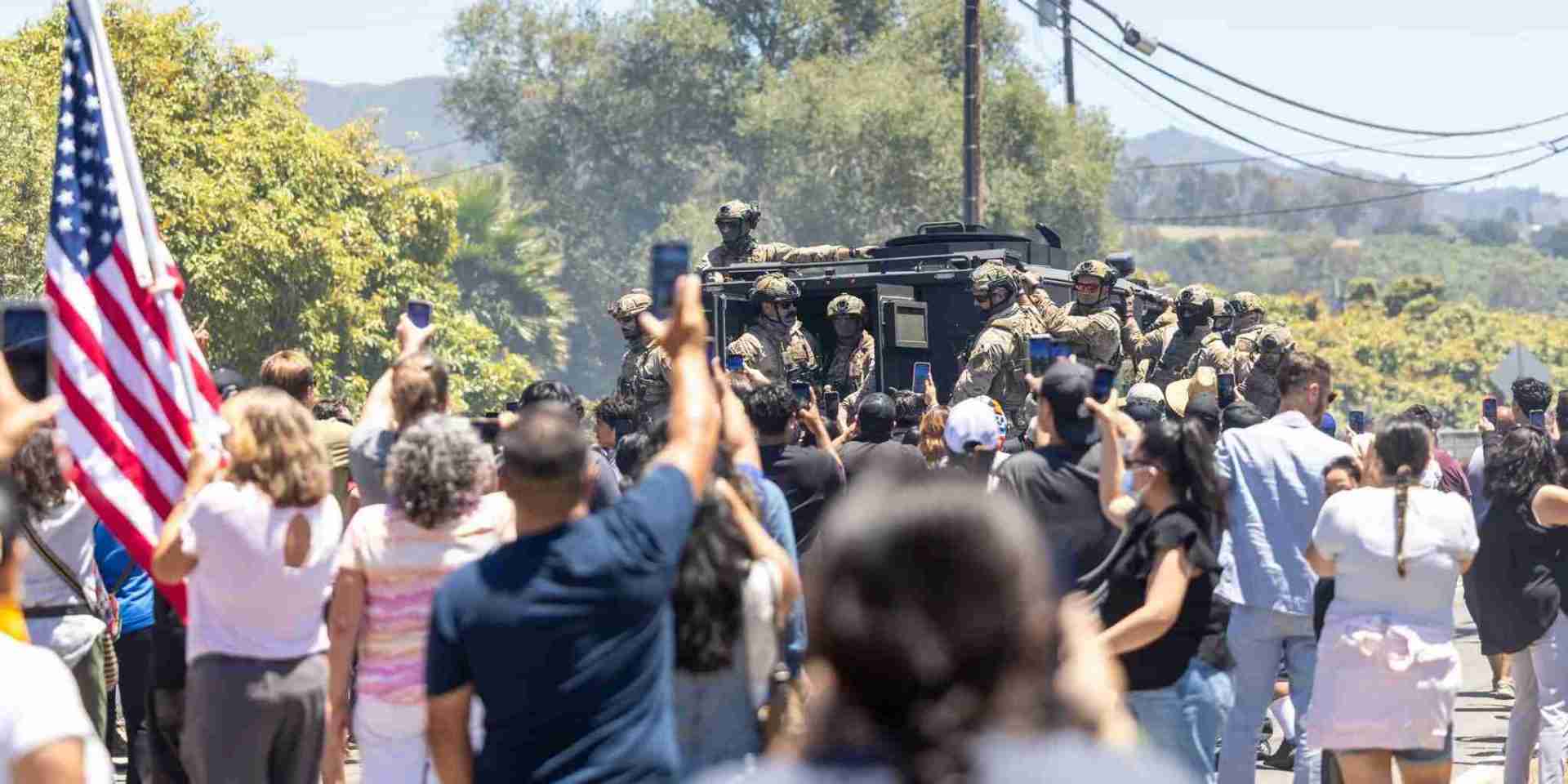
“Defendants systematically used armed soldiers … to set up protective perimeters and traffic blockades, engage in crowd control, and otherwise demonstrate a military presence,” the judge wrote, concluding those acts “violated the Posse Comitatus Act.”
The ruling treats visible military policing, arrests and searches as prototypical activities barred to federal troops under the Act. Analysts say the decision clarifies some limits but leaves unresolved questions about presidential authority in domestic deployments.
Deployment details and what troops did
Officials reported that about 4,000 California National Guard members were placed under federal command alongside approximately 700 Marines, assigned to Task Force 51 under U.S. Army North. They were deployed to multiple sites for immigration enforcement operations and to respond to protests accompanying those operations.
According to the court record, troops went beyond protecting federal property: they helped set up perimeters and checkpoints, assisted in crowd and traffic control, and maintained a visible presence that the judge found amounted to law enforcement.
Government defense and the court’s response
The Trump administration argued it had authority under 10 U.S.C. § 12406 to mobilize troops to protect federal personnel and property and to assist in immigration enforcement, claiming limited protective use was necessary to secure federal missions.
Judge Breyer rejected a broad reading of that authority, drawing a line between permitted protective actions and active law enforcement. The court found no evidence of an insurrection or breakdown of civil authority that would permit invoking an Insurrection Act exception.
Relief ordered and limits spelled out
The court’s order permanently blocks use of federalized Guard troops and Marines in California for a list of policing activities including:
- Making arrests or detaining individuals for law enforcement purposes
- Conducting searches to obtain evidence for criminal prosecutions
- Controlling crowds, demonstrations or traffic as part of policing
- Collecting evidence or intelligence on behalf of civilian law enforcement
The ruling is designed to prevent deployments that mirror the June 2025 operations unless a narrow constitutional or statutory exception clearly applies.
State suit and political context
California’s lawsuit was led by Governor Gavin Newsom and Attorney General Rob Bonta, arguing the federal action violated state sovereignty and the Posse Comitatus Act. The case landed in federal court where Judge Breyer issued an opinion described by many as a strong rebuke of federal military policing inside the state.
Lingering legal questions
Legal analysts note the opinion is important but leaves gray areas. It clarifies activities likely unlawful under the Posse Comitatus Act but does not fully resolve how far presidential authority extends for domestic troop deployments or the scope of statutory exceptions.
The judgment was stayed until Sept. 12, 2025, to allow the federal government to seek appellate review; the case will likely be appealed and could shape nationwide precedents.
Implications for Redding, California
Economic impact: Redding relies on tourism, small business and state contracts tied to public safety. A future dispute over federal troop use could affect visitor perceptions and local operations if federal agents appear without clear legal backing.
Political consequences: For conservative audiences in Redding, the decision highlights the balance between federal power and local control, affirming limits on federal military involvement in domestic policing.
Social effects: Residents who feared soldiers on city streets may find relief in the court’s limits, while local law enforcement must prepare to handle protests or immigration-related operations without federal military support.
Practical applications: Local officials in Shasta County should review mutual-aid plans and National Guard arrangements. The difference between state-controlled Guard forces and federalized troops matters; federalization changes the legal framework and local leaders may need clearer agreements with state authorities.
Legal next steps
The federal government asked the court to stay the order and immediately appealed. The stay runs through Sept. 12, 2025, while the case proceeds. The appeals process will determine whether Judge Breyer’s interpretation stands and how broadly it will constrain similar deployments in the future.



