Three Bay County beaches under advisory after tests show high enterococcus levels; officials warn against water contact
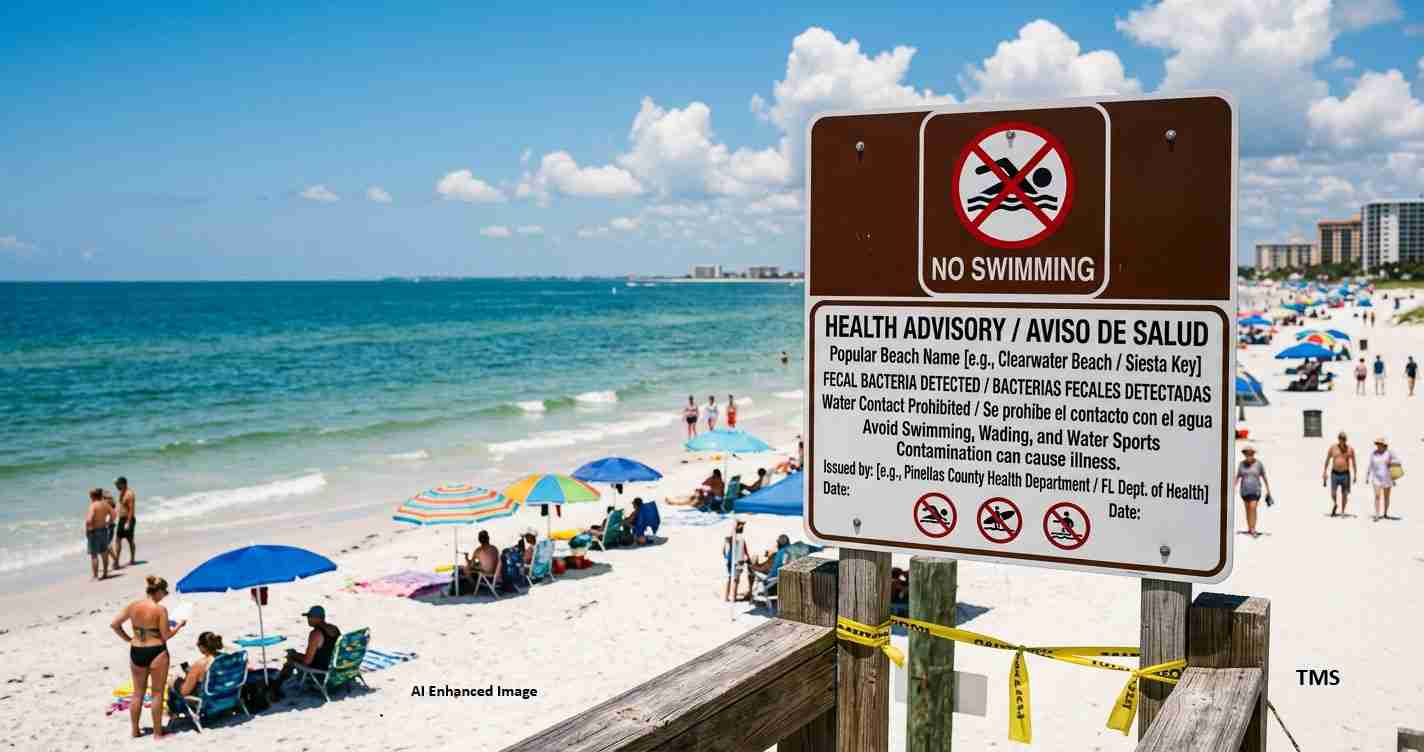
Three popular Bay County beaches — Laguna Beach, Carl Gray Park and Beach Drive — are under water-quality health advisories after routine testing found elevated Enterococcus bacteria; DOH‑Bay advises avoiding water contact until levels return below state thresholds.
Key takeaways
- Samples on May 26 showed elevated Enterococcus at three Bay County sites — results posted May 28 by DOH‑Bay.
- Affected sites: Laguna Beach (SP 2) — 19440 Front Beach Road, Panama City Beach; Carl Gray Park (SP 9) — Collegiate Drive, Panama City; Beach Drive (SP 10) — US‑98 West Beach Drive, Panama City.
- The advisory is not a beach closure: shore access remains open, but authorities advise against any water-related activities until follow-up tests meet state criteria.
What happened and where
Routine monitoring by DOH‑Bay detected Enterococcus readings above Florida’s recreational water criteria from samples collected on Tuesday, May 26, 2026. Results were posted by the county on May 28. The three affected sites — Laguna Beach, Carl Gray Park and Beach Drive — are popular with tourists and families, particularly Laguna Beach in Panama City Beach. Officials will keep advisories in effect until follow-up sampling shows counts below state health thresholds.
What Enterococcus is and why it matters
Enterococcus (enterococci) are bacteria that naturally inhabit the intestinal tracts of warm-blooded animals, including humans. They are commonly found in fecal matter and are used as an indicator organism — high levels suggest a greater likelihood that harmful pathogens may be present in the water. The EPA explains how enterococci are used to assess beach safety.
Health risks: Elevated Enterococcus increases the chance of stomach/intestinal illness, ear and throat infections, skin rashes, and wound infections; people with weakened immune systems or chronic conditions are at higher risk.
Likely causes: rain, runoff and infrastructure
Environmental health experts and DOH‑Bay point to recent heavy rains and flash flooding as probable drivers. Stormwater runoff can carry animal waste and other contaminants into coastal waters. Other potential sources include sewer overflows or failing septic systems, but the advisory notes the exceedances without naming a definitive source for these samples. The pattern aligns with typical post-storm bacteria spikes public-health programs monitor.
Current public-health guidance
- Avoid all water contact at Laguna Beach, Carl Gray Park and Beach Drive until tests show Enterococcus levels below state thresholds. This includes no swimming, wading, surfing or letting water contact eyes, mouth or open wounds. (DOH‑Bay advisory)
- Be especially cautious: people with open cuts, weakened immune systems, or chronic illnesses should stay out of the water.
- Updates and testing: advisories remain until follow-up samples are below the health threshold; results are posted on DOH‑Bay and state Healthy Beaches pages.
How monitoring works and what to watch for
Florida’s beach-monitoring program collects routine samples at designated sites and compares Enterococcus counts to standards meant to protect public health. When a sample exceeds the guideline, health departments issue advisories or closures depending on risk. Follow-up samples determine when the advisory can be lifted. Check updates via DOH‑Bay and the state’s Healthy Beaches listings.
Practical next steps for visitors and families
- Do not swim or wade at the three affected sites until the advisory is lifted.
- If you or a family member swam recently and develop stomach illness, fever, rash, ear pain, or a wound infection, tell your clinician about possible water exposure.
- Avoid harvesting or eating shellfish from waters with advisories unless state or local authorities indicate it is safe. (DOH‑Bay water program)
- Check beach flags and local advisories before heading to the shore; use DOH‑Bay and Healthy Beaches updates as your sources.
Reporting and accountability
Residents and business owners should report suspected sewage odors, visible overflows, or clogged storm drains to local public works or health departments. Timely reports can speed responses and help determine whether infrastructure failures are contributing to contamination. Quick reporting matters, especially in tourism-dependent coastal communities. DOH‑Bay posts results and maintains a public information line for questions. (DOH‑Bay)
Broader water concerns to keep in mind
DOH‑Bay also reminds beachgoers of other coastal hazards separate from this Enterococcus advisory, such as harmful algal blooms (“red tide”) and naturally occurring Vibrio bacteria in warm, brackish water. These risks reinforce why checking advisories before entering coastal waters is always prudent. (DOH‑Bay water program)
Implications for Redding, California
Economic: While Redding is far from Panama City Beach, many North State families travel for vacations; advisories can affect travel plans and bookings. Local travel agents and businesses should remind customers to check destination advisories before departure.
Political & governance: The episode highlights the need for local control, stormwater maintenance, septic inspections and rapid response to reports of overflows. Transparent, timely public communication — like DOH‑Bay’s postings — helps residents make informed choices.
Social & health: Families should factor water-quality advisories into travel plans. Redding clinics may see patients returning with water-related illnesses; noting recent beach exposure aids diagnosis and care.
Cultural: Outdoor recreation is central to life in Redding. The advisory underscores community responsibility to protect waterways; civic and volunteer groups can promote stewardship and reporting.
Practical applications for Redding residents
- Check advisories before travel and before entering local waters; use county and state water-quality resources to confirm safety.
- Report stormwater problems, failing septic systems or visible pollution to local public works to reduce contamination without large new regulations.
- Carry basic first aid and know when to seek medical care after water exposure; mention recent travel or beach exposure to your provider.
Sources and where to find updates
- DOH‑Bay advisory and site list
- DOH‑Bay water programs and beach safety guidance
- EPA guidance on Enterococcus and beach monitoring
If you plan to travel to Bay County or were recently at these beaches: monitor DOH‑Bay postings and state Healthy Beaches updates. Avoid water contact at Laguna Beach, Carl Gray Park and Beach Drive until officials lift the advisories.