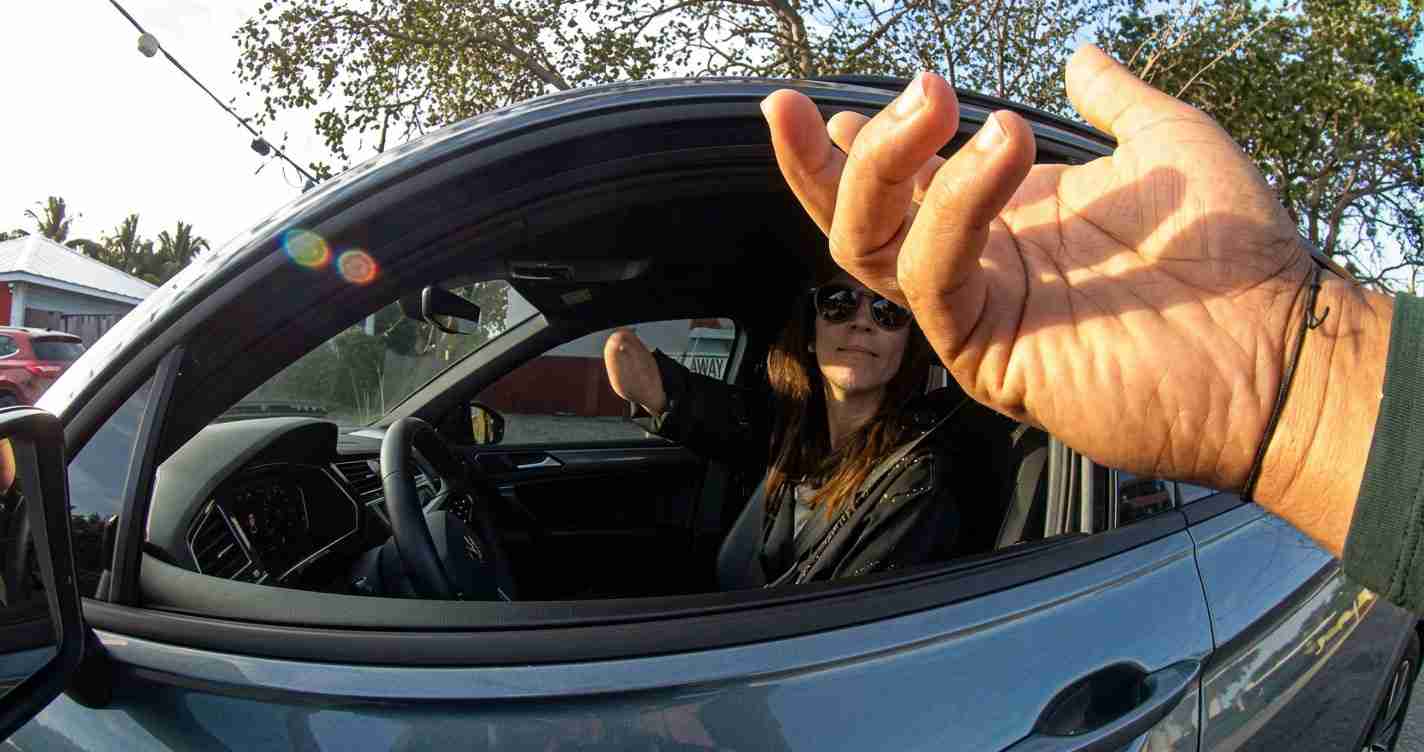
Palm Beach deputy’s bodycam clip sparks uproar after ticketing woman with no right hand; citation later dismissed
A Palm Beach County deputy stopped Kathleen “Katie” Thomas on Feb. 11 in Lake Worth Beach, insisting she held a cellphone even after she showed she has no right hand. The $116 citation was later dismissed for lack of evidence.
Key takeaways
- Kathleen “Katie” Thomas, an adaptive athlete and influencer missing her right hand, was cited after a Feb. 11 traffic stop in Lake Worth Beach.
- The deputy told Thomas he saw her “holding the phone with [her] right hand,” despite Thomas showing her right forearm; the stop was captured on bodycam and went viral.
- The $116 citation for Wireless Comm. Device/Handheld While Driving – First Offense was dismissed by prosecutors for lack of evidence.
- The episode raised questions about distracted‑driving enforcement, officer training for encounters with disabilities, and citation‑software labeling.
What happened
When and where: Feb. 11 on North Dixie Highway in Lake Worth Beach, Florida, during a distracted‑driving enforcement operation.
Who: Driver Kathleen “Katie” Thomas, 36, an adaptive athlete and social media influencer who is missing her right hand/forearm; the deputy is identified on body camera as “Deputy Gazal” of the Palm Beach County Sheriff’s Office (PBSO).
What the bodycam shows
Body‑camera footage released this week captures the exchange that fueled online debate. The deputy approaches Thomas’ vehicle and says he pulled her over because he saw her “holding and manipulating a phone with her right hand.” Thomas responds calmly, lifts her right arm and shows it ends at the forearm.
“So you want to just call this a day or…?” — Kathleen Thomas, after showing her right forearm
The deputy presses on, saying he saw a “hand manipulator.” When pressed, he partially backtracks: “With the right hand, perhaps not,” yet continues to ask Thomas to confirm that she did not have a phone “in your hand.” Despite the exchange — including Thomas raising her right arm and then her left at the deputy’s prompting — the citation was issued.
Watch the released clip: bodycam clip shared by Thomas. See the uncut footage: uncut footage of the interaction.
The legal basis and the ticket
Charge listed: Wireless Comm. Device/Handheld While Driving – First Offense, with a $116 fine.
Florida’s distracted‑driving laws distinguish between texting (typing/sending messages) — a primary offense — and merely holding a phone, which is not uniformly prohibited except in specified locations (for example, school zones or active work/construction zones). Court filings and the citation indicate the boxes for school‑zone and construction‑zone were not checked.
A court hearing was set, but prosecutors dropped the case shortly before the hearing; court records list the dismissal reason as “lack of evidence.”strong
PBSO spokeswoman Teri Barbera said the decision followed review of Florida Statutes 316.305 and 316.306, the totality of the circumstances and an ambiguity in how violations can be labeled in the department’s citation software.
PBSO’s statement and the deputy’s actions
PBSO emphasized that the deputy acted on what he believed he saw at the time and noted the dismissal related to statutory wording and citation‑software recording — not necessarily a formal finding of misconduct. The office had not announced internal discipline for the deputy in available coverage.
“Officers must make real‑time decisions in the field and motorists retain the right to contest citations in court,” Barbera said, underlining the tension between split‑second enforcement and later scrutiny once videos circulate online.
Public reaction and the viral spread
Thomas posted the clip to social media; it gained millions of views and quickly reached national outlets. Reactions split: many ridiculed the deputy for continuing the stop after seeing a missing hand, while others defended the role of officers tasked with spotting distracted drivers and noted enforcement can rely on imperfect, rapid observations.
The incident prompted broader discussions about:
- How officers form visual assumptions during roadside stops and the risk of errors.
- Limits and ambiguities of Florida’s distracted‑driving statutes and where police clearly have authority to ticket.
- Awareness and training for encounters with drivers with limb differences or adaptive devices.
Thomas’ response and next steps
Thomas said she intended to contest the ticket and posted the bodycam footage to document the exchange. After prosecutors dismissed the citation, she used the episode to highlight how people with disabilities can be misread and to challenge distracted‑driving enforcement practices. The dismissal relieved her of the $116 fine.
Open questions
- Evidence of adaptive device: The deputy’s claim about seeing a “hand manipulator” was not substantiated in public records or footage; dismissal suggests prosecutors felt the claim could not be proved beyond a reasonable doubt.
- Internal review/training: PBSO has not publicly detailed whether it will conduct internal review or retraining to prevent similar encounters; critics call for clearer policies and training on recognizing prosthetics and adaptive devices.
- Citation software: Wording differences between Florida Statutes 316.305 and 316.306 and ambiguity in citation software labeling may have influenced the dismissal, raising administrative and legal questions.
Implications for Redding, California
This Lake Worth Beach stop has practical lessons for Redding drivers, law enforcement and policymakers:
- Economic impact: Even a $116 ticket can consume officer and court time when contested; repeated dismissals can add administrative costs for departments and courts.
- Political consequences: For conservative readers who support law enforcement, the case underscores the need to balance authority with accuracy — offering support for officers while demanding training that reduces avoidable mistakes.
- Social effects and cultural relevance: Redding communities that include veterans and residents with limb differences may benefit from training that covers adaptive driving and prosthetics to preserve public trust and respect for first responders.
- Practical steps: Drivers should document interactions when safe and legal to do so; agencies should audit citation‑software labels and expand training on encounters with adaptive devices; local courthouses and defenders should be ready to advise residents contesting similar tickets.
Sources and footage
- CBS12 coverage of the stop and PBSO comments
- Bodycam clip shared by Thomas
- Uncut footage of the interaction
Preserved facts, dates and quoted exchanges are based on reporting and released body‑camera footage cited above.