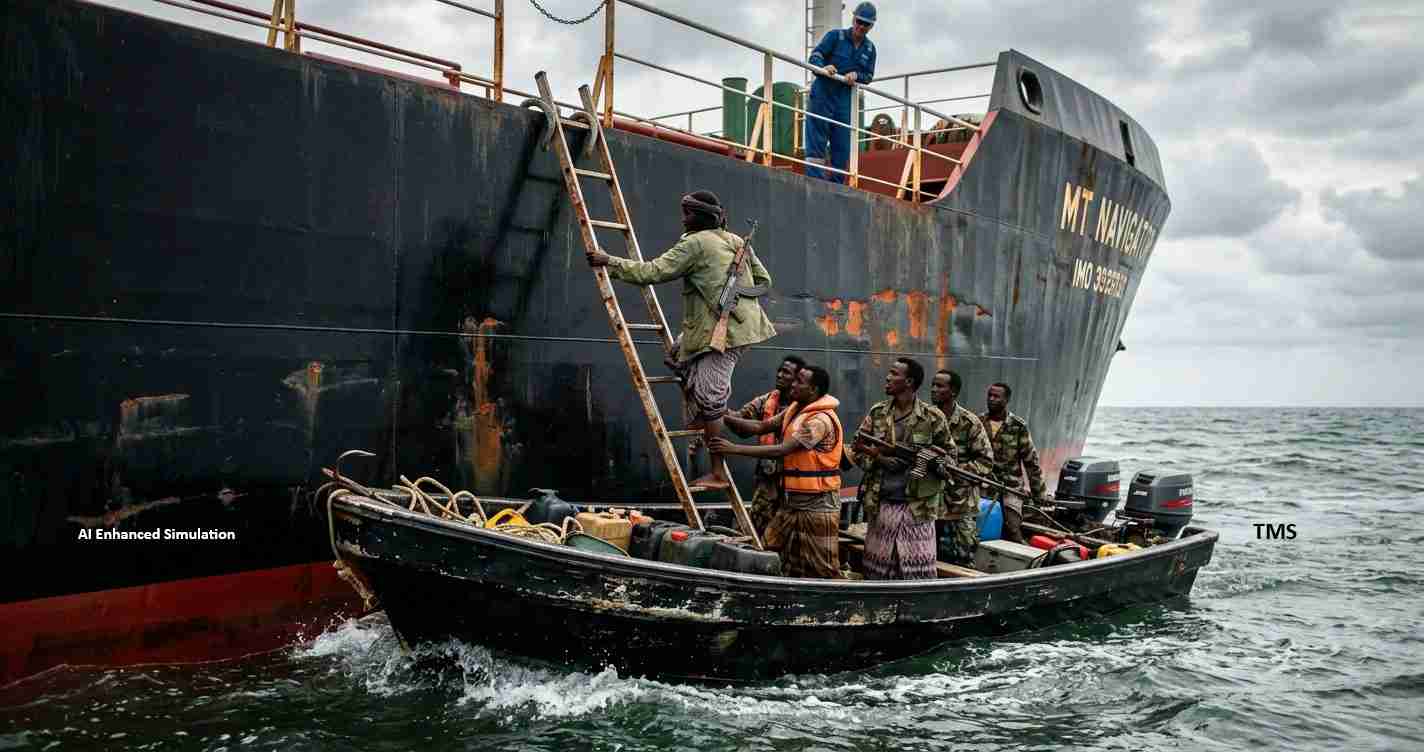
Somali piracy surge and Houthi pirate collaboration revive Red Sea threat after MT Eureka hijacking
A recent surge in Somali piracy, capped by the May 2, 2026 hijacking of oil tanker MT Eureka off Shabwa, signals an emerging Somali–Houthi collaboration exploiting a Red Sea security vacuum that threatens vital global shipping lanes.
- MT Eureka hijacked: Armed boarding reported May 2; recovery efforts were later reported.
- New collaboration: Analysts warn Somali pirate groups are coordinating with Houthi-linked actors for cover and technical support.
- Security vacuum: Naval resources diverted to the Red Sea have left western Indian Ocean waters exposed.
- Economic risk: Disruption to the Red Sea corridor could raise freight and fuel costs globally and locally.
The MT Eureka hijacking and recovery efforts
On May 2, 2026, Yemen’s coast guard reported armed men boarded the oil tanker MT Eureka off Shabwa and steered it toward the Gulf of Aden. The vessel was later located and recovery efforts were reported by news outlets, according to Fox News.
That seizure fits a pattern of attacks that began in late April, when multiple vessels were taken or attacked within days of each other, including a Somali-flagged fishing boat, the Palau-flagged tanker Honour 25, and a general cargo vessel redirected to Garacad (see ModernGhana coverage).
Analysts: a return to the “Somali model” with a new twist
Ido Shalev, COO at RTCOM Defense and a former Israeli naval officer, says the MT Eureka incident shows a return to the old Somali piracy playbook — full seizures of ship, cargo and crew for ransom — but with a new operational twist.
“This is an opportunistic alignment. The Houthis provide geopolitical cover and tech; Somali groups provide the boots on the water.”
Shalev and other analysts describe a transactional partnership in parts of the Red Sea and Gulf of Aden: Somali groups supply skiffs and personnel while Houthi-linked actors offer cover, advanced GPS and surveillance capability (reported in Fox News).
Wave of attacks raises risk levels
Maritime risk monitors noted an uptick in incidents beginning April 21. Windward AI and the U.K. Maritime Trade Operations raised warnings as at least three hijackings or attempted seizures occurred within a short period. Some crews repelled attacks using defensive measures such as flares, but the overall trend points to growing boldness and range among pirate groups (coverage includes ModernGhana and video summaries on YouTube).
Contributing factors: naval distraction and rerouted oil
Two primary drivers explain the resurgence. First, naval resources that once patrolled the western Indian Ocean and Somali waters have been redirected to the Red Sea in response to ongoing Houthi missile and drone strikes on commercial ships since late 2023. Analysts say that shift created a security vacuum off Somalia that criminal groups are exploiting (analysis reported in Fox News and a StreamlineFeed report).
Second, global energy flows have shifted: instability in the Strait of Hormuz led Saudi Arabia to route millions of barrels per day through the East–West pipeline to Yanbu, turning a once-secondary corridor into a high-value target — especially while Brent crude traded near $115 per barrel this quarter (Fox News).
Historical context: piracy’s rise, fall and risk of return
Piracy off Somalia peaked between 2008 and 2013 and then fell sharply after a multinational naval effort, armed security teams on ships, and improved surveillance. Shalev — who helped design Nigeria’s Falcon Eye surveillance project — warns that patrols alone are not enough; intelligence and early detection are critical when global naval attention is split (Background on piracy off Somalia).
Expert views and pattern recognition
Other analysts echo the same concerns. David Willima of the International Institute for Strategic Studies (ISS) observed that reduced patrols created opportunities for criminal groups as war-related traffic surged in the Middle East. Think tanks and maritime bodies had warned of a possible resurgence tied to the Red Sea crisis earlier in 2024; the recent string of attacks reinforces those warnings (ModernGhana; Encyclopedia overview).
Broader economic and security impacts
The Red Sea corridor handles roughly 12–15% of global trade — more than $1 trillion in goods annually — including about 30% of container traffic plus oil and LNG shipments. Disruption or fear of attacks pushes shippers to reroute around the Cape of Good Hope, adding time and cost. That raises freight rates, delays shipments, and increases fuel bills for goods bound for U.S. coasts and inland markets (Fox News).
If Iran-backed actors provide safe harbor or technical support to pirates, the nexus of state-backed disruption and criminal profit could complicate naval responses, forcing warships to balance counterterrorism, deterrence, and maritime crime suppression simultaneously (Fox News).
Responses underway
Regional and international naval assets are monitoring the area and issuing advisories. Industry groups and ship owners are reassessing routing, speed, and onboard defenses. Recovery operations in the MT Eureka case were reported, and maritime security firms urge improved detection systems and intelligence sharing — measures stressed by Shalev based on his surveillance work (Fox News).
Implications for Redding, California
- Economic impact: Inland communities like Redding could see higher prices for fuel, shipping-dependent goods, and construction materials if global oil and freight costs rise.
- Political consequences: Coverage may drive calls for stronger U.S. Navy presence, faster intelligence-sharing, and tougher action to secure trade corridors.
- Social effects: Higher fuel prices and delays disproportionately affect residents on fixed incomes and small businesses; local aid groups may face higher logistics costs.
- Practical steps: Local leaders and businesses should monitor energy prices and shipping notices, consider hedging strategies, and review contingency stockpiles for critical services.
Sources and further reading
- Fox News report (citing Reuters and other sources)
- ModernGhana coverage of hijackings off Somalia
- StreamlineFeed report on resurgence
- Background on piracy off Somalia (Encyclopedia overview)
- Video coverage and reporting references
Conclusion
This developing pattern — described by analysts as Somali piracy threats in the Red Sea coupled with Houthi collaboration tied to high-value crude routes — underscores how regional conflicts can ripple into global markets and local communities. Authorities and industry groups emphasize that improved intelligence, surveillance, and coordinated multinational action will be critical to preventing a sustained return to the large-scale hijackings of the past.