
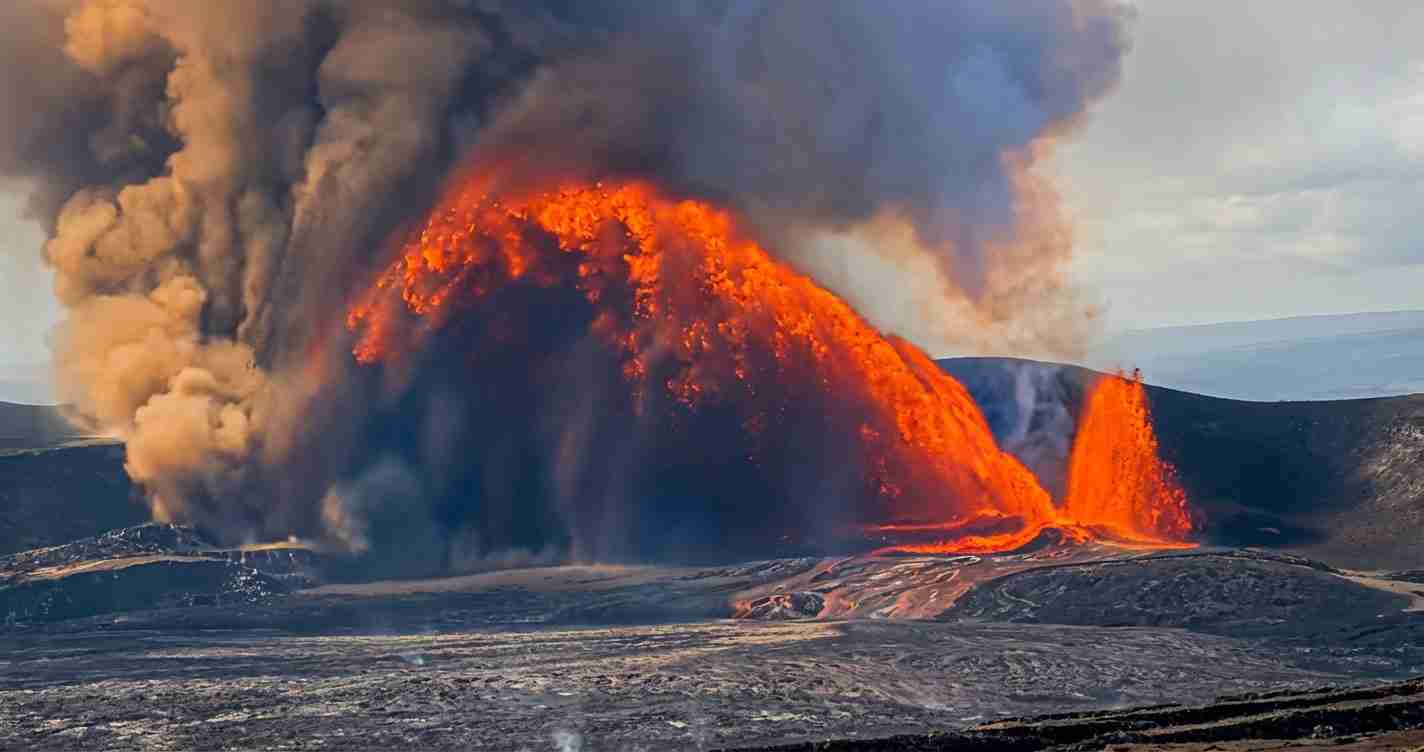
Man Dies After Entering Closed Area of Kīlauea Caldera
A 33-year-old Hawaii resident died after entering a closed section of the Kīlauea caldera rim on Feb. 26, 2026. Rescue teams found him following an overnight search; he was airlifted to Hilo and pronounced dead Feb. 27.
Key takeaways
- Entry into a restricted area: The man entered a closed section on the east side of the Kīlauea caldera and was located after an overnight search and airlifted to Hilo Benioff Medical Center, where he was pronounced dead on Feb. 27, 2026.
- Persistent hazards: Park officials emphasize that unstable cliffs, hidden cracks and sudden ground changes make rim areas dangerous even when the volcano is not actively erupting.
- Broader pattern: Experts and rangers say this incident adds to a national trend of visitors ignoring closures, increasing risky rescues and prompting calls for enforcement.
- Ongoing review: The park is investigating the circumstances and has withheld the victim’s identity while family notifications are completed.
Main story
Into the closed area: what officials say
Park staff and rescuers confirmed the east side of the Kīlauea caldera was closed to the public when the man entered. Managers routinely close rim sections when rockfall, ground cracking or volcanic unrest create unsafe conditions. Even without active lava flows, steep cliffs and unstable ground can be fatal.
“Closures are not suggestions,” park officials told local media. Rangers close areas based on geologic surveys, observations and recent ground activity to protect visitors and cultural resources.
Search, rescue and hospital transfer
National Park Service teams conducted an extensive overnight search through steep, hazardous terrain with unstable cliff edges and volcanic features. The man was not located until the next day; crews then arranged an airlift to Hilo Benioff Medical Center, where he was pronounced deceased on Feb. 27. The park has withheld the victim’s identity pending family notification.
Why closures matter
Park officials stress that closures are safety measures grounded in geology and ranger observation. Near Halemaʻumaʻu crater rim, tremors and landslide risk can create sudden hazards even after eruptions end. The most recent eruption period on Kīlauea concluded Feb. 15, 2026, but managers kept sections closed because the landscape can shift without warning.
Patterns of risky behavior and national context
Officials and experts say the Kīlauea incident fits a larger pattern of visitors ignoring closures, prompting resource-intensive rescues and, in some cases, criminal charges. With rising national park visitation, more people are in rugged environments where poor risk judgment can be deadly.
Dylan Spencer, an assistant professor of criminal justice and criminology at Georgia Southern University and co-author of the 2025 study “Recreation and disarray: Analysis of disorder in U.S. national parks,” said many visitors misread risk and treat parks like city parks or zoos.
Bill Wade of the Association of National Park Rangers noted that ignored warnings force rangers into dangerous rescues that can endanger both visitors and responders and drain local resources.
Prior incidents at Hawaiʻi Volcanoes National Park
Park officials pointed to multiple recent events where people entered off-limits zones. Examples include December 2024 trespassers near an active eruption and a June 2025 incident in which a 30-year-old survived a 30-foot fall after leaving a marked trail near Byron Ledge to approach lava fountains. These cases illustrate how a brief lapse in judgment can become life-threatening.
Enforcement and consequences at other parks
This problem is nationwide. In April 2025 a tourist from Seattle was sentenced to a week in jail after breaking rules at Yellowstone and approaching thermal features too closely. Thermal areas are particularly dangerous because crust can be thin over scalding water and boiling springs — nearly two dozen fatalities at Yellowstone’s thermal zones have been recorded in park history.
Investigation and public safety messaging
Park authorities and local officials continue to review the incident. Rangers renewed public warnings urging visitors to follow signs, stay on marked trails and respect closures. Officials said they will review how closures are posted and patrolled while balancing access with protection of wilderness and cultural resources.
Implications for Redding, California
Economic impacts: Redding-area outfitters and travel services that promote national-park trips may see travelers delay or cancel volcanic or geothermal tours after high-profile accidents. Businesses should reinforce safety messages, consider stronger waivers and provide thorough pre-trip briefings.
Political and social effects: The incident highlights themes of personal responsibility and enforcement that may resonate with conservative constituencies in the Redding area. Lawmakers could push for stiffer fines or clearer penalties for trespassing in hazardous park areas. Families, schools and youth groups may heighten safety protocols and adult supervision ratios on outdoor trips.
Practical applications: Local search-and-rescue volunteers and emergency responders should review mutual-aid agreements, training and resource needs. Travel businesses should favor guided trips with trained leaders and clear risk briefings for customers to limit liability and protect public safety.
Sources and further reading
- Fox News: “National park death exposes repeated rule violations, tourists take dangerous risks”
- WBZ NewsRadio / iHeart: “Man dies after sneaking into a closed area of a national park”
- Big Island Video News: “Man dies after being airlifted out of Kilauea Volcano caldera”
- Fox Weather: “Person dies after going into closed off area at Kilauea Volcano in Hawaii”
- Fox4 News: “National park death exposes repeated rule violations”
Note: Investigators continue to review the circumstances of the Kīlauea caldera incident while park officials urge visitors to obey closures and treat wild places with respect. The case is part of a broader national trend over visitor behavior and public-safety enforcement.


