
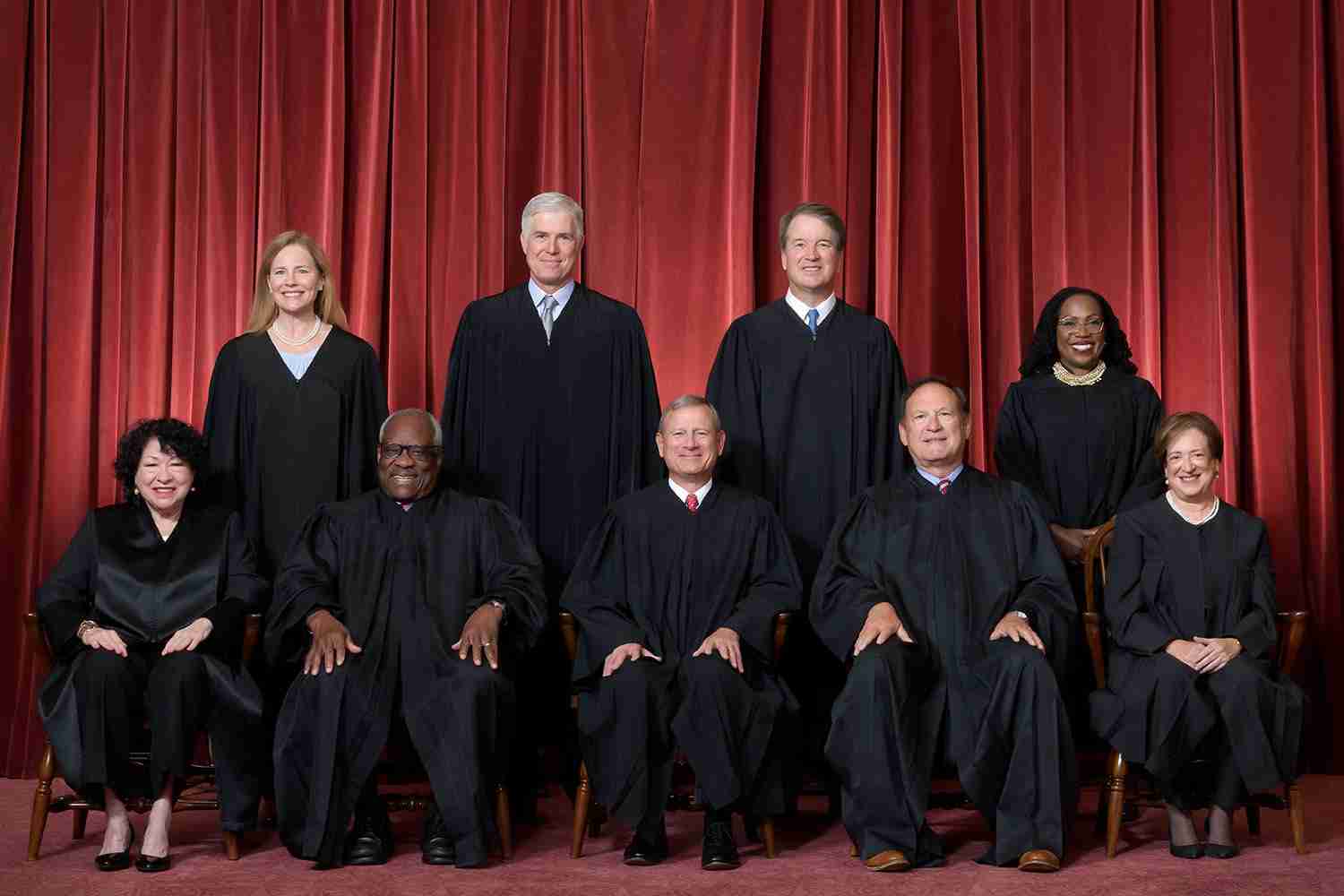
Trump Criticizes Justices After Supreme Court Oral Arguments on Supreme Court Transgender Athletes Cases, Says Supporters ‘Should Lose a Lot of Credibility’
The Supreme Court heard consolidated cases challenging state bans on transgender women and girls in female sports, and former President Donald Trump said some justices “should lose a lot of credibility” after oral arguments that signaled a possible upholding of those bans.
Key takeaways
- Consolidated cases: Little v. Hecox (Idaho) and West Virginia v. BPJ were argued together and the hearing suggested a majority may favor upholding state bans.
- Trump’s reaction: At a White House press conference, Trump criticized justices he believed supported transgender participation in women’s sports.
- Legal clash: States argued Title IX and biological differences justify sex-separated teams; challengers said bans violate the Equal Protection Clause and Title IX.
- Local stakes: A ruling upholding bans could create policy uncertainty for places like Redding, California, affecting schools, budgets, and community debates.
Main content
What the Court heard
The Supreme Court heard consolidated cases Little v. Hecox (Idaho) and West Virginia v. BPJ, addressing whether states may bar transgender girls and women from competing on female sports teams at school and college levels. The hearing ran nearly three-and-a-half hours and observers noted questioning that appeared to signal skepticism of the challengers’ arguments. Lower federal courts had blocked both laws: the 9th Circuit found Idaho’s law violated equal protection and the 4th Circuit found West Virginia’s law violated Title IX.
Trump’s criticism of the Court
Immediately after oral arguments, at a White House press conference, former President Donald Trump weighed in. He said he could not “imagine” some justices fighting to “allow men to be able to play in women’s sports” and repeated that any justice who ruled that way “should lose a lot of credibility.” Those remarks were framed around concerns about fairness for women and girls in athletics and were widely reported in contemporaneous coverage.
“I could not imagine some justices fighting to allow men to be able to play in women’s sports — they should lose a lot of credibility,” — former President Donald Trump
What happened at oral argument: the lawyers’ positions
The consolidated cases ask whether states may bar transgender girls and women from competing on female teams. Idaho’s law at issue in Little v. Hecox bans transgender women from women’s teams at all school levels, including college. West Virginia’s law is challenged in West Virginia v. BPJ. State lawyers defended the bans on grounds that Title IX allows sex-separated teams and that biological differences matter in athletics. Attorneys for the challengers argued bans violate the Equal Protection Clause and Title IX’s prohibition on sex discrimination, noting medical treatments like puberty blockers and hormone therapy can mitigate physical advantages.
Arguments for the states
West Virginia Solicitor General Michael R. Williams argued Title IX permits sex-separated teams and emphasized that biological sex matters in athletics “in ways both obvious and undeniable.” The Trump administration’s representative, Hashim Mooppan, urged the court that states need only show a “substantial relationship” or “reasonable fit” between their rules and goals, not a “perfect fit,” to justify laws aimed at preserving competitive fairness.
For contemporaneous legal analysis see Education Week and reporting from SCOTUSblog.
Arguments for the transgender athletes
Challengers’ attorneys Joshua Block and Kathleen Hartnett argued bans violate the Equal Protection Clause of the 14th Amendment and Title IX. They noted some transgender athletes receive medical treatments (puberty blockers, hormone therapy) that can reduce or eliminate physical advantages; if treatments remove meaningful competitive edges, there is no justification to ban a transgender woman from a team that matches her gender identity. For the ACLU’s statements, see the ACLU press release.
What the justices asked — lines that mattered
The justices’ questioning highlighted the court’s concerns and possible directions:
- Chief Justice John Roberts asked whether allowing transgender girls to play would force a change to the “biological definition of girls” across other legal areas, indicating concern about broad consequences.
- Justice Clarence Thomas posed a hypothetical about a poor male tennis player trying out for a women’s team, probing whether the laws’ reasoning could be overbroad.
- Justice Amy Coney Barrett questioned whether the law discriminates because it primarily affects transgender girls, noting that “trans boys can play on boys’ teams.”
- Justice Samuel Alito raised the perspective of cisgender female athletes, asking whether opponents of transgender participation were “bigots” or merely “deluded” about unfair competition.
- Justice Neil Gorsuch focused on the 1974 Javits Amendment and Department of Education rules that permit sex-separated teams, indicating a cautious Title IX analysis.
Detailed reporting on these lines of questioning is available from SCOTUSblog and Education Week.
How the court seemed to lean
Observers said several justices voiced skepticism of the challengers, and post-argument reports suggested a majority of justices may be inclined to uphold the state bans. The length and tone of questioning, notably from conservative members, indicated the court might be prepared to give states more leeway in defining sex-separated teams under Title IX. Final outcomes remain contingent on the court’s written opinions.
Background on the plaintiffs
The cases involve two transgender female athletes: Lindsay Hecox, a student at Boise State University who sought to join the women’s cross-country team in Idaho, and another plaintiff identified as B.P.J., who challenged West Virginia’s law. Both assert that bans exclude them from teams that reflect their gender identity and that such exclusion violates federal law. Additional case summaries are available at Oyez.
Implications for Redding, California
Economic impact: High school and college sports drive local economies. If the Supreme Court upholds state transgender sports bans, California policy will be critical for local teams. California currently allows transgender athletes to compete on teams matching their gender identity; a national shift could increase legal and policy uncertainty affecting school budgets and coaching decisions in the Redding area.
Political consequences: The ruling could sharpen political debates in Northern California. Local conservative voters in Shasta County and surrounding areas often prioritize girls’ sports fairness. A decision perceived as limiting state power to restrict transgender participation could mobilize activists and lawmakers to seek state-level policy changes or clarifying legislation.
Social effects: Families and students in Redding may face renewed debate at school board meetings. Coaches, athletic directors and parents could be forced to revisit tryout rules, locker-room policies and training practices, creating tension in communities that value both inclusion and fair play.
Cultural relevance: Redding’s conservative-leaning community will likely focus on protecting opportunities for female athletes. Arguments emphasizing physical differences and fairness resonate with many local readers, while faith-based and civic groups supporting transgender youths may press for inclusive policies, deepening community discussion.
Practical applications for schools and teams: Local high schools and community colleges may need to review eligibility rules, paperwork and medical documentation policies depending on the court’s ruling. Athletic directors should consult legal counsel and state education agencies; coaches may need to prepare for potential legal challenges and higher scrutiny at tryouts.
What local leaders should watch: Redding school boards and Shasta County officials should track the court’s written opinions and any state responses. If the Supreme Court grants states broader authority to restrict transgender athletes, California’s laws and guidance will determine local practice. If the court strikes down bans, districts may still face lawsuits and policy disputes affecting budgets and schedules.
Reporting and sources
This article draws on contemporaneous reporting, live analysis of the January oral arguments, and public statements by the former president. Key sources include:



