
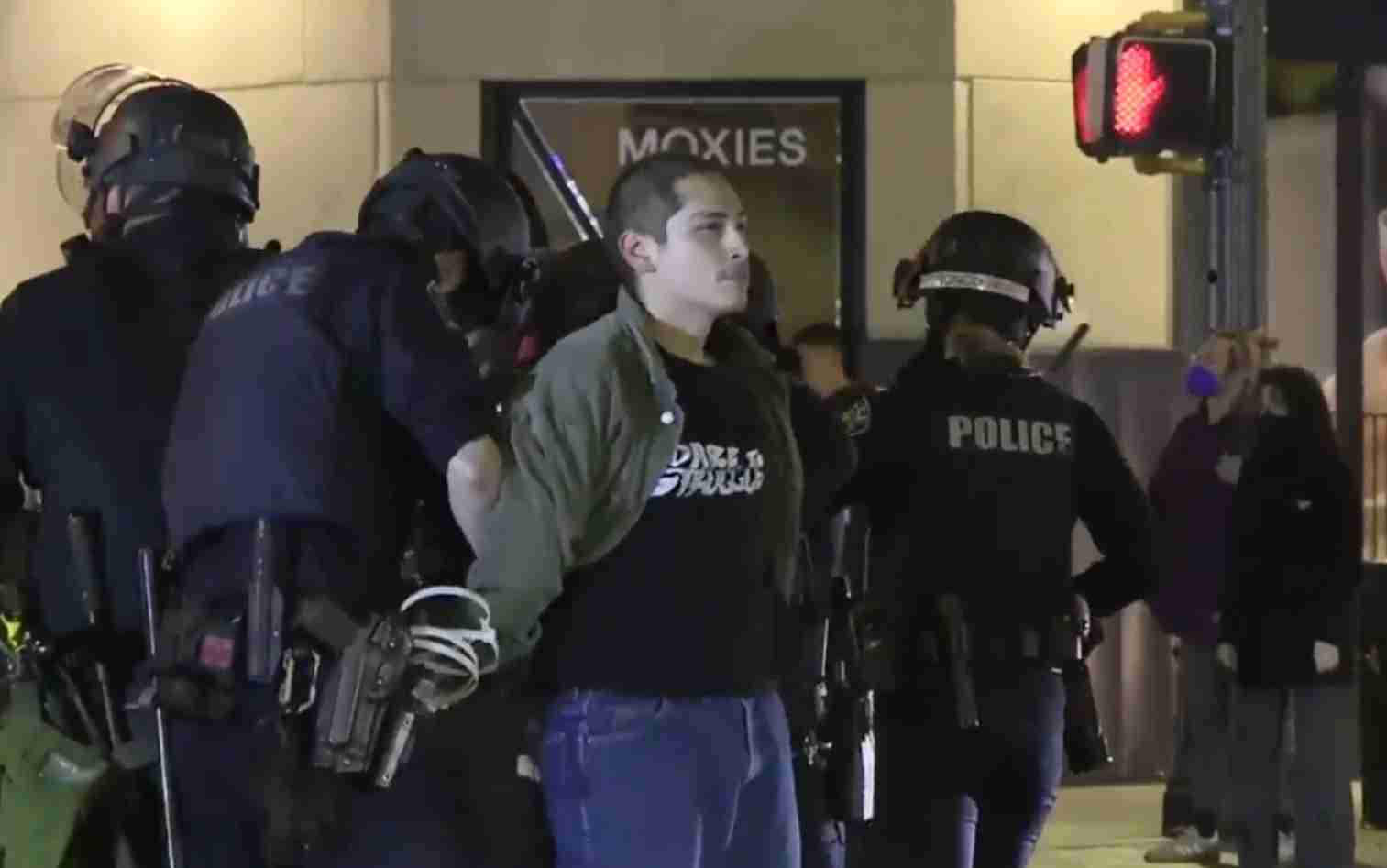
Austin police, DPS ride into crowd after anti‑ICE rally; multiple detained amid pepper‑ball use
Downtown Austin saw escalating tensions Saturday night when an anti‑ICE protest turned confrontational; police and state troopers used pepper balls and bike charges to clear blocked streets near the J.J. Pickle Federal Building, detaining multiple demonstrators.
Key takeaways
- Bike charges and pepper‑ball rounds: Video and official statements show APD and Texas DPS troopers on bicycles using less‑lethal munitions to disperse parts of the crowd.
- Arrest counts vary: Early tallies range from three to seven; APD said final numbers were pending.
- Context: Rallies were sparked by the fatal shooting of Renee Nicole Good and included daytime and evening actions across downtown Austin.
- Debate over tactics: Organizers called the response “brutal”; state leaders defended law‑and‑order measures.
What happened
Organizers staged an “End ICE Terror” rally tied to the fatal shooting of Renee Nicole Good; later that evening some participants moved onto downtown streets, blocking traffic near South Congress Avenue and East 6th Street. Law enforcement — including Austin Police Department officers and Texas Department of Public Safety troopers — moved into crowds on bicycles; video shows officers charging into demonstrators. Authorities confirmed the use of less‑lethal rounds described as “pepper balls.” (Sources: CBS Austin, KUT Austin, News4 San Antonio.)
Timeline and location
Saturday’s demonstrations began near the J.J. Pickle Federal Building at 300 E. 8th St., where protesters gathered in the early evening. Organizers say the crowd assembled around 6:30 p.m. before some participants moved onto downtown streets, blocking traffic near South Congress and East 6th. Arrests and intensified police action were reported at the Congress & 6th intersection around 8 p.m. as officers sought to clear the roadway.
Why they were protesting
The rallies were part of broader demonstrations responding to the fatal shooting of Renee Nicole Good by an ICE officer in Minneapolis earlier that week. Local organizers framed the downtown actions as direct protest against ICE operations and deaths in detention, linking Austin’s immigrant communities to national outrage. (Reporting: KUT Austin, Fox San Antonio.)
Crowd behavior and escalation
Video and reporting show some demonstrators engaging in direct action: burning flags and throwing shoes splattered with red paint at a sign bearing former President Donald Trump’s name near the federal building earlier Saturday. Multiple outlets said protesters later blocked traffic downtown for an extended period, prompting law enforcement intervention. Organizers described the rally as civil disobedience; authorities characterized the road‑blocking as an unlawful, dangerous escalation. (See: News4 San Antonio, CBS Austin.)
Law enforcement response: bikes, pepper balls, detentions
Austin Police and Texas DPS troopers were both on scene, with federal officers near the federal building. Video shows officers in riot gear and on bicycles moving into crowds and pushing demonstrators back at South Congress and East 6th. Multiple accounts say officers used less‑lethal munitions described by protesters as pepper balls to disperse crowds. APD confirmed pepper balls were used but early reports did not always specify which agency fired particular rounds or which agency made each arrest. (Coverage: CBS Austin, KUT Austin, News4 San Antonio.)
Video and witness accounts
Footage shared online and aired on national outlets shows officers on bicycles “charging directly into a crowd of anti‑ICE agitators,” according to one international video narration. Other clips show bike lines pushing through groups of demonstrators, resulting in several people being handcuffed and led away. The number of detentions visible on video varies; some clips show at least three detained during the bike charge. (Videos: YouTube clip, Fox News video, reporting: CBS Austin.)
Arrests: varying counts and evolving totals
Early reporting showed differing arrest totals. Organizers told CBS Austin that at least seven people were arrested, including one person reportedly detained later when heading to their car. APD told KUT Austin that at least five people were arrested outside the federal building. News4 San Antonio reported authorities detained four people downtown after about 10 minutes of blocked traffic. APD said it expected to release a more accurate arrest count later.
Claims of excessive force and the law‑and‑order defense
Organizers and activists — including groups such as Dare to Struggle Austin — criticized police tactics as “brutal”, saying officers used bicycles and pepper spray/pepper balls aggressively and arrested people engaged in protest. They called for the release of those detained and demanded charges against ICE agents in the Renee Good case.
State leaders and law enforcement pushed back. Governor Greg Abbott posted that
“Texas is not Minnesota,”
criticizing what he called reckless rhetoric and saying DPS would not tolerate defiant protesters. Abbott’s office said Texas authorities have a duty to protect the public and officers from danger and property damage. DPS spokesperson Lt. Chris Olivarez wrote on X that the agency supports the right to peacefully assemble but will not tolerate “violence, threats to the public or law enforcement, obstruction of roadways, and damage to property.” (Reporting: CBS Austin, Fox San Antonio.)
Broader context: a day of rallies and ongoing demonstrations
Saturday’s confrontation was part of a wider set of demonstrations in Austin. Earlier, an “ICE Out of ATX” rally at City Hall drew roughly 400 people, and local reporting noted at least three days of protests following Renee Good’s death. Speakers at daytime events connected local immigrant issues to national trends and urged continued pressure on federal immigration officials. (See: Fox San Antonio, KUT Austin.)
Disputes and open questions
Reporting agreed on key facts — the focus on Renee Good, blocked streets downtown, a bicycle push by officers and use of less‑lethal rounds — but several details remain unsettled: the exact number of arrests, which agency fired pepper balls in each instance, and whether specific uses of force complied with department policy. APD said it was compiling more complete arrest and use‑of‑force information. (Sources: CBS Austin, KUT Austin.)
Implications for Redding, California
Local officials in Redding may study Austin’s response for lessons in public safety and crowd control. Key considerations include:
- Public safety and crowd control planning: Review policies on bike lines and less‑lethal munitions to ensure clarity on when and how they may be deployed.
- Legal and civil‑liberties considerations: Expect debates balancing First Amendment rights with public safety, and prepare clear guidance on obstruction of roadways and proportional force.
- Political impact: National incidents can ignite local action; elected officials should anticipate pressure from both sides of the debate.
- Practical effects: Plan alternate routes and timely advisories to reduce disruption if demonstrations block downtown streets.
- Community relations and oversight: Prioritize transparency — body‑camera footage, arrest numbers, and after‑action reviews can help maintain public trust.
Reporting and video sources
This report compiles local coverage and video from multiple outlets. Primary referenced items include:
- CBS Austin
- News4 San Antonio
- Fox San Antonio
- KUT Austin
- Video: YouTube clip (Times of India / syndicated)
- Fox News video
Reporting compiled from the local coverage and video cited above.


