
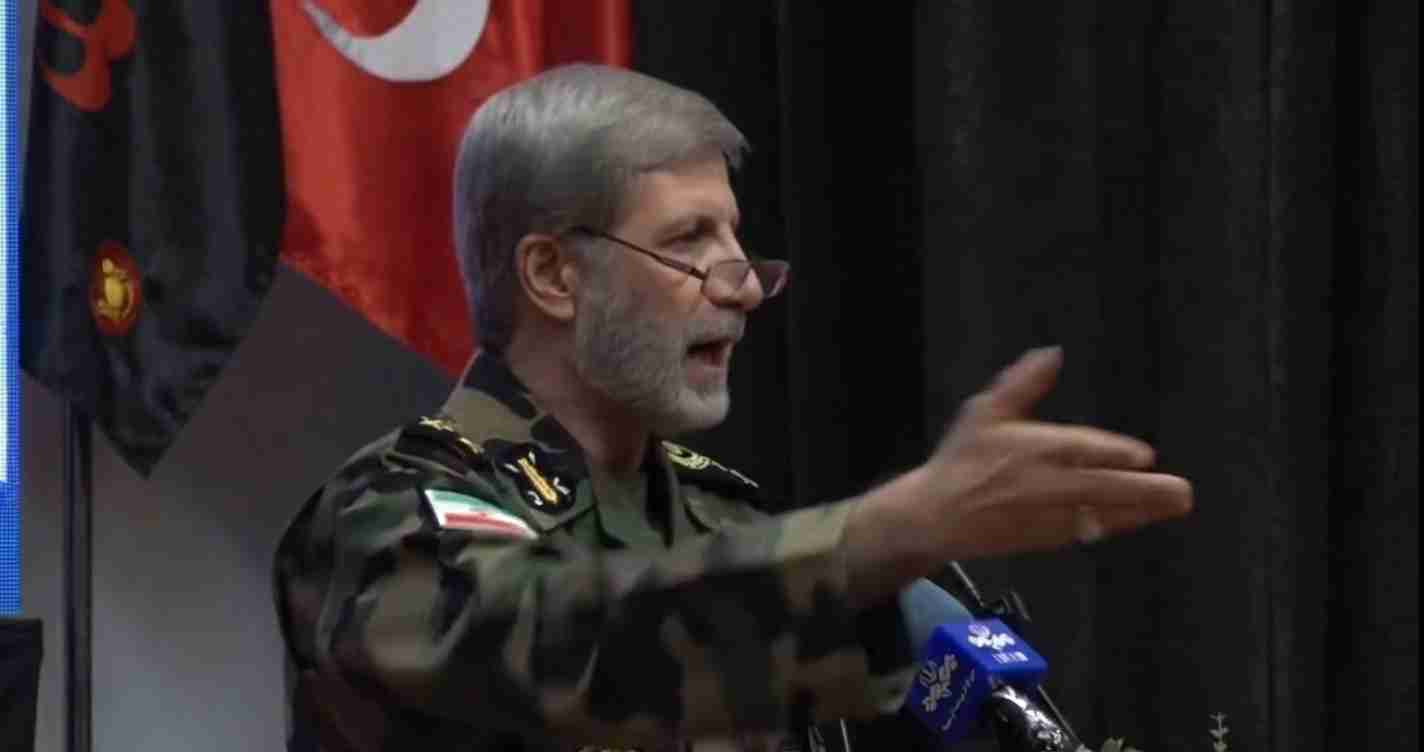
Iran Army Chief Warns of Preemptive Attack After Trump ‘Locked and Loaded’ Remarks
Iran’s Army Chief, Maj. Gen. Amir Hatami, warned of possible preemptive military action against the United States and Israel, citing hostile rhetoric — including President Trump’s “locked and loaded” comments — amid ongoing nationwide protests and widening economic unrest.
Key takeaways
- Maj. Gen. Amir Hatami said Iran may take preemptive action if foreign rhetoric is judged to lead to aggression (Military.com, Euronews, CGTN).
- Hatami contrasted current Artesh readiness with performance during the June 12‑day conflict, warning any miscalculation would prompt a “more decisive response” (Tasnim, Military.com).
- Domestic unrest driven by economic pain and currency collapse has intensified the political stakes; Tehran attributes escalation to foreign plots while opponents cite sanctions, corruption and mismanagement (Euronews).
- Local implications: U.S.-Iran tensions could raise oil and fuel prices and create political and social anxiety in places such as Redding, California.
What happened
Speaking to students at the Army Command and Staff University in Tehran, Maj. Gen. Amir Hatami framed recent foreign statements about Iran as threatening rhetoric and warned the government would not leave such rhetoric unanswered. His comments were widely carried by state outlets including IRNA and Tasnim.
“I can say with confidence that today the readiness of Iran’s armed forces is far greater than before the war,” Hatami said. “If the enemy commits an error, it will face a more decisive response, and we will cut off the hand of any aggressor.”
Who is Maj. Gen. Amir Hatami?
Hatami commands Iran’s regular army, the Artesh, not the Islamic Revolutionary Guard Corps (IRGC). He is the first regular army officer in decades to occupy a post long dominated by IRGC leadership. Hatami rose to the top army post after the June conflict — described by Tehran as the 12‑day war — which killed several senior Iranian commanders (Military.com, Euronews).
What President Trump said
President Donald Trump warned that if Iran “violently kills peaceful protesters,” the United States “will come to their rescue,” and on two occasions said the U.S. is “locked and loaded.” Tehran cited those comments as direct intervention when responding to Hatami’s warning (Military.com, Euronews, CGTN).
Hatami’s remarks and emphasis
Hatami described the intensification of what Tehran calls enemy rhetoric as a threat and stressed that the regular army’s readiness is greater now than before the June fighting. He warned that any miscalculation by an adversary would prompt a “more decisive response” and used strong language about cutting off “the hand of any aggressor.” These passages were reported by state media and amplified in official channels (Tasnim, IRNA, Military.com).
Reference to the June 12‑day war
Hatami repeatedly compared current deterrent capability to Iran’s performance during the June conflict, when Tehran says Israel struck military and nuclear targets and the U.S. struck nuclear sites such as Natanz and Fordow. Iran says it responded with waves of missiles and drones before the fighting halted after 12 days — a reference he used to underline enhanced military readiness (The New Region, Ansarollah, CGTN).
Domestic unrest and economic drivers
Iran has seen weeks of protests driven by deep economic pain: the rial’s sharp fall and rising food prices have spurred demonstrations across many cities. Local reporting indicates dozens killed and more than a thousand arrests in clashes with security forces. Officials call the unrest “riots” and blame foreign plots; Hatami called the protests “normal and natural” but said their rapid escalation was “undoubtedly planned by the enemies” (Euronews, The New Region, CGTN).
Economic relief and regime vulnerability
Tehran has introduced limited relief measures — modest payments aimed at helping poor families cover staples (roughly the equivalent of €6 per month) — while officials blame Western sanctions and “maximum pressure.” Critics point to corruption and mismanagement. The protests are a direct challenge to the theocratic system, which helps explain leaders’ emphasis on foreign plots and regime security (Euronews, Ansarollah).
Perceived dual threat from U.S. and Israel
Iran’s security leaders frame the situation as a twin threat: Israel’s reported strikes and targeted killings during the June conflict and U.S. pressure over nuclear and missile programs. Officials present warnings as deterrence aimed at Washington and Tel Aviv and as reassurance to domestic audiences that the regime can defend itself (Military.com, Euronews, The New Region).
How serious is the threat?
Hatami’s use of the word preemptive and explicit threats of decisive retaliation make his remarks stronger than routine rhetoric. Analysts note the message appears calibrated to deter strikes and reassure domestic audiences rather than to announce immediate operations, but the statements do increase risk by signaling capability and will to respond if Tehran perceives an imminent attack (Military.com, Euronews, CGTN, Tasnim).
Other official Iranian reactions
Foreign Minister Seyed Abbas Araghchi said Iran’s internal affairs are a domestic matter and rejected U.S. interference. Supreme Leader Ayatollah Ali Khamenei and other senior figures condemned President Trump’s comments and endorsed a firm stance. State media broadly carried Hatami’s remarks (CGTN, Tasnim).
Implications for Redding, California
Economic impact: Geopolitical risk can push oil prices higher, raising fuel costs at the pump and increasing shipping and food prices for Redding residents. Local farmers, trucking firms and small businesses could see rising transport and input costs.
Political consequences: Conservative voters in Redding often prioritize strong defense. The exchanges between Hatami and President Trump could sharpen local political debates and pressure officials to support robust U.S. posture and care for service members.
Social effects: Heightened tension may raise anxiety in immigrant communities with ties to the region and among military families. Schools, churches and civic groups may host briefings to help families and communities prepare.
Practical applications for residents
- Monitor federal travel advisories and county emergency notices; local news and emergency offices will track developments.
- Budget conservatively for potential fuel price swings; small businesses should plan for modest increases in transport costs.
- Veterans groups and faith communities can prepare support resources for service members’ families.
- Expect local leaders to host town halls or informational sessions explaining federal actions and any county-level measures.
Sources (selected)
Reporting compiled from the following sources and state media accounts:
(Reporting compiled from the above sources and state media accounts.)



