
Indiana Senate Rejects Trump-Backed Map in Major GOP Rift, Killing Plan to Add Two Republican House Seats
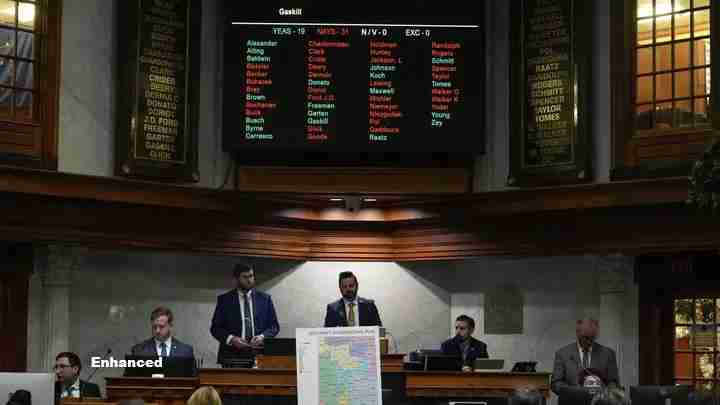
The Indiana State Senate rejected a Trump‑backed redistricting plan, House Bill 1032, after a bipartisan revolt that preserved two Democratic‑leaning districts and killed a bid to add two safe GOP U.S. House seats on Wednesday night ahead of 2026.
Key takeaways
- Bill: House Bill 1032, a mid‑decade congressional redistricting plan backed by former President Donald Trump and national Republicans, sought to redraw Indiana’s nine districts.
- Vote: The Indiana Senate rejected the map 31–19 after about three hours of debate; 21 Republicans joined all 10 Democrats in opposition.
- Consequence: The defeat preserves the current map and the state’s two Democratic‑leaning districts, blocking a likely path to a 9–0 GOP sweep that analysts warned the plan would create.
What the rejected map would have done
House Bill 1032 proposed an aggressive GOP gerrymander of Indiana’s nine congressional districts designed to erase two Democratic‑leaning seats and convert a current 7–2 GOP advantage into a likely 9–0 sweep. Reporting on the proposal appeared in IDS News and Axios.
- 1st District: The plan would have stretched and split the 1st District (Rep. Frank Mrvan, D), diluting Democratic voters from northwest Indiana (IDS News).
- 7th District: The 7th (Rep. André Carson, D) would have been carved into multiple pieces, moving Indianapolis precincts into surrounding rural Republican counties — a classic cracking tactic (Democracy Docket).
- Monroe County: Monroe County (Bloomington, Indiana University) would have shifted from the 9th to the 8th District — another change seen as advantaging Republicans (IDS News).
The vote and political breakdown
After roughly three hours of floor debate, the Senate voted 31–19 to reject HB 1032. The margin was notable because 21 Republican senators joined all 10 Democrats to oppose the plan, an intraparty revolt larger than many expected (UPI; Axios).
The bill had earlier cleared the Indiana House 57–41, where 12 Republicans voted with Democrats against the plan — an early sign of GOP division (IDS News).
Trump’s involvement and the pressure campaign
National Republicans and pro‑Trump allies made HB 1032 part of a broader strategy to reshape U.S. House maps ahead of 2026. Former President Trump publicly and privately urged approval, at times naming skeptical senators and warning of “consequences.” Reporting details Trump’s outreach in Axios and ABC News.
“We finally have a resolution now,” said Senate President Pro Tempore Rodric Bray, noting internal GOP disagreements even while some share the goal of a GOP House majority.
After public agitation, more than a dozen GOP lawmakers reported receiving bomb threats, swatting incidents, or other intimidation — a volatile element that further complicated the vote (ABC News; IDS News).
Key state players and reactions
Rodric Bray (R–Martinsville), the Senate President Pro Tempore, initially resisted reconvening for redistricting and later opposed the bill, saying the chamber lacked the votes and framing the result as an internal GOP resolution (Axios).
Governor Mike Braun strongly backed the Trump‑aligned map, blasted dissenting senators and warned of political consequences, calling the vote disappointing and claiming dissenters rejected “the leadership of President Trump” (Axios; UPI).
National context: one front in a map war
Indiana’s fight is one part of a nationwide redistricting offensive aimed at shaping the 2026 midterms. Republican map efforts in states including Texas, Missouri, Ohio and North Carolina have sought aggressive gains, while Democrats have pursued map plays in states such as California — producing a countrywide map war in statehouses and courts (Democracy Docket).
Why this is described as a “major blow” to Trump
Analysts call the vote a major blow because a Republican supermajority rejected a map strongly backed by Trump and national operatives. More than half of the GOP Senate caucus defied pressure, undercutting the notion that national leaders can always control state legislative choices and blocking a relatively inexpensive path to add two safe GOP House seats (Axios; Democracy Docket).
Immediate practical consequences in Indiana
With HB 1032 rejected, the existing congressional map remains in place and the state’s two Democratic‑leaning seats are preserved. Because the vote occurred during the regular session, Senate leadership says the issue cannot be revisited this session without special procedures or a special session, making a quick revival unlikely (ABC News).
Reactions from Trump and allied groups
Former President Trump publicly expressed anger and disappointment, calling Indiana an outlier while saying his side had won elsewhere (Trump statement). Pro‑Trump groups pledged to target the 21 Republican senators who voted no in 2026 primaries and to spend on messaging that they “sided with Democrats” (Axios; UPI).
Implications for Redding, California
Though the vote occurred in Indiana, the episode carries lessons for conservatives in Redding:
- National pressure vs. local control: Indiana shows limits to national pressure on state lawmakers. Local GOP leaders in California can study those tactics when national demands clash with local priorities (Axios).
- Primary politics: Pro‑Trump operatives plan to target dissenting Republicans, energizing fundraising and candidate challenges — a development Redding activists should watch (Democracy Docket).
- Voter trust and safety: Reports of threats and intimidation are a warning that political fights can become dangerous; local officials should prioritize safety and optics that avoid alienating voters (IDS News).
- Federal policy ripple effects: Preserving the current map marginally reduces potential GOP House gains, which can affect federal spending priorities important to Redding — wildfire resources, forest policy and rural infrastructure (Axios).
- Lessons for local operations: Build voter outreach, avoid optics that target minority or urban voters, and defend officials’ safety to reduce damaging intra‑party fights (Democracy Docket).
What happens next
For now, the current congressional map stands. A rapid revival of HB 1032 in this session appears unlikely without a special session or extraordinary procedural steps. National groups may instead focus on other states or primary targets in 2026; state observers will watch whether targeted pressure campaigns translate into primary challenges and spending (Axios).
Sources: Axios; IDS News; ABC News; Democracy Docket; UPI; YouTube.


