
Trump delivers blunt ultimatum to Maduro as land operations loom — negotiations collapse over Maduro amnesty demands
President Donald Trump issued a direct ultimatum to Nicolás Maduro, demanding his immediate departure and offering safe passage for him and close family if he resigned, after negotiations collapsed over Maduro’s demands for global amnesty and retained military control.
Key takeaways
- Immediate ultimatum: Trump told Maduro to leave Venezuela at once and offered safe passage for him and close family if he stepped down.
- Negotiations collapsed: Talks stalled after Maduro sought global amnesty and to retain control of the armed forces.
- Escalation followed: The U.S. warned Venezuelan airspace was effectively closed and signaled possible land operations; military and aviation moves followed.
- Caracas pushed back: Venezuela revoked foreign carrier rights and accused the U.S. of “colonial aggression” while staging military pageantry.
Main coverage
The ultimatum and the Washington offer
President Trump placed a phone call during the week of Nov. 16 pressing Nicolás Maduro to leave Venezuela immediately. The administration offered safe passage not only for Maduro but reportedly for his wife, Cilia Flores, their son and several close aides if he agreed to step down at once. The White House framed the move as a last diplomatic effort to avoid broader military action. (Source: Times of India; Fox News)
Maduro’s amnesty demands and the breakdown
Sources familiar with the discussions say Maduro responded with three conditions Washington rejected: a global amnesty for top regime figures, the right to retain command of the armed forces after elections, and a timeline that avoided immediate resignation. U.S. negotiators viewed a blanket amnesty as incompatible with accountability for alleged abuses, corruption and drug-trafficking, and said preserving civilian rule and the rule of law was non-negotiable. (Source: Times of India; Fox News)
Escalation after failed talks
When talks ended without agreement, the U.S. intensified pressure. President Trump warned Venezuelan airspace should be treated as “closed in its entirety” and said land operations could begin “very soon.” The FAA and several carriers rerouted flights and suspended routes to nearby Caribbean islands in response to higher military activity. The administration described these steps as precautionary while preparing other options. (Source: Times of India; Fox News)
Venezuela’s response and public posturing
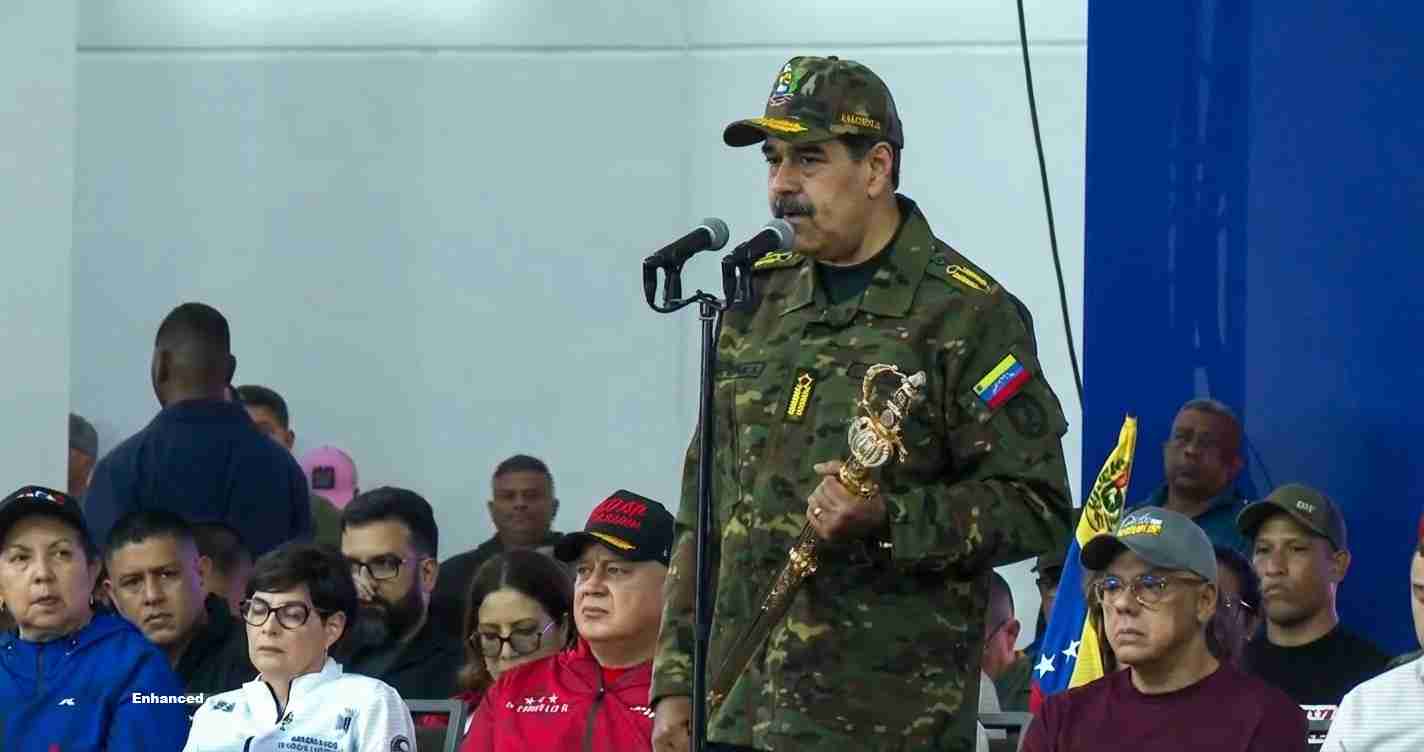
Caracas retaliated by revoking operating rights for several foreign carriers and accusing the United States of “colonial aggression.” Maduro staged a public display at a military academy, brandishing a sword and rallying supporters while denouncing what he called U.S. plots against Venezuela. The government’s posture combines legal moves against foreign carriers with high-profile military optics. (Source: Times of India; Fox News)
U.S. political context: drugs, law enforcement and national security
U.S. officials and some members of Congress tied the Maduro regime to drug flows and organized crime, arguing the U.S. must act to stop fentanyl and other illicit narcotics that have contributed to overdose deaths. The administration stepped up maritime strikes on suspected drug vessels and labeled the so‑called Cartel de los Soles a foreign terrorist organization as part of broader pressure. (Source: Times of India; Fox News)
Defense assessment: regime weakened but targets dispersed
Defense experts briefed on the matter say Venezuela’s armed forces are degraded by corruption, sanctions, defections and maintenance shortfalls. Much equipment is aging and in poor condition, limiting Caracas’s capacity to repel a coordinated foreign operation. Still, analysts caution that locating top regime figures scattered across the country would be complex and risky. (Source: Fox News)
International backdrop
Maduro retains ties with countries such as Russia and Iran, though analysts say those partners are limited in what direct support they can offer. China has strategic interests but is unlikely to risk open confrontation with the U.S. over this crisis, leaving Maduro increasingly isolated diplomatically. (Source: Fox News)
Implications for Redding, California
Economic impact: Redding’s local economy is sensitive to national energy markets and federal spending. A U.S.-led intervention or prolonged tensions in Venezuela could increase oil-price volatility, raising gasoline costs for residents, businesses, trucking companies, and small farms.
Political consequences: The administration’s firm posture may resonate with many conservative voters in Redding who favor decisive national-security measures. Local leaders could use the development to argue for tougher policy on drugs and borders; conversely, extended deployments might spur debate over federal priorities.
Social effects: Redding communities affected by opioid and fentanyl crises may welcome aggressive action aimed at cutting drug flows, but an overseas military operation that drags on could heighten anxiety among veterans and military families.
Cultural relevance: Many conservative civic organizations and churches in Redding view decisive leadership on foreign threats as important; this episode could mobilize local groups around veterans’ support and family services.
Practical advice: Residents should monitor fuel prices, track Pentagon announcements if they have family in service, and check airline notices when traveling through Caribbean hubs as routes may be rerouted due to elevated military activity.
Sources and further reading
- Times of India: “You must leave the country now, Trump delivers blunt ultimatum to Maduro on call; US-Venezuela tensions flare”
- Fox News: “Trump gave Maduro ultimatum to flee Venezuela, land operations loom: report”
Reporting based on Times Media Service reporting and the sources above; quotes and details are attributed to those outlets and officials they cite.



