
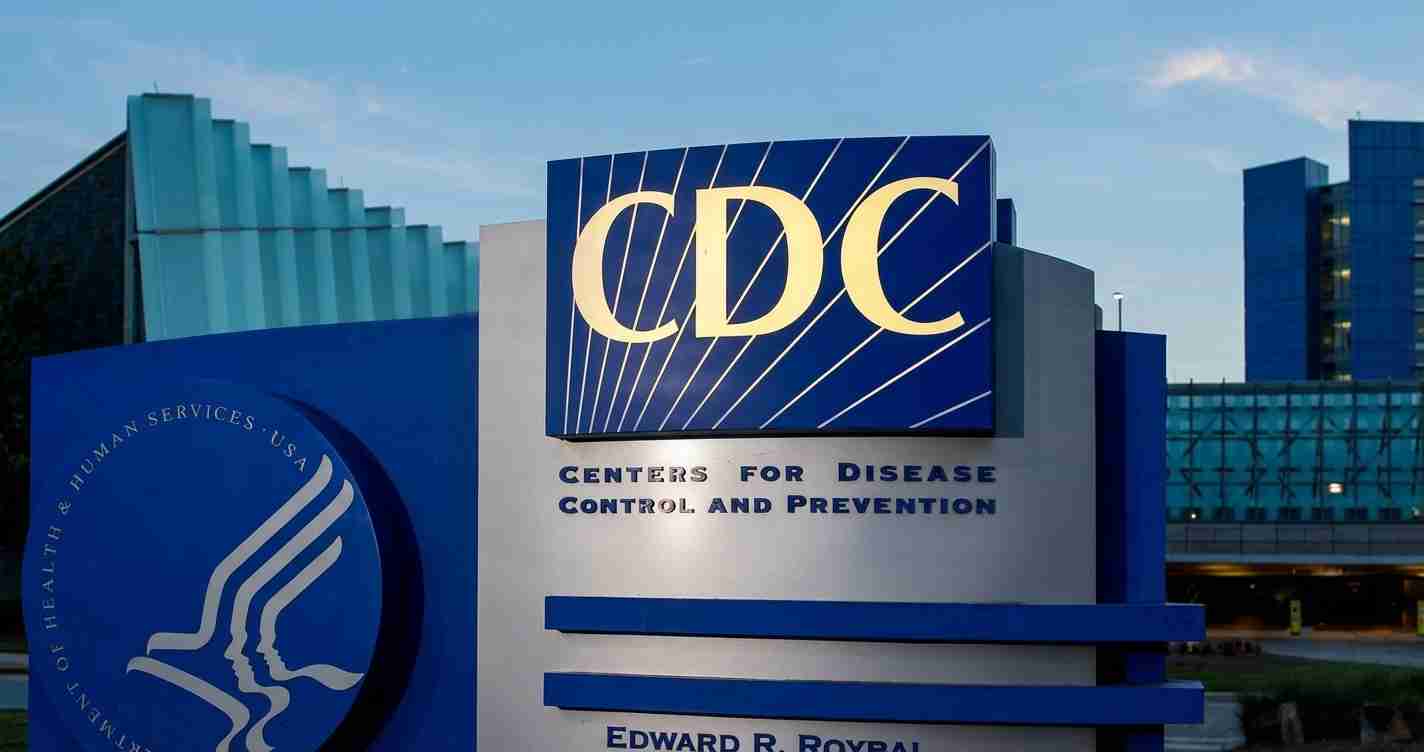
CDC quietly revises vaccine-and-autism language, cites legal standards while affirming safety
In late 2025, the CDC revised its public wording on vaccines and autism, stating that “vaccines do not cause autism” isn’t strictly an evidence-based claim — a legal-driven clarification under the Data Quality Act, not a scientific reversal.
Key takeaways
- CDC wording change: The agency updated its language to say the claim “vaccines do not cause autism” is not strictly evidence-based, noting studies have not ruled out every theoretical possibility — especially for infant vaccines; see the CDC vaccine safety page.
- Legal driver: The revision reflects concerns under the White House/OMB information quality guidance (the Data Quality Act), not new scientific evidence linking vaccines to autism.
- Science unchanged: Major health bodies and numerous studies continue to find no credible causal link between vaccines and autism; see the World Health Organization Q&A on vaccines and autism.
What changed at the CDC
Late in 2025, the CDC revised wording across its vaccine safety pages to emphasize limits to absolute certainty. The new phrasing explains that the blunt claim “vaccines do not cause autism” is not, strictly speaking, an evidence-based claim because studies have not ruled out every theoretical connection — particularly for infant vaccines — while the CDC left intact its long-standing guidance that available evidence does not show a causal link.
The agency’s autism-and-vaccine materials now stress scientific uncertainty while directing readers to the extensive body of research finding no link. The update appears on the CDC vaccine safety: vaccines and autism page and the agency’s broader CDC vaccine safety hub.
Why the wording changed: law, accuracy and the Data Quality Act
Health policy experts and CDC officials say the revision is a legal and technical adjustment, not a shift in scientific findings. The change reflects requirements in the Information Quality Act (commonly called the Data Quality Act) and related guidance from the Office of Management and Budget, which direct federal agencies to ensure released information is accurate, objective and transparent about uncertainties.
Critics argued that categorical language—stating a universal negative—could be legally vulnerable because science rarely “proves” absolute negatives; the CDC opted for more legally defensible, precise phrasing while not endorsing any causal claim.
What the science has long said
For decades, major health organizations and large epidemiological studies have found no credible evidence linking vaccines—including MMR and routine infant immunizations—to autism. Independent reviews and systematic analyses have repeatedly failed to find a causal connection. The World Health Organization continues to list vaccines and autism as unlinked.
The CDC continues to point to that body of evidence while clarifying how it frames uncertainty. In short: the scientific consensus that vaccines are safe and show no reliable link to autism remains intact, and the wording change does not constitute evidence that vaccines cause autism nor alter vaccine recommendations.
Legal and public reactions
The revision produced mixed reactions. Some public-health experts praised the CDC for transparency and legal prudence; others warned that legalistic language could be exploited by skeptics to suggest a policy reversal.
Conservative commentators concerned with government accountability note the role of the Data Quality Act in shaping communications. Public-health officials caution that portraying the update as a science reversal is misleading.
What the CDC says about public health
The CDC stresses the update is meant to be precise, not alarming. The agency maintains recommended vaccine schedules because they protect children and communities from serious diseases. Vaccination remains a central tool to prevent outbreaks and save lives; more information is available on the CDC vaccine recommendations and schedules.
Experts emphasize that scientific language often avoids absolute claims. Phrasing that acknowledges “we cannot rule out every theoretical possibility” is standard scientific honesty and does not imply an equal balance of evidence for and against a claim; here, the balance continues to favor vaccine safety.
Why this matters in public communication
Clear, consistent messaging is essential when public trust is fragile. Ambiguous or legalistic wording can be used to seed confusion and may contribute to reduced vaccination rates, which in turn can lead to outbreaks of measles and other preventable diseases.
At the same time, acknowledging scientific limits can build trust for some audiences. Public-health communicators must balance plain-language reassurance with accurate disclosure of uncertainty.
Implications for Redding, California
Economic and public health impact
Redding and Shasta County have documented pockets of vaccine hesitancy. Any perceived shift in CDC guidance could affect local uptake, raising the risk of outbreaks that strain clinics, hospitals and schools, and creating economic costs from disrupted services or workforce impacts.
Political consequences
In this largely conservative region, the CDC’s wording change may be viewed through skepticism about federal agencies. Local leaders who favor parental choice may press for clearer explanations of how the Data Quality Act shaped CDC language and could use the development to argue for local control over public-health messaging.
Social effects
Parents in Redding will seek straightforward facts. Confusion about the CDC’s message could deepen divides among families and increase the time clinicians must spend counseling hesitant parents — time otherwise used for direct care and vaccinations.
Cultural relevance and trust
Redding’s political culture emphasizes individual liberty and local decision-making. Local health officials should explain the legal reasons for the CDC’s wording shift and re-state the strong scientific evidence supporting vaccines using clear, plain-language outreach through trusted community channels.
Practical applications for residents
- Parents: Talk to your child’s doctor about vaccine schedules and safety; ask for the science in plain language.
- Schools and daycares: Prepare to respond to questions and provide links to trustworthy sources like the CDC vaccine-and-autism page and the WHO Q&A.
- Health providers: Expect more questions; offer extended clinic hours or informational sessions and use fact sheets that explain both the evidence and why the agency updated its phrasing under the Data Quality Act guidance.
- Local leaders: Frame communications to respect community values — emphasize transparency, local choice, and the robust evidence supporting vaccine safety.
Reporting and sources
This article is based on the CDC’s updated vaccine safety pages and public guidance on federal information quality. Readers can review the CDC’s vaccine-and-autism information online at the CDC vaccine-and-autism page and broader resources at the CDC vaccine safety hub. The White House Office of Management and Budget provides guidance on the Information Quality Act at the OMB information quality page. The World Health Organization maintains a Q&A on vaccines and autism.
Reporting: Times Media Service



