
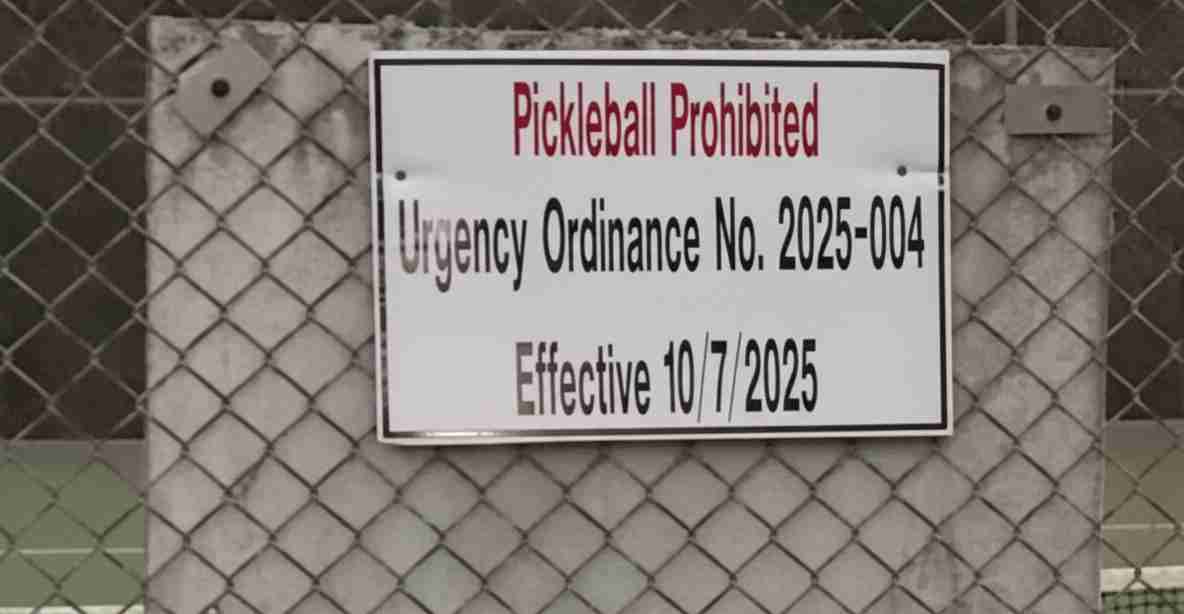
Carmel pickleball ban: Wealthy town bars play at Forest Hill Park after neighbors complain about popping-paddle noise
Carmel’s City Council voted to permanently ban pickleball at Forest Hill Park, the town’s only public facility, after repeated complaints about the sport’s sharp “pop” noise — a decision that splits residents and echoes a national debate.
- Council action: The Carmel City Council voted earlier this month to ban pickleball at Forest Hill Park, the town’s only public venue for the sport — reported by Fox News.
- Noise complaints: The decision followed repeated reports about the sharp “pop” sound produced when modern paddles hit pickleball balls — covered by The Independent.
- Compromise rejected: A proposal to allow only quieter paddle-and-ball combinations was rejected as unenforceable, according to reporting from the Washington Times.
- Precedent: Carmel may be the first California city to ban pickleball outright over noise concerns; other communities have used limits, barriers, or hours instead (Washington Times).
What the council voted on
The ban was the final action after a series of public meetings and persistent complaints from neighbors near Forest Hill Park. Residents told city officials they were disturbed by the repeated, high-pitched popping that happens during play. City staff and several council members said the sound undermined the quiet character many expect in Carmel, a town known for its peaceful streets and coastal views.
Residents said they were “disturbed by the repeated, high-pitched popping” that carried into nearby yards.
Compromise options considered: Council members weighed a plan to permit play only with quieter paddles and low-noise balls, but rejected it on enforceability grounds — how would the city verify equipment and monitor compliance? Officials argued that without reliable enforcement, quieter-equipment rules would be ineffective (Fox News; Washington Times).
Why noise became the center of the dispute
Pickleball’s surge in popularity—especially among older adults seeking low-impact activity—brought increased play to public parks. Modern composite paddles and hollow polymer balls produce a sharper, repeating pop that carries into adjacent properties. In small, quiet towns like Carmel, many residents say this clashes with the traditional soundscape and lifestyle noted by locals and reporters (The Independent).
Community reaction: divided and vocal
Supporters of the ban say it preserves property values, protects a peaceful way of life, and respects residents who moved to Carmel expecting quiet neighborhoods. They argued public spaces should not become sources of ongoing disruption.
Opponents say the ban unfairly targets a popular activity and particularly affects older residents who rely on free public courts for exercise and social connection. They argued quieter equipment and mitigation measures could have balanced recreation with tranquility (The Independent).
Legal and practical considerations
City officials pointed to enforcement challenges when rejecting equipment-only compromises. Ensuring compliance would require monitoring the site, verifying paddles and balls, and creating penalties — functions the city said it lacks the resources to guarantee. Some council members feared violations would go unchecked, leaving the noise problem unresolved (Fox News).
Wider context: a national trend of local fights
The Carmel dispute mirrors a broader trend: as pickleball courts multiply, clashes over noise, space, and competing uses have intensified. Municipal leaders across the country are forced to weigh community character against growing demand for recreation. In denser or quieter communities, these conflicts are most acute (Fox News).
Forest Hill Park’s status matters
Forest Hill Park had been Carmel’s only public facility for pickleball. Removing the activity from that site effectively ends public play unless private courts exist or the city later approves a new location. For players who depended on free access, the ban is a sudden loss of amenity (Fox News).
Policy options cities weigh
Other municipalities have pursued alternative approaches, including:
- Commissioning sound studies to measure decibel levels;
- Installing acoustic barriers or fencing;
- Setting curfews or limited playing hours;
- Designating courts with setbacks from homes;
- Requiring specific equipment that is easier to verify.
Each option carries costs and enforceability questions; Carmel’s outright ban contrasts with these mitigation-focused responses (Washington Times).
Implications for Redding, California
Economic impact: Redding officials and residents should monitor how Carmel’s ban affects tourism and property values. Carmel markets serenity and scenery; Redding balances outdoor recreation with neighborhoods and may face different pressures.
Political consequences: The dispute highlights local government power over quality-of-life issues. Redding council members could face similar pressure if courts expand near residential areas; constituents may demand enforceable policies rather than open-ended compromises.
Social effects: Pickleball provides low-cost exercise and social ties, especially for older adults. A ban removes that option from public life; Redding should weigh social losses against noise concerns.
Cultural relevance: Carmel’s action underscores tension between preserving small-town character and accommodating new leisure trends. Redding must balance quiet and recreational access in ways that reflect local priorities.
Practical applications: For Redding policymakers, five practical steps
- Map existing courts and nearby homes to identify conflict zones.
- Commission a sound study before imposing permanent bans to measure actual noise and mitigation possibilities.
- Pilot enforceable measures — set hours, designate buffered courts, and require easily verifiable equipment.
- Create a transparent enforcement plan with clear penalties and a responsible monitoring agency or partner.
- Hold public hearings in affected neighborhoods so both players and neighbors have a voice before irreversible action.
Source notes and reporting
This article draws on reporting from Fox News, The Independent, and the Washington Times. The council’s rejection of quieter-equipment compromises and the arguments about enforcement and community character were reported by multiple outlets covering the meetings.
Key takeaway: Carmel prioritized preserving local tranquility over maintaining public pickleball access, setting a possible precedent for other communities weighing recreation against neighborhood peace.


